

At first glance, Pixels does not try to impress the audience with aggressive marketing or unrealistic claims. Instead, it focuses on something surprisingly simple: making people actually want to play. The farming mechanics feel familiar, the sense of progress is rewarding, and social interaction gives players a reason to stay instead of just farming tokens and leaving. For many users, it feels less like a cryptographic experience and more like a living digital world.
What sets Pixels apart isn't the hype but the retention. Players are coming back daily, communities are forming organically, and engagement is growing without forced narratives. In a market where attention typically fades as quickly as it appears, this kind of stability sends a strong signal. It suggests that Web3 games may finally be shifting from guesswork to a real user experience.
A big part of this shift comes from the infrastructure. Built on the Ronin network, Pixels benefits from low transaction costs and seamless onboarding, removing one of the biggest barriers that previously kept major players out of crypto environments. When technology becomes invisible, adoption becomes possible - and it seems Pixels understands this principle well.
What's most intriguing is how this momentum is being built quietly. There's no loud announcements about industry changes; yet participation continues to rise. Instead of chasing short-term market hype, Pixels seems to be establishing long-term behavior, where ownership, gameplay, and community coexist rather than compete for attention.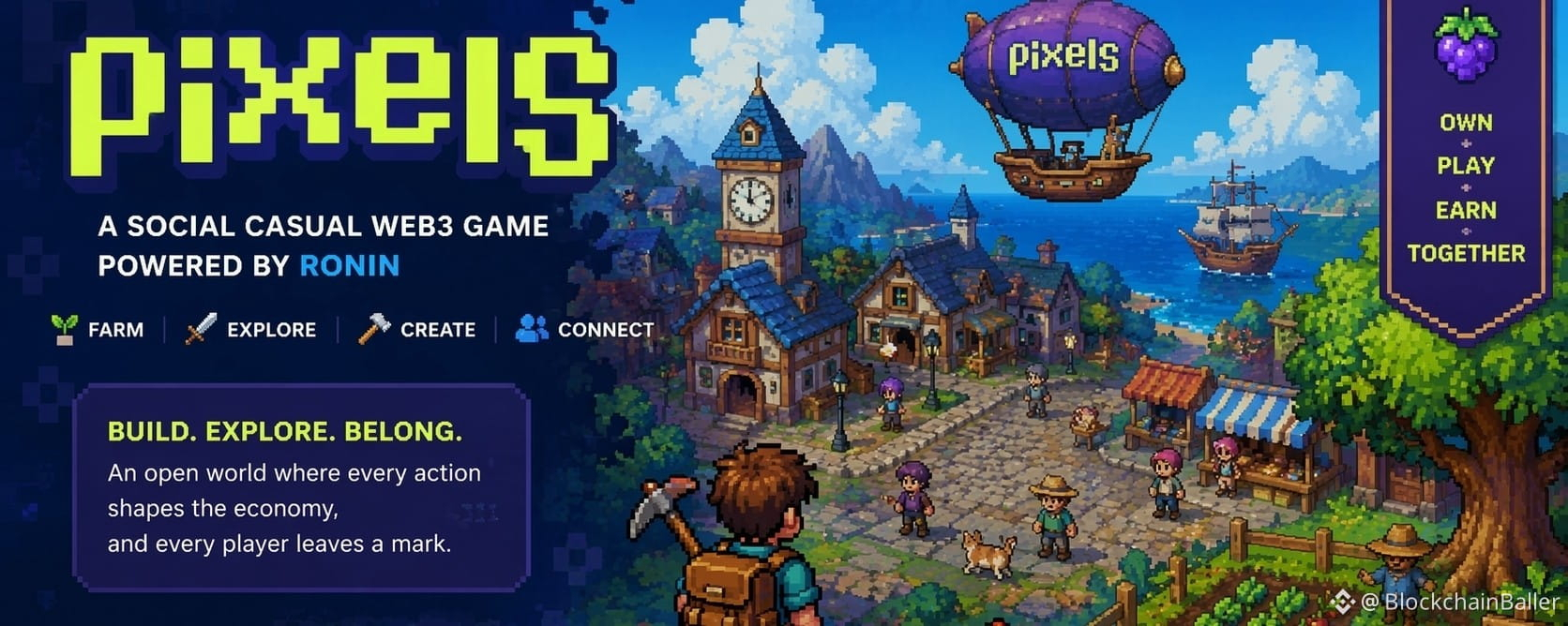
Maybe the real story isn't about one successful game. Perhaps Pixels marks the moment when Web3 games stop trying to prove themselves and simply start delivering. If history repeats itself, the projects that are quietly growing today often become the foundations everyone relies on tomorrow.