
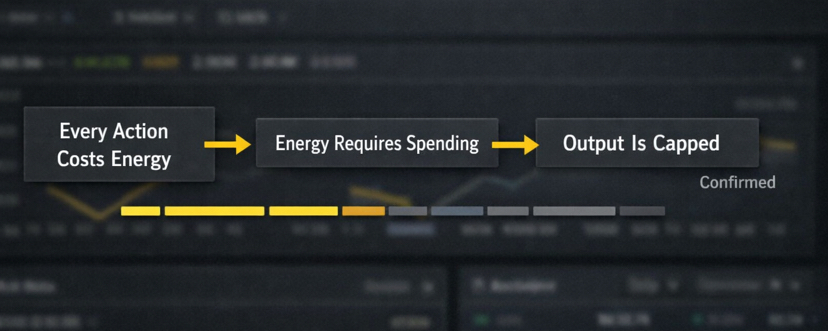
I spent a few weeks in the game and noticed a strange thing — tokens accumulate but there is no feeling of real earnings. This is what happened when I figured out how energy actually works. It's not just a game resource. It's a hidden currency with a real monetary equivalent.
My colleague is involved in logistics and often talks about fuel. The car moves — fuel is consumed. No fuel — the car stands still regardless of how much cargo needs to be transported. You can wait for the tank to fill up by itself — but it costs time.
Every action in the game — harvesting crops, extracting resources, crafting items — consumes units of energy. It regenerates slowly and naturally. But if you want to play more and earn faster — you need to replenish energy through food or a sauna.
High-calorie food that provides a lot of energy is crafted from ingredients available only in premium lands or purchased with tokens. That is, to earn faster — you need to spend. And to spend effectively — you need to already have resources. This is a vicious circle that most new players simply do not notice until they start carefully calculating the real costs of the game — and then the picture changes completely.
You are not playing for free. You are playing for time or for money. The difference is only in what you choose.
We tend to think that there are resources in the game that can be obtained for free if you just spend time. But energy completely disrupts this logic. Inactivity in the game also has its price. And while you wait for the energy to regenerate — another player has already bought it and moved ahead.
At that moment, I realized that energy is not just a gameplay mechanic but a hidden regulator of the entire economy.
Every day, 100,000 new PIXEL tokens enter the ecosystem through the Task Board. And it is energy that determines how much of this flow can be obtained — because without energy, you cannot complete tasks, and without tasks, you do not receive tokens.
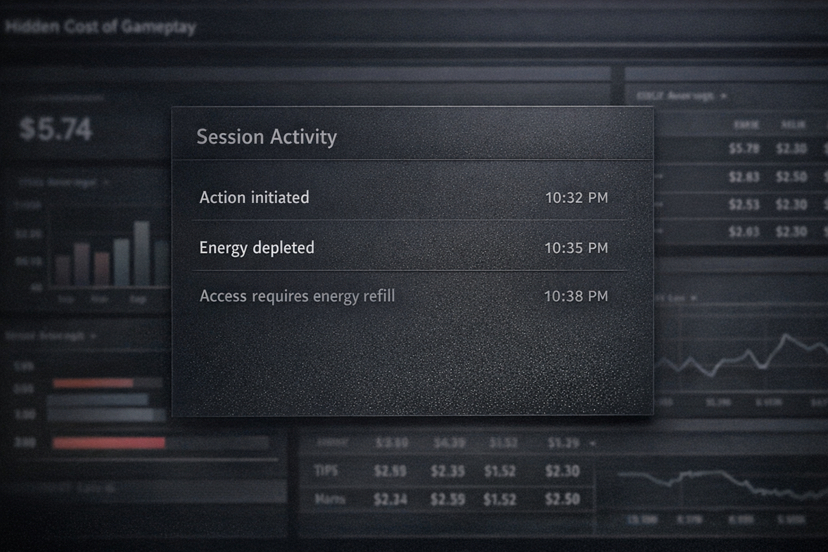
Pixels limits access to tokens not through rules but through the physics of the game itself. Those who invest in energy efficiency get more. Those who play passively get exactly as much as natural regeneration allows.
On one hand, this is a fair mechanic. The more you invest — the more you get. On the other hand — it means that the game has never been completely free. The price is just hidden in the mechanics and not in the price tag.
Most players notice this only when they start seriously calculating the real cost of their time in the game. And then all the numbers look completely different than they seemed at first.
Have you already calculated how much one hour in Pixels really costs — not in tokens but in time and money?
