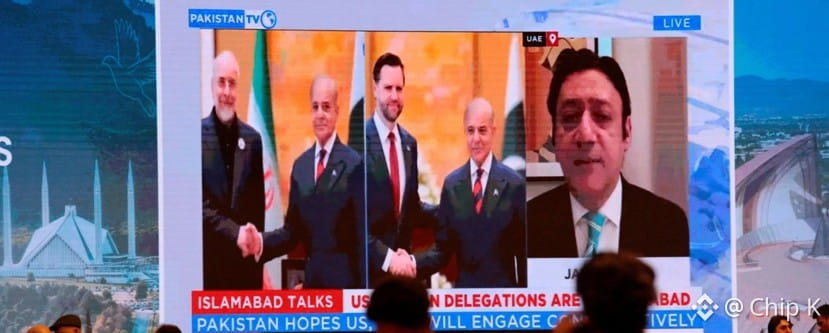
U.S. President Donald Trump has just revealed the possibility that the U.S. and Iran will renegotiate in Pakistan in the next 2 days, expressing hope for new developments amid tensions in the Middle East. This information was released just a few days after the previous round of negotiations in the capital of Pakistan ended without reaching any agreement.
“On the other side (Iran) has contacted us and they want to reach an agreement,” Mr. Trump said, while expressing confidence in Pakistan and praising the country’s Chief of Army Staff, General Asim Munir, for his effective coordination efforts.
On the content of the negotiations, the White House leader affirmed a hardline stance on Tehran's nuclear program. He does not support the proposal to suspend uranium enrichment for 20 years, as Washington's ultimate goal is to completely prevent Iran from acquiring nuclear weapons.
"Negotiation is a bargaining process, and one cannot expect to resolve all issues at once," expert Li added. Both sides start with high demands to probe the limits of the opponent's endurance, he noted.
"The short-term outlook for resuming negotiations is real and fairly strong, and the signals currently emerging reinforce that assessment," he added, noting that the time between negotiating rounds allows both sides to recalibrate their positions and demands.
"Both sides are ready to negotiate seriously, but their positions are still fundamentally very different," expert Siddiqa explained. She warned that if pressure on the ground escalates faster than diplomatic response capabilities, the risk of new confrontations will correspondingly increase.
The current deadlock follows weeks of escalating "tit-for-tat," starting with joint airstrikes by the US and Israel on Iran on February 28, after which Tehran retaliated by disrupting shipping activities through the Strait of Hormuz, causing a global energy crisis.