
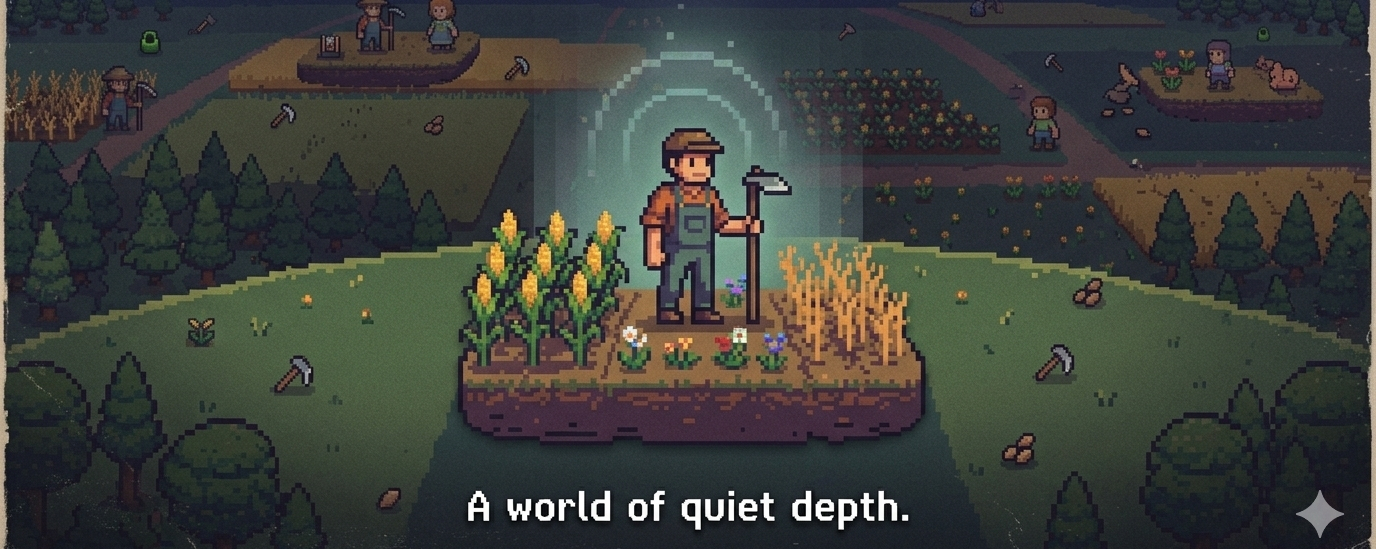
Pixels is one of those projects I keep revisiting—not because it proved everything right, but because it hasn’t quietly faded away like most others in a space that thrives on short-lived narratives.
At a glance, it still checks all the familiar boxes. A casual social Web3 game on Ronin. Farming, exploration, crafting, land, progression, community. It’s the kind of pitch that’s been repeated so often it almost loses meaning. Same structure, same token layer, same promise that this time the economy won’t eat the experience alive.
Most of the time, it does.
What makes Pixels different now is timing. It feels more interesting after the hype than during it. Earlier, it was easy to dismiss—just another project riding liquidity and attention. Now that the cycle has cooled and the easy optimism is gone, what’s left is harder to fake.
And that’s where things get real.
I tend to trust projects more when they start showing pressure. Not when everything looks perfect, but when cracks begin to form. That’s when you see whether there’s an actual world underneath—or just a structure designed to perform well for one cycle.
Pixels, despite everything, still feels like it leans toward being a world.
It’s slower. Calmer. Less aggressive. You farm, you build, you move around, you check in, you leave, you come back. It doesn’t try to overwhelm you. It doesn’t constantly push urgency. And that alone puts it in a different category than most Web3 games.
But none of that makes it immune.
Because the real conflict is always the same: the game wants time, the market wants speed. One builds habits, the other demands momentum. And when those two collide, things usually start to break.
We’ve seen it before. Rewards turn into sell pressure. Players turn into metrics. Updates get judged by price instead of experience. The environment is still there—but it feels different. Less like a place, more like a system being used.
That shift is subtle, but it changes everything.
Pixels hasn’t fully crossed into that territory—at least not yet. What keeps it relevant is that it seems to recognize the tension. It doesn’t feel as naive as many projects that came before it. Whether that awareness is enough is a different question.
Right now, it sits in that uncomfortable middle phase. The hype is gone. The easy crowd has left. What remains is the harder part—building something people return to without needing constant financial incentive.
That’s the real test.
Strip away the token narrative. Remove the market noise. Take away the excitement of price movement. What you’re left with is simple:
Do people still come back?
Because in the end, that’s all that matters. Not the roadmap. Not the promises. Not even the community noise.
Just behavior.
And with Pixels, that answer still isn’t fully clear—which is exactly why it’s still worth watching.