

HOW I BUILD ON BINANCE SQUARE
Hello everyone, let’s take a look back at the journey we’ve been through.
In Part 1, I shared the reason I started to know about Binance Square from a FOMO person, losing money and struggling in the market.
In Part 2, I talked about 5 important lessons that helped me change my mindset and perspective on the market.
And in this Part 3, I want to share a next step: How I am building every day on Binance Square in a very simple but sustainable way.
That is when I begin a new journey.
Not to become a KOL.
No need for large capital.
Also not the best trader in the market.
But simply starting to build day by day in your own way on Binance Square slowly, clearly, and consistently.
AND HERE ARE 3 WAYS I BUILD ON BINANCE SQUARE

No. 1️⃣ How I write posts - not to 'go viral', but to 'keep readers'.
My biggest mistake when writing on Binance Square was not lacking ideas, nor was it that I didn’t write well enough. But it was a wrong expectation from the start believing that a post must 'go viral immediately'. Because of that thinking, I put a lot of pressure on each post: it must have many views, it must have interactions, it must explode right from the first posts. And when that didn’t happen after 1-2 posts, I thought I wasn’t cut out for it, or maybe I should stop.
But when looking back, I understood that the operation of Binance Square was not as I imagined.
The algorithm does not assess whether you write well or poorly based on subjective feelings. It does not prioritize 'good-sounding' posts, but prioritizes reader behavior:
How many people stop at your post?
How many people read from start to finish?
How many people come back to read the next posts?
And those are the things that determine whether your post gets pushed far or not.
From there, I completely changed my mindset:
‘The first post doesn’t need 10,000 views. Just 100 real readers from start to finish is enough.’
And I start building content with 3 clear structural layers
1. Hook (the first 1-3 lines)
This is the most important part of the entire post. Its only goal is not to explain, but to keep readers engaged immediately. If the hook is not strong enough, the rest has almost no chance of being read. In this opening section, I often use 3 types of openings:
A true story from personal experience
An opposing viewpoint to the majority
Or a situation with strong emotions, easily creating empathy
For example, the types I often write:
‘I have lost money just because of one simple thing that most newcomers overlook…’
Or
‘There is a truth in crypto that no one tells you, but it determines whether you win or lose…’
2. Value (main content section)
After keeping readers engaged from the hook, I focus entirely on the 'value' of the post, meaning how to make readers feel that: 'continuing to read is not a waste of time.'
The goal of this section is very clear: make the reader feel they receive something truly useful after finishing the post. To achieve that, I do not write broadly or ramble. I always structure content in a simple yet digestible way:
Divide the content into 3 main points
Keep each idea within about 3-5 lines
Separate paragraphs clearly, avoid writing in one long block
The reason is very simple: reading habits on crypto are extremely fast and intense; readers often scroll quickly before deciding whether to continue reading, only stopping if they find the content easy to understand and grasp. And they can leave within seconds if they feel confused or if it’s too long
Therefore, instead of trying to cram a lot of information into one paragraph, I choose to 'package' each idea neatly and clearly.
When you can do that, the content is no longer just information, but becomes a smooth reading experience with a rhythm that makes people want to continue to the end of the post.
3. Insight (takeaway)
This is the part that many people often overlook… but for me, it is the most important part of the entire post. After providing information and value, I always try to leave at the end of the post a 'resonance' — something that makes the reader pause for a moment, think a little more. It doesn’t need to be too long. It doesn’t need to be too complicated. But it must be enough to linger with the reader. The Insight part could be:
An open question that encourages interaction
A personal viewpoint after observing the market
Or simply just a short statement, but strong enough to provoke thought
And sometimes, just the right closing statement can make the entire post be remembered much longer.
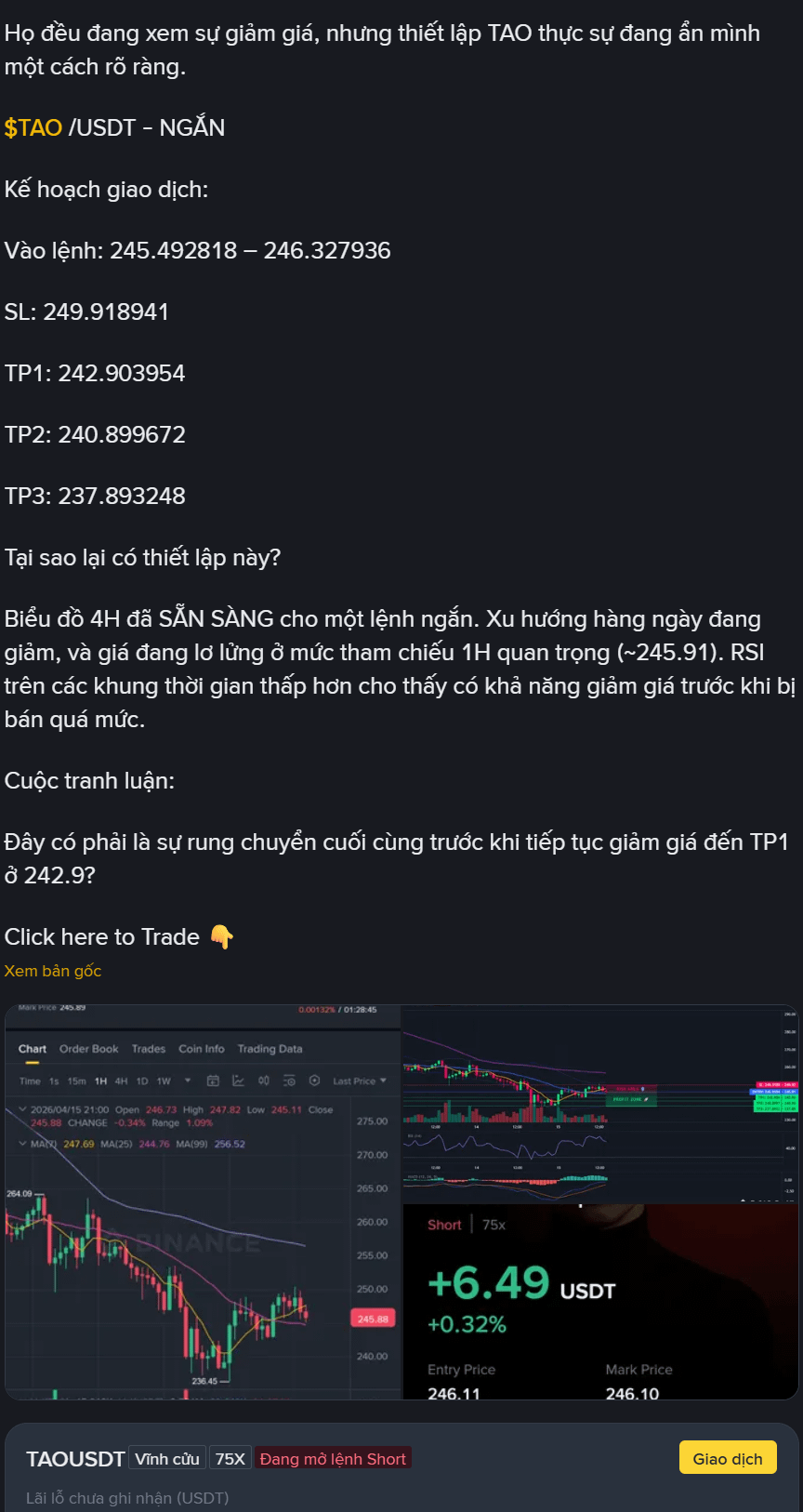
No. 2️⃣ How I keep interaction - not spam, but ‘trigger reactions’
When I first started, I simply thought that: just doing cross-interaction, exchanging follows, calling for likes and comments was enough for the content to spread. But the more I did, the more I realized that method does not bring sustainable effectiveness. 'Ask-give' interactions can create some initial numbers, but it does not create real readers. And more importantly, it does not help the content reach the right audience I want to target. From there, I began to understand that a more important interaction is what makes the post spread.
And behind that is the way the algorithm operates — it prioritizes content that generates natural reactions. Posts that make readers stop, think, respond… will be pushed further.
I completely changed my approach.
No longer trying to 'ask for likes,' 'ask for comments' in a forced way. No longer setting goals to manually pull interactions. Instead, I focus only on one thing:
Create content that makes readers want to respond. That response can come in many ways:
Nod because it resonates with their experience
Comment because they have encountered similar situations
Or even counter because they disagree and want to debate
Because I realize one thing very clearly:
People do not interact because you ask them to. They only interact when the content truly touches their thoughts or feelings.
And when you can do that, the interactions will come naturally without needing to 'ask', but will always appear.
Here are 3 ways I often do to maintain interaction
1. The closing always has an open question
At the end, I always try not to 'close' the post too early, but to leave an open point for readers to join the conversation. The simplest way I use is to ask a question. It doesn’t need to be too complicated, but must be enough to make readers pause for a moment and think.
For example:
‘What mistakes are you making in these 3 things?’
‘If it were you, would you choose to hold or exit?’
‘Are you trading based on emotions or a clear system?’
Such questions are not aimed at finding the right or wrong answer, but to provoke the natural response of readers. An effective question usually has 3 elements:
Easy to answer, does not make readers think too long
Linked to real experiences, so they feel 'I am in that.'
Touch on emotions or personal decisions, making them want to respond
When you achieve this, the post is no longer one-dimensional, but becomes an exchange. And those natural responses are what help the content last longer and spread better.
2. Create light debates
In the writing process, I often intentionally include viewpoints that have 'thought-provoking' qualities, but do not go in the direction of causing negative controversy.
For example:
‘Holding is not always discipline.’
‘Not every DCA is correct.’
‘90% of newcomers misunderstand risk management.’
These statements are not aimed at creating conflict or confrontation, but to open up a different space for readers to think. Because in reality, when a viewpoint goes against what people have always believed, the most natural reaction will be to stop and read more carefully.
My goal is very clear:
Make readers pause for a moment
Trigger the reaction of 'agree or disagree'
From there, create natural interactions, not forced
When the content is good enough to make people want to respond, it has surpassed the 'reading for knowledge' level and started to become a real exchange.
3. Responding to comments as part of the content
For me, the comment section is not just a place for feedback, but also a natural extension of the post. In fact, I see it as a continuation of the main content and also a 'mine of ideas' for the next posts. Many of my later content does not come from sitting and thinking of new topics, but from questions, viewpoints, or debates from readers in previous comments.
There are questions that make me look deeper into the issues. Some opposing opinions open up an entirely new direction for writing.
And importantly, the algorithm highly values posts that get a lot of attention, interaction reflected through comments, thus those posts will be pushed further, easier to go viral.
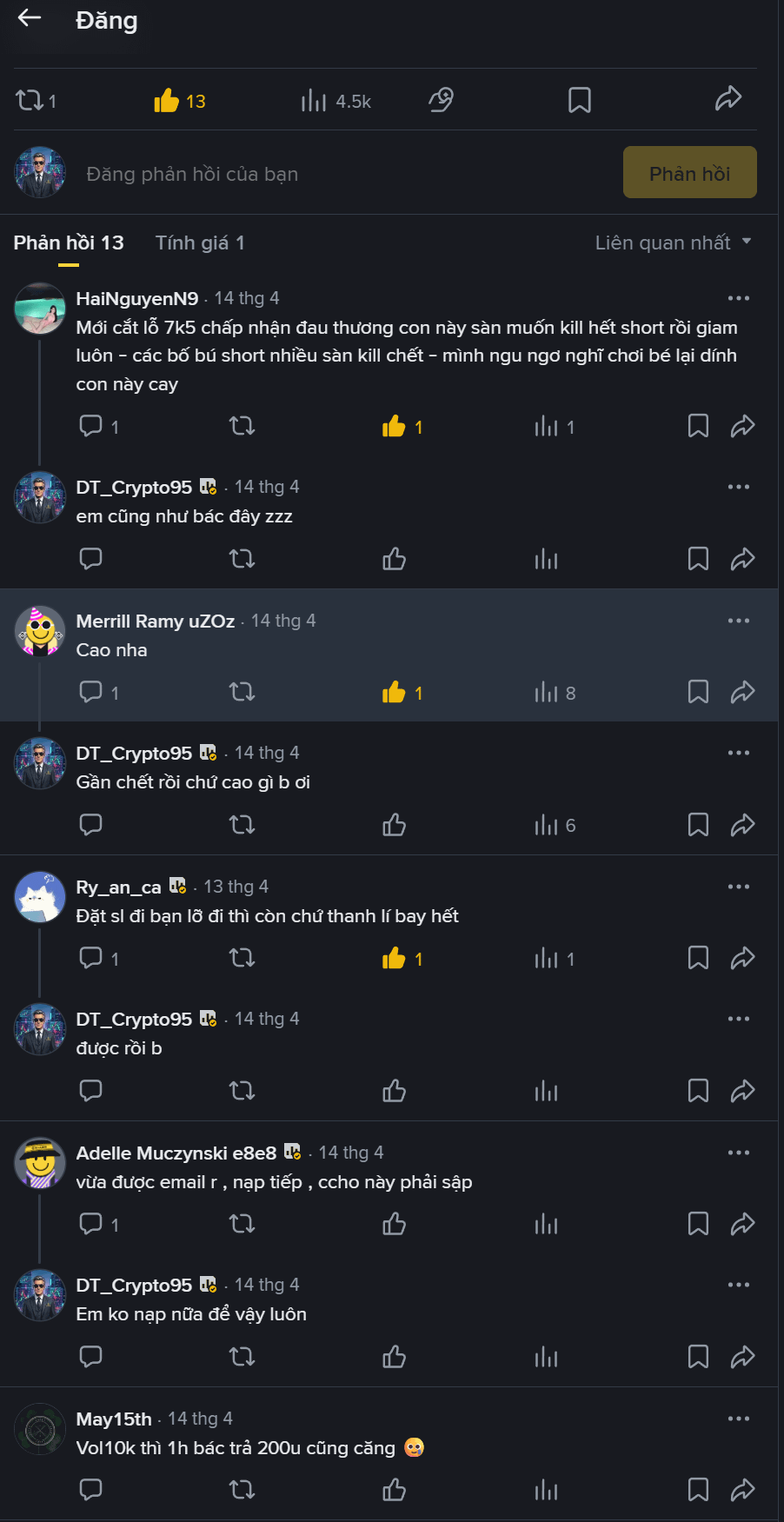
No. 3️⃣ How I increase followers - not chasing numbers, but building 'trust'
In the past, I made a fairly common mistake: overly focused on increasing followers by any means — from cross-interaction, exchanging followers, even at one point I thought about buying fake followers.
But the more I did, the more I realized everything was not effective as imagined. Those followers were not real, not the right target, and almost had no interaction. Even when my content was good, it was still not read correctly, by the right people.
The more I try to pull follows, the more the results drift away from what I really want to build.
After a while, I completely changed my approach. I started simplifying everything:
‘Don’t try to increase follows. Focus on how to make a person want to come back to read the next post.’
Because when a person truly feels the content is valuable, they will come back on their own. And when that happens enough times, following is no longer a goal — it becomes a natural result.
I gradually realized an important thing: Following does not come from persuasion or numbers, but from trust built up through each post. And that trust cannot be built overnight, but there is only one way: write clearly enough, and make it worthwhile for readers to want to come back.
And from there, I start focusing on the 3 most important things:
1. Consistency of content
I don't try to post a lot every day or chase content quantity. Instead, I choose to go slower but clearer:
Maintain a consistent theme: crypto mindset, trading, and discipline
Maintain a stable tone
And build a writing style with a distinct mark, not changing continuously
Because after a while, I realized something very important: Following does not come from a viral post. But from readers gradually recognizing who you are, what you are talking about, and what values you represent.
When the consistency lasts long enough, readers do not need to think much; they just need to glance at a few lines to know 'this is the type of content I should follow.'
2. Content series
Instead of writing disjointed posts, I started building content in a series format.
For example:
Post 1: Mistakes of newcomers
Post 2: Capital management methods
Post 3: Psychology when burning accounts
Post 4: How to read the market correctly
Each post is not standalone, but part of a bigger picture.
And when readers see value in a post, they will naturally tend to come back to look for the next parts.
That’s when the content starts to 'retain' readers, rather than just attract them once and then disappear.
And at this point, following is no longer a goal to pull but becomes the inevitable result of a systematic content journey.
3. Real value, not 'acting'
The crypto market is a very sensitive environment to falsehood. Readers do not need much time to realize that you are copying ideas, you are 'amplifying' experiences, or you have truly gone through what you are talking about. Therefore, I choose to do the opposite: go straight to the truth.
Recount real experiences
Including mistakes
Including losses and costs
Do not sugarcoat, do not beautify excessively. Because in the end, in the long run: Trust is much more important than views or follows.
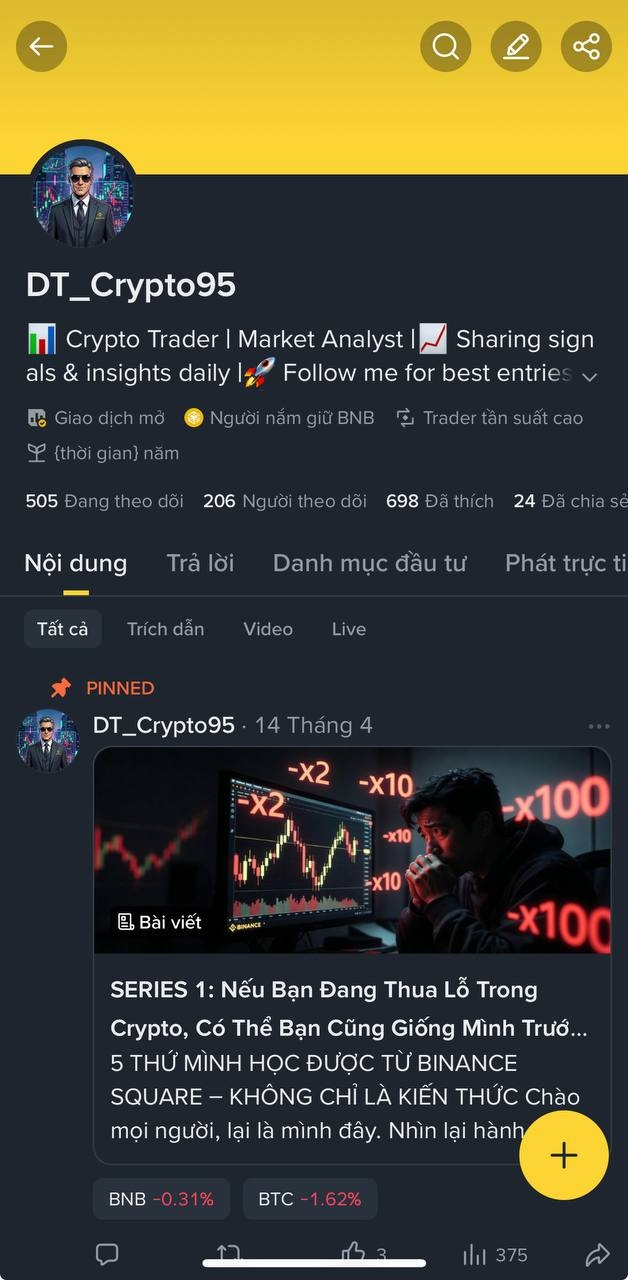
Finally, after a period of consistently writing content on Binance Square, I began to realize a few very clear things that may seem simple but create a big difference. Content does not need to be perfect; not every post has to go viral or spread widely. In fact, many of my posts do not achieve high views, yet still bring in followers steadily and consistently. The algorithm prioritizes 'real people'; it’s not the most beautifully designed post that wins. It’s the post that makes readers stop, read to the end, and feel a connection. Persistence is more important than technique; there is no 'growth hack' that lasts long.
The only thing that helps me go the distance is writing regularly, improving day by day, and understanding the readers better over time
I am not a KOL. I also did not start with any special advantages. But I believe one thing:
‘In Binance Square, you don’t need to be the best. You just need to be the one who doesn’t stop.’
If you are starting to build your own profile, don’t worry if no one has read the first post, don’t worry if you have no followers, don’t compare yourself to others. Because everyone has started from zero.
What about you?
‘Are you building content systematically, or still posting randomly?’
And that’s all my sharing in this series. Thank you for taking the time to accompany and read to the very last line. Your support is a huge motivation for me to continue writing and sharing more on this journey with Binance Square.
If you find this series valuable, please give me a like and follow because it helps me know that what I am doing is on the right track.
And this is not the stopping point.
In the next series, I will share how I make money on Binance Square.
See you in the next series
Thank you very much
#ItsBetterOnSquare
Additionally, if you want to participate in events from@Binance Vietnam I put the link below — you can refer to it for more information. 👇
https://www.binance.com/en/survey/80e983dd46b34a358f97b411f8cb921f