
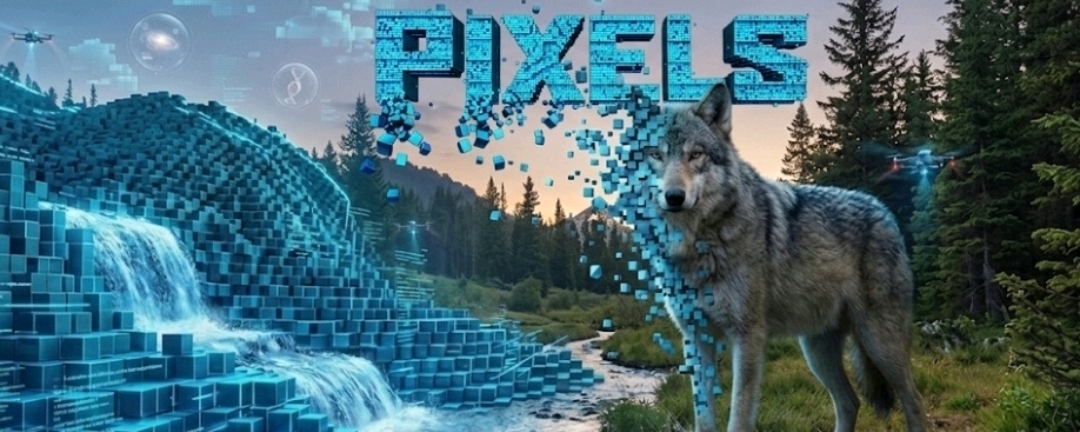
The Web3 gaming sector (GameFi) has gone through cycles of euphoria and brutal corrections. However, amidst the noise, Pixels ($PIXEL) has achieved something that very few projects manage: staying relevant, retaining its community, and evolving its economic model.
Why does #pixel continue to be the king of the Ronin network and what can we expect for the coming months? Here we analyze the pillars of its resilience.
1. The Transition to "Chapter 2": Sustainable Economy
The major mistake of Play-to-Earn games in 2021 was the infinite issuance of tokens without real utility. Pixels learned the lesson. With the implementation of Chapter 2, the team shifted the focus towards resource scarcity and effort-based progression.
Today, $PIXEL is not just a reward that players sell immediately; it is the necessary currency for:
Leveling up critical skills.
Acquiring exclusive items in the internal marketplace.
Participating in the Guild system, which promotes long-term retention.
2. "Stacked": Beyond a single game
The most important news for investors is not the game itself, but the infrastructure. With the launch of Stacked, Pixels is becoming a platform where other developers can build. This transforms $PIXEL into an asset with cross-utility in multiple mini-games, reducing the dependence on a single title.
3. Network Metrics and Adoption
Unlike other projects with "ghost communities", Pixels maintains hundreds of thousands of daily active users (DAU). Being on the Ronin Network gives it a competitive edge: nearly free transactions and direct access to the largest gaming community in Web3.
Market Outlook
From a technical standpoint, the token $PIXEL has shown a solid foundation. While the general crypto market fluctuates, the gaming sector tends to react strongly to product updates. The key for the coming months will be the integration of new lands and the expansion of the pet system.
Conclusion
Pixels is not trying to be the game with the best graphics, but rather the game with the best economy and community. In a space filled with empty promises, a functional product with millions of monthly transactions is an anomaly that deserves attention.