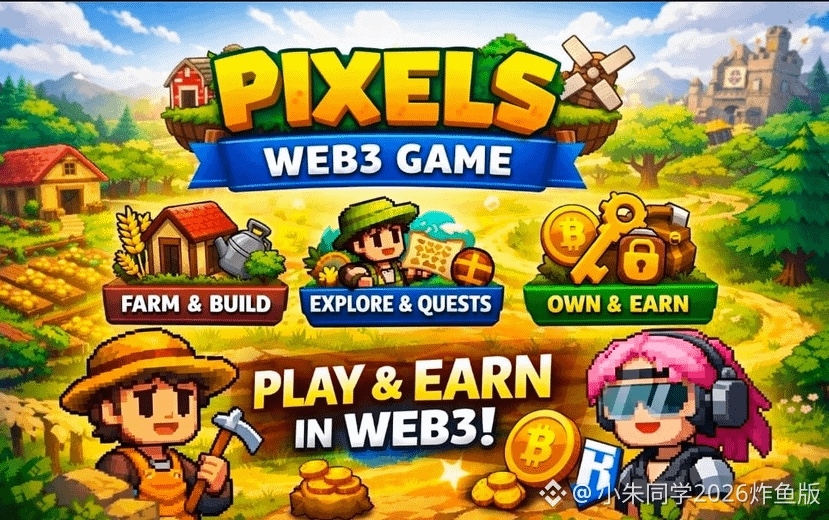
After years of bubbles and growing pains in the Web3 gaming industry, we finally welcome a true game changer. Stacked, a Rewarded LiveOps engine and AI Game Economist developed by the phenomenal blockchain game team Pixels over four years, officially opened to the public in March 2026. It is not only the productization of an internal tool forged from Pixels' life-and-death crisis but also represents a fundamental shift in Web3 gaming from 'token issuance and speculation-driven' to 'data-driven and sustainable operations.' With over 5 million active players, over 200 million rewards processed, over $25 million in ecological revenue contributions, and a reward input return rate (RORS) of over 131%, it proves that sustainable Play-to-Earn (P2E) is not a fantasy but a mature model that can be implemented, scaled, and profited. This article will deeply analyze seven dimensions—project origin, dual-end architecture, core technology, economic model, team genes, market value, and future vision—of how Stacked reconstructs the underlying economic logic of Web3 gaming and why it can become the most disruptive Web3 gaming infrastructure in 2026.
1. Project Origin: The Life-and-Death Trials of Pixels and the Birth of Stacked
To understand the value of Stacked, one must first return to the growth journey of Pixels. As the most successful Web3 farming exploration social RPG game on the Ronin chain, Pixels reached millions of daily active users, tens of millions of dollars in revenue, and over 10 million players at its industry peak from 2024 to 2025, becoming a benchmark project for Web3 games. However, few know that Pixels' success was not smooth sailing but went through several near-death crises, and Stacked was born as a "lifeline" during these crises.
From 2022 to 2023, Pixels adopted an all-on-chain reward mechanism at an early stage, distributing all in-game rewards directly on-chain. This design seemed to align with the decentralized concept of Web3, but it became a fatal flaw: bots, cheaters, and Sybil attacks flooded in, crazily harvesting tokens and NFT resources, pushing real players out of the ecosystem, leading to rapid inflation and collapse of the game economy. Pixels team founder Luke Barwikowski admitted in multiple interviews that at one point, the team's bank account was left with only $800, and the project was on the brink of collapse. It was this life-and-death crisis that made Luke realize that the core issue with traditional P2E is not about "making money," but about "who to reward, what to reward, and how to reward." Blindly issuing tokens will only attract speculators, not real players; rewards must be deeply tied to players' real contributions, game retention, and economic health to be sustainable.
Subsequently, the Pixels team allocated half of their resources to four core areas: LiveOps (real-time operations), reward distribution, anti-cheat, and economic design. They abandoned all-on-chain rewards and shifted to a data-driven precision reward system, establishing the Return on Reward Spend (RORS) metric—which indicates how much revenue return can be generated for every $1 spent on rewards. Only when RORS is greater than 1 can rewards be a sustainable profit center rather than a consumable marketing cost. After two years of iteration, Pixels formed a complete reward engine internally: identifying real players through behavioral data analysis, accurately matching reward types and issuance timing, tracking reward ROI in real-time, and building a robust anti-cheat system. This system allowed Pixels to successfully emerge from the crisis, achieving stable RORS above 3:1 for several consecutive months, meaning every $1 spent on rewards could earn back $3 in revenue.
By the end of 2025, the Pixels team realized that this internally refined reward system could not only serve the Pixels ecosystem but also address common pain points in the entire Web3 game industry. Therefore, they stripped, reconstructed, and productized this system, naming it Stacked, and officially launched it to the public in March 2026, opening it up to all Web2 and Web3 game studios. Thus, Stacked evolved from an internal tool of Pixels to an industry-wide rewarded LiveOps infrastructure, opening a new era for the Web3 game economy.
2. Dual-End Architecture: Player Side Experience Innovation, Studio Side Efficiency Revolution
Stacked's core competitive advantage lies in its unique dual-end architecture design—creating a one-stop Play & Earn experience on the player side while providing AI-driven LiveOps solutions on the studio side, with data intercommunication and value closed loops, satisfying the simple and easy-to-use needs of ordinary players while addressing the complex operational pain points of game studios.
(1) Player Side: Zero threshold, privacy first, real earnings
For ordinary players, Stacked is a reward center app (app.stacked.xyz) that requires no understanding of blockchain and no upfront investment, supporting one-click login with phone numbers, emails, Apple, Google, and TikTok without passwords, lowering the participation threshold for Web3. Its core design philosophy is "rewarding real behavior, not speculative behavior," with three core functions building a complete player value closed loop:
1. Play & Earn: Players can normally play in Pixels, Pixel Dungeons, Sleepagotchi, and other ecosystem games. Stacked's backend automatically identifies behavioral data, matches personalized tasks (such as level completion, consecutive wins, exploration progress, social interactions, etc.), and completing tasks earns $PIXEL tokens and Stacked points rewards, with balances increasing in real-time. Rewards are based on players' real gaming contributions, not ineffective behaviors such as botting or account farming, completely eliminating bots from exploiting rewards.
2. Create & Share: Players can record highlight videos of the game, write guides, and share gaming experiences. The content can earn up to 2x community contribution multiplier (Community 2.0x) after being verified by the community. This mechanism encourages players to create high-quality content, feeding back into the game ecology and forming a positive cycle of "playing games - earning rewards - creating content - earning more rewards." The real player cases displayed on the official website are very convincing: some players opened sneaker stores using Stacked earnings, while others played in shifts with their partners to earn motorcycles, computers, phones, and other physical assets, proving that Play-to-Earn can become a stable income source for ordinary people.
3. Cash Out: Supports immediate cash withdrawal of $PIXEL tokens, with diversified withdrawal channels such as PayPal, gift cards, and in-game items expected to launch in the next 1-2 months, breaking down the exchange barriers between cryptocurrencies and fiat currencies. At the same time, Stacked adheres to the principle of privacy first, only using anonymized gaming behavior signals to match tasks, and will never collect or sell players' personal identity information, protecting user privacy and security.
In addition, Stacked has designed a multi-level reward multiplier mechanism, including Session 1.5x, Guild Bonus, and 14-day consecutive win rewards, enhancing player activity and retention. As of April 2026, the Stacked player side has accumulated over 5 million active users, with total rewards exceeding $200 million, becoming one of the largest reward platforms in the Web3 game field.
(2) Studio Side: AI Game Economist, unlocking top operational capabilities with one line of code
Stacked's B2B core value lies in providing game studios with a "ready-to-use" rewarded LiveOps engine and AI Game Economist, solving pain points in traditional game operations such as data absence, blind rewards, anti-cheat difficulties, and untraceable ROI. Any Web2 or Web3 game studio can simply add a line of code to integrate the Stacked SDK and gain access to all the operational capabilities accumulated by the Pixels team over four years, without needing to build a professional data science team, significantly reducing operational costs and technical barriers.
1. AI Game Economist: This is Stacked's most disruptive feature and the industry's first AI game economic brain. Studios can ask questions in natural language such as "Why are D3-D7 whale players churning severely?" "How can we improve new player 7-day retention?" "How should the reward budget be allocated for maximum efficiency?" The AI automatically analyzes vast amounts of player behavior data, generating detailed LiveOps reports and providing actionable reward schemes, A/B testing suggestions, and attribution measurement results. Luke stated in an interview: "We have packaged all the data science models from Pixels' internal years into an AI Agent, giving any studio the capabilities of a top-tier game economics team."
2. Precise Anti-Cheat System: Based on the behavioral data accumulation of millions of real players in the Pixels ecosystem, Stacked builds a powerful model to combat bots, cheaters, and Sybil attacks, accurately identifying ineffective behaviors and ensuring rewards are only distributed to real players. This capability is unmatched by traditional P2E platforms and is the core guarantee for Stacked to achieve a sustainable economy.
3. Real-time ROI Tracking and Attribution: Stacked can track the effectiveness of every reward in real-time, accurately calculating key metrics such as RORS, retention improvement, revenue growth, and LTV (lifetime value of players), allowing studios to clearly grasp the real return on reward investment. Internal testing data shows that Stacked's personalized reward activities for players who have not consumed for over 30 days increased conversion by 178%, active days by 129%, and RORS reached 131%, proving that rewards can be transformed from a cost center into a profit center.
4. White Labeling and Flexible Integration: Stacked supports white labeling deployment, allowing studios to completely hide the Stacked brand, making players think the reward system is a native feature of the game; it also supports multi-chain adaptability (currently mainly on the Ronin chain, with future expansions to Ethereum, BNB Chain, etc.), compatible with both Web2 and Web3 games, with a very wide range of applications.
Currently, Stacked has been stably operating for years in ecosystem games like Pixels, Pixel Dungeons, and Chubkins (Sleepagotchi), handling over 200 million reward distributions, helping Pixels achieve over $25 million in revenue contribution, verifying its production-level stability and commercial value.
Three, Core Technological Barriers: Data, AI, and Anti-Cheat Triple Moat
Stacked is not a conceptual product but a 'built-in production' practical-level system. Its core technological barrier stems from the four years of experience accumulated in defensive usage, massive behavioral data, and AI algorithm iterations at Pixels, forming a hard-to-replicate triple moat:
(1) Massive Behavioral Data Barrier
Stacked relies on the real behavioral data of over 10 million players and millions of daily active users in the Pixels ecosystem to construct the world's richest Web3 game player behavior database. This data covers all-dimensional characteristics such as player gaming habits, consumption preferences, churn patterns, and content creation tendencies, providing a solid data foundation for AI analysis and precise rewards. Compared to other P2E platforms that start from scratch, Stacked has a natural data advantage, allowing it to more accurately identify player types, predict behavior trends, and optimize reward strategies.
(2) AI Game Economist Technology Barrier
Stacked's AI Game Economist integrates cutting-edge technologies such as machine learning, natural language processing, cohort analysis, and predictive modeling to achieve full-process automation from data to decision-making. It can not only analyze historical data but also predict future trends, such as identifying high churn risk players in advance, recommending optimal reward timing, and automatically generating operational activity plans. This technological barrier requires long-term data accumulation and algorithm iteration, making it difficult for competitors to imitate in the short term.
(3) Anti-Cheat Scalability Barrier
The Pixels team has accumulated a wealth of defensive experience and cheat characteristic databases over four years of operations, continuously combating bots, cheaters, and Sybil attacks. Stacked's anti-cheat system is built on these practical experiences, accurately identifying various cheating methods and scaling to meet the cheating detection needs of millions of players online simultaneously. This barrier is something traditional P2E platforms lack the most and is key to Stacked's ability to ensure economic health.
In addition, Stacked adopts privacy computing technology to achieve data anonymization, protecting user privacy while ensuring data value, complying with global data compliance requirements and laying the foundation for long-term scalable development.
Four, Economic Model Reconstruction: Upgrading the ecological value of $PIXEL
The launch of Stacked not only reconstructs the operational logic of Web3 games but also reshapes the value narrative of the $PIXEL token, transforming it from a single game token into a cross-ecosystem loyalty currency and reward core.
(1) The Core Positioning of $PIXEL
$PIXEL is the native token of the Pixels ecosystem and the core reward currency and cross-game loyalty credential of the Stacked ecosystem. In the Stacked system, the use of $PIXEL has expanded from single in-game consumption in Pixels to various scenarios such as reward distribution, staking income, and community governance. As more external games connect to Stacked, the usage scenarios of $PIXEL will continue to expand, and the demand side will keep growing, forming value support.
(2) Economic Model Optimization
To avoid the traditional P2E token inflation problem, the Pixels team optimized the PIXEL economic model: Stacked's daily rewards adopt a mixed mode of "PIXEL + USDC + Stacked points" to reduce direct selling pressure on PIXEL; at the same time, a monthly ecological pledge reward pool of 28 million PIXELs is established, allowing holders to obtain additional income through staking, enhancing token lock-up amounts; in the future, governance rights for $PIXEL will gradually be opened up, allowing holders to participate in Stacked ecological decision-making, strengthening community consensus.
Luke emphasizes that Stacked's goal is to make rewards a "profit center," not a marketing cost. By providing precise rewards to enhance player retention and consumption, driving ecological revenue growth, and thereby supporting the value of $PIXEL, a positive economic closed loop of "rewards - retention - revenue - token value" is formed, completely bidding farewell to the inflation dead loop of traditional P2E.
Five, Team Gene: Nomadic Entrepreneurs and Practical Teams
The success of Stacked is inseparable from the practical experience and unique philosophy of its core team, especially the personal traits and strategic vision of founder Luke Barwikowski.
Luke Barwikowski, the founder, CEO, and CTO of Stacked and Pixels, is a highly legendary nomadic entrepreneur. He taught himself programming at 12, mined Bitcoin in his basement at 13-14, sold his first app at 18, and studied economics and computer science at the University of Michigan. At 19, he rejected a remote offer from Workday for an annual salary of $130,000, choosing to travel the world, sailing the Pacific and Africa during the pandemic in New Zealand while launching the Pixels project. Now, he spends half his time in a camper and half on a sailboat, known as the "Startup Cowboy."
Luke's core philosophy runs through the design of Stacked: "The future of Web3 games is not to create games for crypto players, but to create games for ordinary players, using crypto technology as the backend." "We reward real contributions—retention, progress, consumption, content creation, rather than speculative behavior." This philosophy of "returning to the essence of gaming and rejecting speculative bubbles" makes Stacked stand out in the restless Web3 industry.
The core members of the Stacked team are all veterans from Pixels, skilled in data science, infrastructure building, rapid experimentation, and anti-cheat research and development, with strong practical abilities and execution power. The team's investors include top institutions such as Animoca Brands, Framework Ventures, and Mechanism Capital, providing resource support for project development.
Six, Market Value: Ending Traditional P2E, Defining New Standards for Web3 Games
The traditional P2E model has three fatal flaws: first, the flood of bots leads to rapid economic collapse; second, blindly issuing rewards results in extremely low RORS and is unsustainable; third, players only come for tokens, lacking game stickiness. Stacked solves these three problems through precise rewards, AI optimization, and anti-cheat capabilities, becoming a benchmark for transformation in the Web3 game industry.
For the Web3 game industry, the emergence of Stacked marks a transformation from "pursuing false DAU and token prices" to "pursuing real revenue, retention, and sustainable economy." Luke predicted in the 2026 industry trend interview: "In 2026, to survive, Web3 games must abandon vanity metrics and turn to real business value." Stacked is the core tool for this transformation, allowing game studios to focus on game development without worrying about economic system collapse; enabling players to enjoy gaming while receiving reasonable returns; and bringing Web3 games back to the essence of "being fun and valuable."
For the Web2 game industry, Stacked's rewarded LiveOps engine also holds enormous value. Web2 games spend hundreds of billions of dollars on advertising customer acquisition each year, with low conversion rates and uncontrollable ROIs. Stacked can help Web2 games convert advertising budgets into player rewards, enhance retention and consumption through precise rewards, and achieve measurable ROI closed loops, opening up new pathways for Web2 game operations.
Seven, Future Vision: From Ecosystem Tool to Industry Infrastructure
Stacked's short-term goal (by 2026) is to complete the launch of the iOS/Android app, expand withdrawal channels such as PayPal and gift cards, and connect more external game studios to expand player scale and ecological influence; the medium-term goal is to become the standard rewarded LiveOps infrastructure for the Web2 and Web3 game industry, covering thousands of games globally; the long-term vision is to build a globally sustainable "reward economy" system, converting marketing budgets from various industries (games, e-commerce, fitness, education, etc.) into user rewards, allowing real contributions from users to be rewarded, overturning the traditional advertising business model.
Luke stated: "Our ultimate goal is to let the reward economy replace the advertising economy, allowing value to return to those who create value." With the continuous evolution of AI technology and the ongoing expansion of the ecosystem, Stacked is expected to become an important infrastructure in the Web3 and even global digital economy, opening a new era of value distribution.
Conclusion
Stacked is not just another P2E platform, but a revolution in the Web3 game economy. It is rooted in the life-and-death struggles of Pixels, based on the real needs of players, using data and AI technology to build a sustainable reward economy closed loop. It proves that the core of Web3 games is not speculation, but value creation; not issuing tokens to attract new users, but precise operations; not short-term bubbles, but long-term value.
In the reshuffle and reconstruction of the Web3 game industry in 2026, Stacked, with practical data, technological barriers, and a clear vision, has become the most promising industry leader. As the ecosystem continues to expand and technology iterates, Stacked will drive Web3 games towards maturity, making $PIXEL a value credential across ecosystems, creating a win-win future for ordinary players and game studios.