
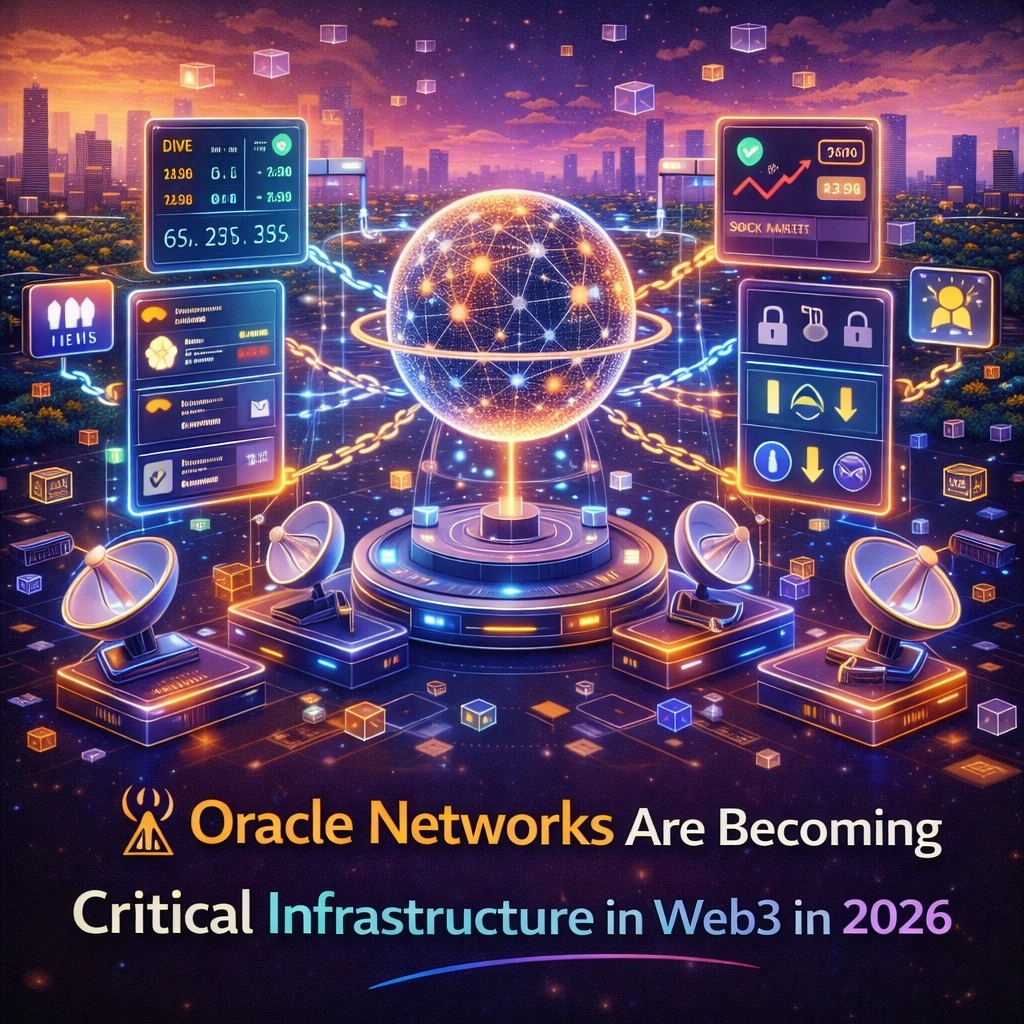
Blockchains are powerful, but they cannot access real-world data on their own. In 2026, oracle networks are becoming a crucial layer of Web3, connecting smart contracts with external data like prices, events, and APIs.
This evolution is turning oracles from a supporting tool into core infrastructure for the entire ecosystem.
🔗 What’s Changing in Oracle Technology
Earlier oracle solutions were limited and sometimes relied on a small number of data providers. Now, modern oracle networks are focusing on decentralization, accuracy, and reliability.
Key developments include:
• Decentralized data feeds from multiple sources
• Real-time updates for financial and non-financial data
• Cross-chain data compatibility
• Secure data verification mechanisms
The focus is shifting from simple data delivery to trust-minimized data systems.
🚀 Why This Trend Is Growing
As smart contracts handle more complex use cases, reliable external data becomes essential. Without accurate data, even the best smart contracts cannot function properly.
Main growth drivers:
• Expansion of DeFi requiring price feeds
• Growth of real-world applications on blockchain
• Demand for secure and tamper-proof data
• Integration with multiple blockchain ecosystems
This makes oracles a foundational component of Web3 infrastructure.
📊 Market Impact
Oracle networks could see increasing importance as more applications depend on external data. Projects providing reliable oracle services may gain strong long-term value due to their essential role.
They also enable new use cases like insurance, gaming, and automated financial products.
🔮 Final Outlook
Oracles are becoming the bridge between blockchain and the real world.
If innovation continues, they could support a wide range of applications far beyond current use cases.
In the long term, Web3 cannot scale without reliable data — and oracle networks are key to making that possible.
#Web3 #CryptoTrends #Oracles #Blockchain #DeFi #BinanceSquare #Write2Earn