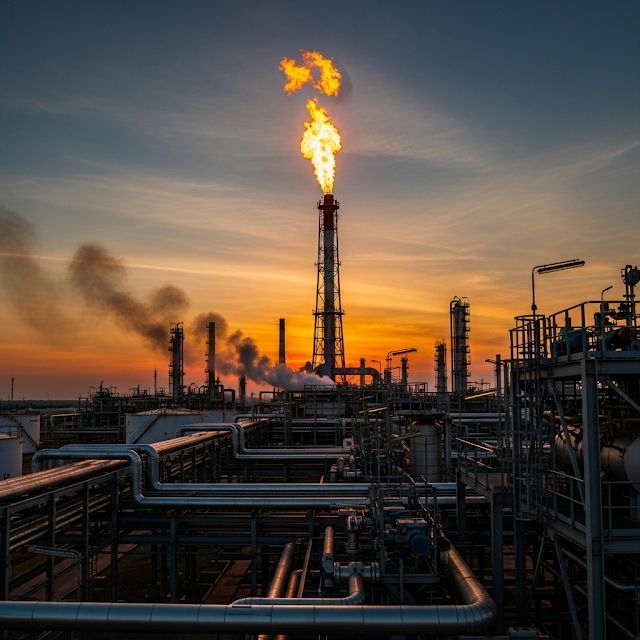
The global oil industry is traditionally considered one of the most conservative and capital-intensive industries. However, digital transformation is gradually changing its structure. One of the key drivers of these changes is blockchain — a distributed ledger technology capable of ensuring transparency, security, and automation of business processes.
The integration of blockchain into the oil sector opens fundamentally new opportunities: from optimizing supply chains to creating digital assets backed by real resources.
Problems of the traditional oil industry
Despite the scale and significance, the industry faces a number of systemic problems:
Low transparency of supply chains
High transaction costs in international settlements
Complex and lengthy document flow procedures
Fraud and data manipulation risks
Limited access to investments for individual projects
Most of these problems are related to the lack of a single trusted environment for interaction between market participants — extracting companies, traders, logistics operators, and investors.
The role of blockchain in transforming the industry
1. Transparency and traceability of supplies
Blockchain allows recording each operation — from oil extraction to its delivery to the end consumer. All data is recorded in an immutable ledger, which eliminates the possibility of information forgery.
This is particularly important for:
control of raw material origin
compliance with environmental standards
confirmation of supply volumes
2. Smart contracts and automation
The use of smart contracts allows automating key processes:
settlements between parties
execution of supply conditions
insurance payments
lending against oil supplies
Smart contracts reduce human factors and speed up transactions, lowering costs and risks.
3. Tokenization of oil assets
One of the most promising areas is tokenization:
fields
infrastructure facilities (refineries, pipelines)
supply contracts
future income streams
The creation of digital tokens backed by real assets allows:
to attract investments through global markets
increase asset liquidity
to break large projects into accessible investment shares
This is especially relevant for emerging markets and private companies.
4. Optimization of international settlements
The oil market is a global system with many currencies, banks, and intermediaries.
Blockchain allows:
to conduct settlements faster (within minutes)
reduce fees
minimize currency risks
to use stablecoins and digital currencies
This makes settlements more efficient compared to traditional banking mechanisms.
5. Data management and cybersecurity
Blockchain provides:
secure data storage
the impossibility of substitution
decentralized access
This is critical for the industry, where errors or data leaks can cost millions of dollars.
Practical application and cases
Real examples of blockchain implementation are already appearing in the market:
digital platforms for trading oil
fuel supply tracking systems
tokenization projects of energy assets
integration with IoT devices for monitoring extraction
Large energy companies and trading houses are beginning to test and implement such solutions to increase efficiency.
Impact on the investment market
Blockchain changes the approach to investments in the oil industry:
lowers the entry threshold for investors
makes investments more transparent
opens access to global capital
allows the creation of hybrid financial instruments
Investors gain the opportunity to participate in projects that were previously only available to large corporations and funds.
Risks and limitations
Despite the potential, there are also limitations:
legal uncertainty in different countries
the need for standardization of technologies
resistance from traditional market participants
integration with existing infrastructure
Regulation of digital assets and tokenization remains an important factor.
Prospects for development
In the coming years, it is expected:
mass adoption of blockchain in supply chains
growth of tokenized energy assets
integration with central bank digital currencies (CBDC)
development of DeFi tools in energy
This will lead to the formation of a new digital ecosystem of the oil market.
The integration of blockchain into the oil industry is not just a technological upgrade, but a fundamental change in the model of interaction among market participants.
Transparency, automation, and decentralization are becoming the new industry standards. Companies that are the first to implement these technologies gain a competitive advantage and access to new sources of capital.
In the context of the global transformation of energy, blockchain becomes a tool capable of increasing efficiency, reducing risks, and opening new horizons for the development of the oil industry.