
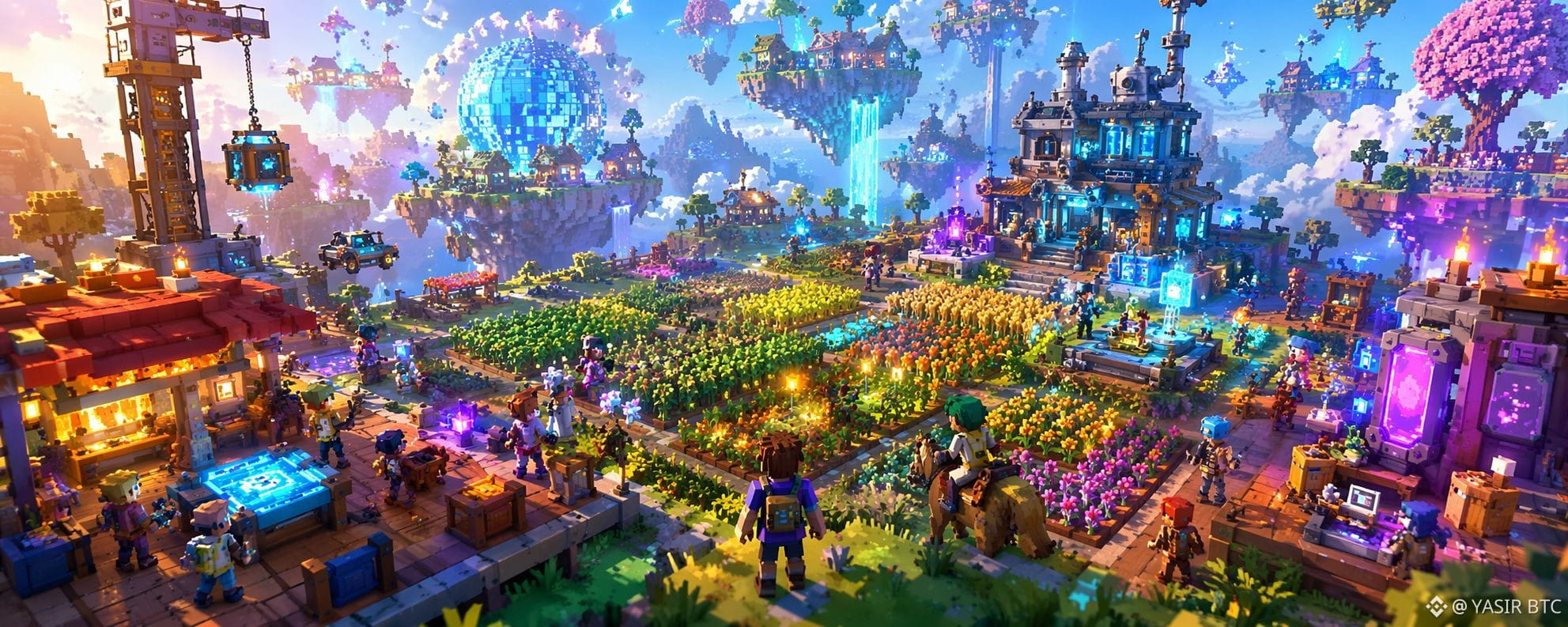
If someone had told me two years ago that I'd be spending my evenings harvesting virtual crops on a blockchain game and actually making money doing it I would have laughed. But here we are in 2026, and Pixels has quietly become one of the most active decentralized applications on the planet. With a fresh Binance campaign shining a spotlight on PIXEL, now is the right time to break down what this project actually is, why it matters, and whether it deserves a spot in your portfolio.
Let's get into it.
What Exactly Is Pixels?
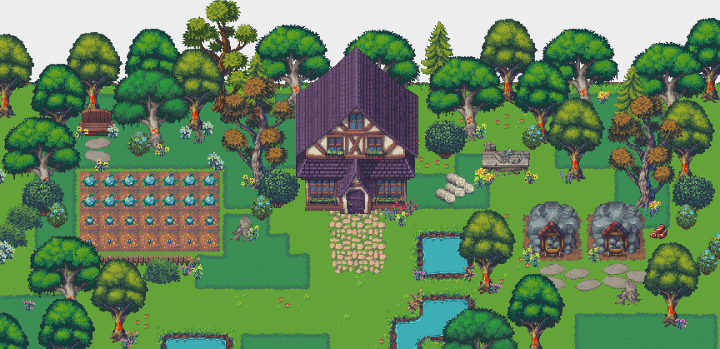
Pixels is a Web3 social farming RPG think Stardew Valley meets blockchain. You explore an open world, farm resources, build on land, join guilds, and trade with other players. The pixel art style keeps it lightweight and accessible, which is intentional. The team's core philosophy has always been "fun first, crypto second." That single decision is what separates Pixels from the graveyard of GameFi projects that front loaded rewards and collapsed within months.
Originally built on Polygon, the game migrated to the Ronin network the same blockchain that powers Axie Infinity. That move was a turning point. Ronin was built specifically for gaming, meaning faster transactions and near zero fees. For a game where you might make dozens of small in game actions daily, that infrastructure matters enormously.
The PIXEL Token What It Actually Does
This is where most articles get lazy. They list features without explaining the "why." So let me be direct.
PIXEL is the premium currency inside the game. It is not used for buying basic seeds or simple items those use a softer in game currency called Coins. PIXEL is reserved for high-value actions: VIP memberships, minting Pet NFTs, joining or forming guilds, and purchasing cosmetic upgrades that carry real social weight in the community.
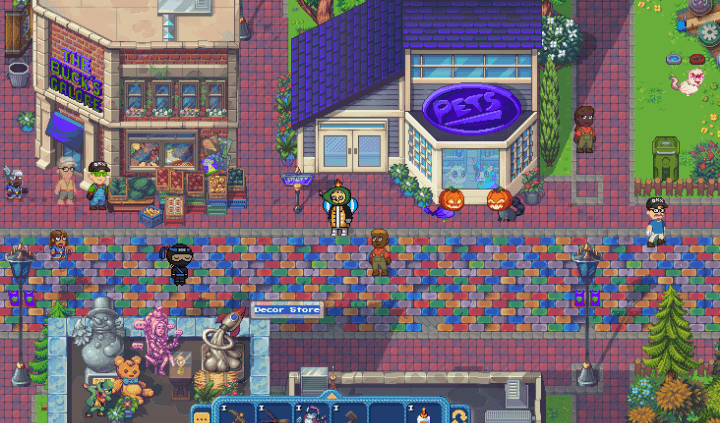
Why does this structure matter? Because it creates genuine demand. When you buy PIXEL, you are not just speculating you are buying access to status, progression, and community inside one of the most active digital economies on earth. That is a fundamentally different value proposition than most crypto tokens, which exist purely for speculation.
A portion of every PIXEL spent in game is either burned permanently or sent to a community treasury. This means the more people play, the less PIXEL exists in circulation. Supply goes down, demand goes up. It is a simple economic loop, but it works and it is the reason Pixels avoided the fate of earlier GameFi projects.
The BERRY Lesson Why History Matters Here
To understand why PIXEL's tokenomics are actually smart, you need to know about BERRY. In the early days, BERRY was the main in game currency. Players could earn it freely, which sounds great until you realize that unlimited earning means unlimited inflation. The token's value collapsed under its own weight. Players who held BERRY watched their earnings evaporate.

The team did something rare in crypto they admitted the mistake and fixed it. In 2024, BERRY was phased out and replaced with a two currency model: PIXEL as the hard, scarce premium currency, and Coins as the soft everyday currency. Think of it like gold versus cash. You spend cash at the grocery store. You store gold in a vault.
This pivot is now considered the gold standard for Web3 game economies. Every serious GameFi project launched in 2025 and 2026 has studied the Pixels model. That credibility matters when you are evaluating whether a project has legs
Chapter 3 The Industrial Expansion
The version of Pixels most people knew in 2023 was a simple farming simulator. What exists in mid-2026 is something else entirely.
The latest major update, called Chapter 3 or the Industrial Expansion, transformed the game into a full economic simulation. Players now manage supply chains across different land plots, negotiate resource trades with allied guilds, and compete for rare materials found only on specific land types like Space or Arctic territories. One player farming alone can no longer compete with a coordinated guild of 200 players running an industrial operation.
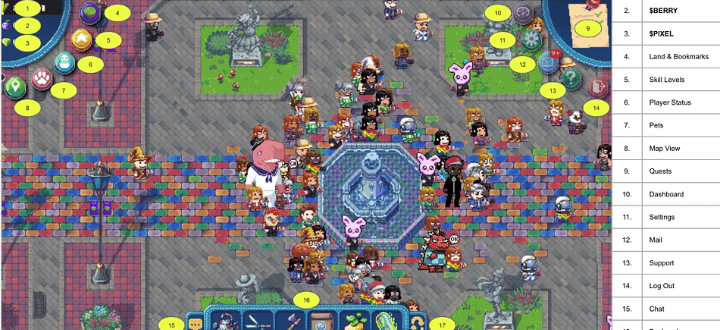
Real life parallel: imagine a small corner store trying to compete with a Walmart supply chain. That is the dynamic now playing out inside Pixels. The solo farmer carves out a niche while the large guilds dominate bulk production. This complexity keeps experienced players engaged and creates real economic tension that drives PIXEL demand.
Land The Scarcest Asset in the Pixelverse
There are only 5,000 land plots in Pixels. That number does not change. Every resource harvested on a land plot generates a passive royalty for the land owner. If you own land near a rare mineral deposit or a high traffic area, your income scales accordingly.
People have started comparing this to owning oil producing land in the physical world. The parallel is not perfect, but it is not crazy either. Scarcity plus utility plus a growing user base is a proven formula for asset appreciation. Early land buyers in Pixels have already seen significant returns, and with the user base still growing, the scarcest plots remain highly sought after.
The Social Reputation System A Brilliant Anti Bot Mechanism
One of the quietest but most important features added in the 2026 update is the Trust Score system. In a world drowning in AI bots, Pixels built an on chain reputation system that rewards genuine human players with better quest rewards and lower marketplace fees.
Your Trust Score is influenced by your PIXEL holdings, your history of social interactions, and your overall activity pattern in the game. High reputation players are visibly different from newcomers they get access to premium areas and exclusive opportunities.
This creates a secondary reason to hold PIXEL beyond just gameplay. Your token balance becomes a form of social proof and identity verification inside one of the largest digital communities on earth. No other gaming token has cracked this problem as elegantly as Pixels has.
1.2 Million Daily Users The Number That Should Stop You in Your Tracks
The average Web3 game struggles to maintain 250,000 daily active users. Pixels is sitting at 1.2 million. Its 30 day retention rate is 68%, against an industry average of around 35%. These are numbers that traditional mobile gaming studios would envy.
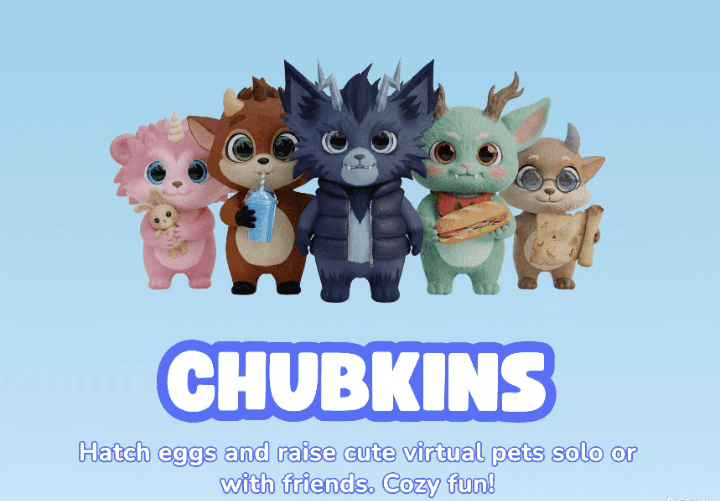
Why does this matter for the PIXEL price? Because every one of those 1.2 million daily users is a potential buyer of PIXEL. Every VIP membership purchased, every guild joined, every Pet NFT minted burns or locks PIXEL. At 1.2 million daily users, that is a constant, daily demand pressure on a token with a shrinking circulating supply. The math is not complicated.
AI Has Entered the Pixelverse
This one genuinely surprised me. By 2026, Pixels has integrated Large Language Model-powered NPCs into the game. These are not your standard "press X to talk" characters. You can have actual conversations with them, and those conversations can lead to hidden quests, rare items, or trade opportunities that nobody else knows about.
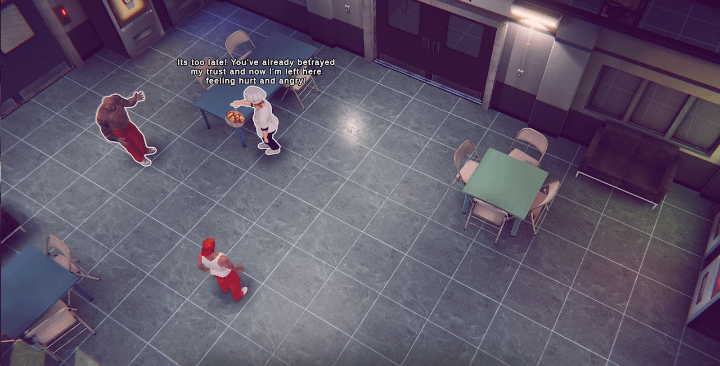
Beyond immersion, AI is now being used by the game's internal economic system to monitor resource flows in real time and adjust quest rewards to prevent inflation spikes. It is essentially a central bank algorithm running inside a video game. Whether that is fascinating or slightly unsettling depends on your perspective but it is undeniably effective at keeping the economy stable.
The Binance Campaign Why This Moment Matters
The current Binance campaign around PIXEL is not just a marketing exercise. Binance campaigns historically introduce assets to tens of millions of users simultaneously. For a token whose value is directly tied to user growth and active participation, a Binance spotlight is a structural catalyst.
New users coming in through Binance need PIXEL to participate in the game at any meaningful level. More participants means more PIXEL spent, more tokens burned, and more demand chasing a shrinking supply. The timing aligns with Chapter 3's industrial expansion and a broader uptick in the Ronin ecosystem's activity both of which provide fundamental support for the token price.
Is PIXEL a Good Investment Right Now?
I am not a financial advisor, and you should never take a single article as your reason to buy anything. But here is what the data shows in 2026.
PIXEL has real daily demand from 1.2 million active users. It has a deflationary mechanism that actually works, proven by three years of stable tokenomics after the BERRY lesson. It is running on infrastructure built specifically for gaming. It has a social layer that creates demand for the token beyond pure gameplay. And it is sitting on Binance's radar at a moment when the Ronin ecosystem is expanding rapidly.
The risks are real too. Gaming trends shift. A competitor could emerge. The broader crypto market could turn bearish. Land prices could become inaccessible for new players, reducing onboarding. These are not small risks.
But if you believe that digital worlds are becoming a primary destination for human time and social life and the data strongly suggests they are then PIXEL is a bet on the culture, the community, and the economy of that world.
How to Get Started with PIXEL
Getting PIXEL is straightforward through any major exchange that supports Ronin-based assets. Once you have it, the fastest way to start is by logging into the Pixels game, setting up your character, and using a small amount of PIXEL to activate a VIP membership. From there, you begin earning in game resources, building your Trust Score, and exploring the guild system.
The learning curve is gentle by design. The team has always prioritized accessibility, and that shows in how smoothly new players can onboard compared to more complex blockchain games.
Final Thought
Pixels is one of those rare projects that actually delivers on what GameFi promised back in 2021. A real economy. Real scarcity. Real community. And real consequences for your decisions inside a digital world that millions of people call home.
Whether you come in as a player, a land investor, or a guild strategist, the Pixelverse rewards participation. In a market full of tokens that ask you to buy and wait, PIXEL asks you to show up and build.
That, more than any price chart, is why people keep coming back.
