
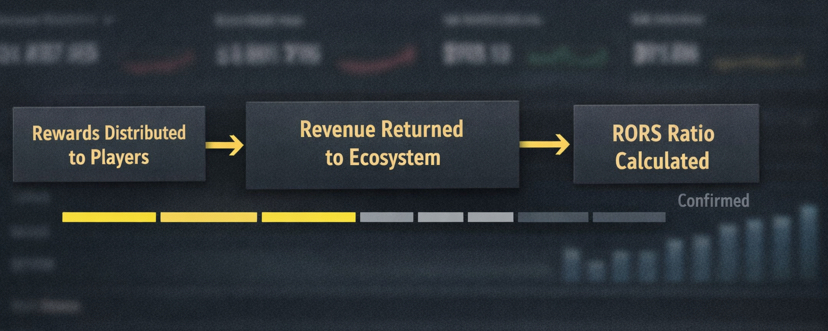
I was stopped by one figure I found in the documentation — and which no game usually shows publicly. Not the token price. Not the number of players. Just the ratio between how many were issued and how many returned.
My aunt has been running a small shop for fifteen years. One time she told me how she almost went out of business in the third year — the revenue was decent but there was always not enough money. It turned out she only counted what came in — and didn't account for what she spent to make it come in. When she finally calculated the difference — she saw she was operating at a loss for months.
Here’s how it works in games. Each game issues tokens as rewards to players. Players either spend them within the ecosystem or cash them out and sell. If most players cash out — the ecosystem gives back more than it receives. And you earn less in real terms even if the number of tokens in balance is growing.
This is a vicious circle that destroyed most of the early play-to-earn projects. Not bad code. Not fraudsters. Just math that no one calculated correctly — and that most players do not see until it’s too late. And when they see it — the token has already fallen. And it’s impossible to fix this in hindsight.
More rewards — more debt. More debt — cheaper token. Cheaper token — you earn less even when it seems like more.
We are used to thinking that generous rewards are a sign of a healthy game. But it's a trap that looks appealing right up until the math catches up with reality. Most players notice this only when it’s too late to change anything — and then they leave silently. Without a scandal. Without explanations.
At that moment, it hit me — a generous economy and a healthy economy are not the same thing.
Return on Reward Spend — is the ratio between the rewards issued and the income that the ecosystem receives back. The current value is around 0.8. This means that for each issued reward token, less is returned than was spent on its issuance. Simply put — the ecosystem is still operating at a loss.
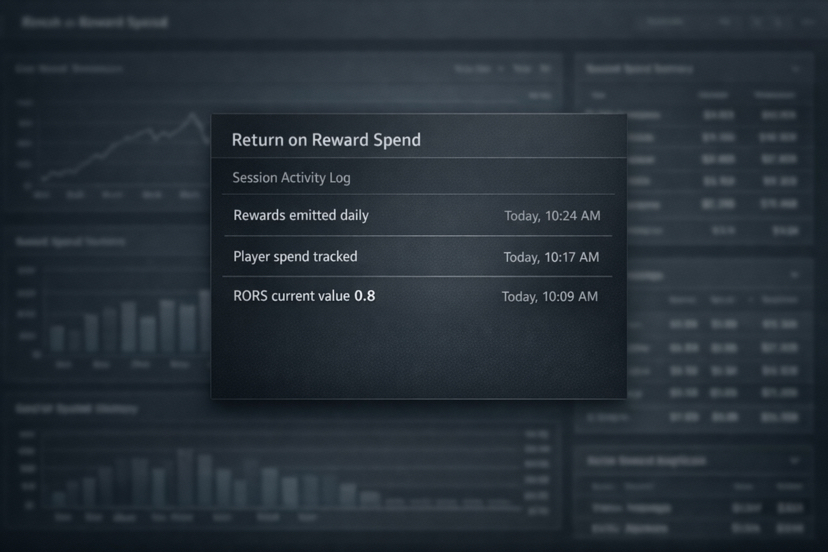
Pixels measures the health of the ecosystem precisely through this indicator — and openly publishes it. I haven't encountered many Web3 projects that show a problematic figure publicly instead of hiding it. Every team decision is subordinated to one goal — to raise this ratio above break-even. Not the token price. Not the number of players. Specifically RORS.
On one hand, this is a sign of maturity — the team understands the problem and does not hide it from the community. On the other hand — the publicity of the figure emphasizes that the system is still subsidizing players at the expense of future issuance. And this subsidization cannot continue indefinitely.
And while RORS is below one — someone pays the difference.
