A lot of Web3 games say they are building the future.
Very few actually feel like they are.
That is why this project stands out.
It is not trying to win attention with noise. It is building something that feels more thought-out, more grounded, and honestly, more sustainable. In a space full of short-lived hype cycles, this project is taking a slower and smarter route: make the game fun, make the economy work, and make the token matter for more than just speculation.
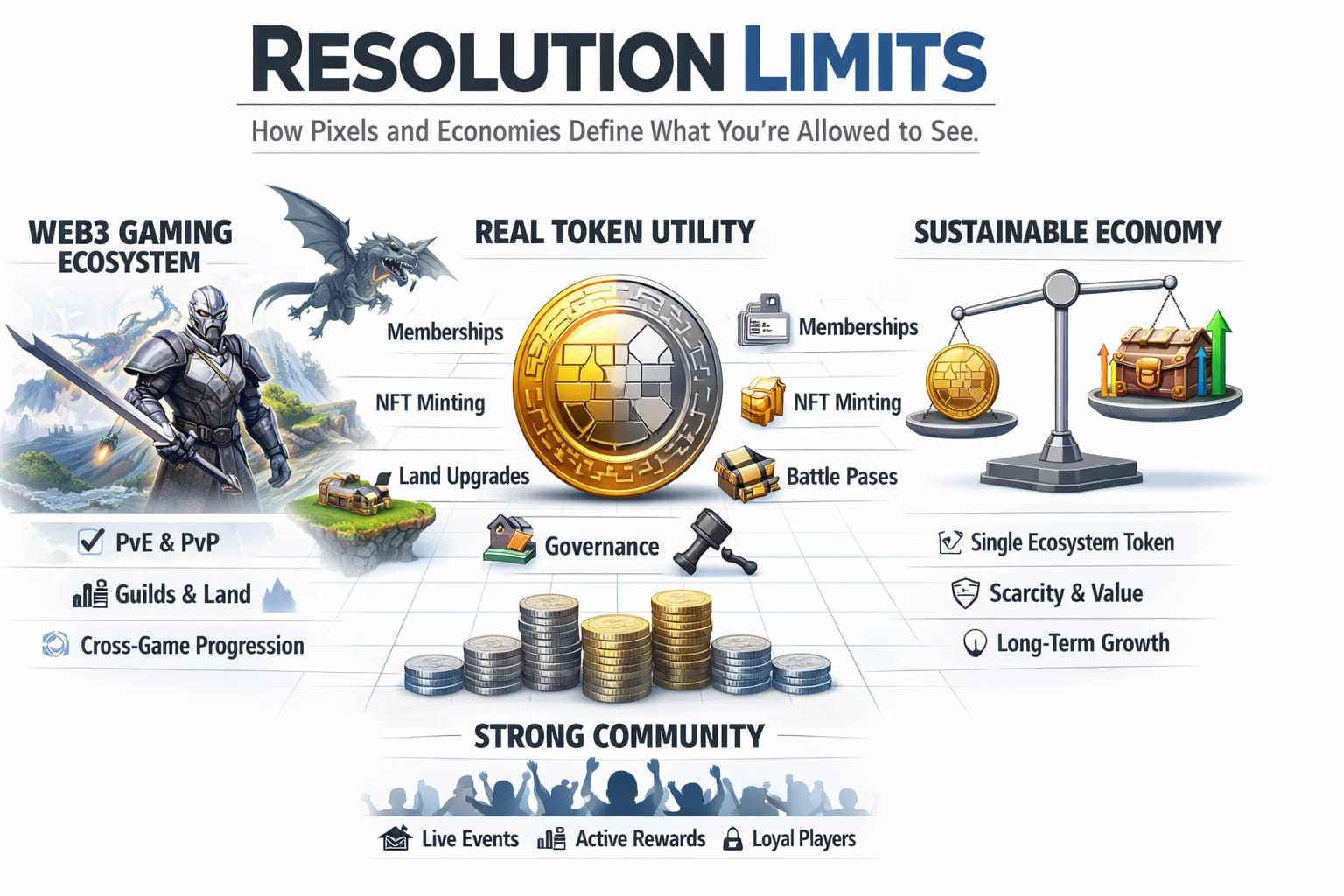
At its heart, this is a blockchain gaming project built around real progression. It combines gameplay, ownership, and a growing ecosystem in a way that feels connected instead of scattered. The gameplay itself is designed to keep players involved, whether they are exploring PvE content, preparing for PvP, building out guilds, or upgrading land and assets. And because it runs on a blockchain network built for smoother, lower-cost interaction, it is meant to feel like a game first, not a wallet exercise.
That part matters.
The native token is not just there for show. It actually does things. Players use it for memberships, battle passes, guild creation, NFT minting, land upgrades, premium features, and governance. So instead of being a token that only lives on a chart, it becomes part of the experience. It has a reason to exist inside the game, not just outside it.
And that is where the project starts to feel different.
A lot of games in this space rely on inflated reward systems that look exciting at first but become harder to sustain over time. This project is moving in a more disciplined direction. It is shifting away from that kind of inflationary model and toward a single ecosystem token that supports the whole economy. That creates a cleaner structure. Fewer moving parts. Better alignment. More room for real value to build over time.
When players are spending more inside the game than the system is distributing back out, the economy starts to feel healthier. Scarcity begins to matter. Long-term activity begins to matter. And the token becomes tied to actual use, not just emission.
That is usually where real fundamentals start to show up.
The roadmap makes the bigger picture even more interesting. This is not being built as a one-off title that fades after launch. It is growing into a broader multi-game platform. PvE is coming. PvP is coming. Cross-game progression is coming. A shared account system across multiple games is coming too. That means the player’s identity and progress are not stuck inside one isolated experience. They move with the ecosystem.
That is a much bigger vision than “just a game.”
The community side is strong as well. The team keeps showing up with frequent public updates, and that consistency matters more than people realize. It builds trust. It keeps players involved. It makes the project feel alive. Add in major live events, active participation, and reward systems that favor loyal players over short-term farmers, and you get something rare in Web3: a community that feels like it is actually being built, not just harvested.
That is what makes this project worth watching.
It is not trying to be the loudest project in the room. It is trying to be one of the few that can still make sense a year from now, and two years from now. A game with utility. A token with purpose. An economy with structure. A community with staying power.
That is the blueprint.
And in Web3 gaming, that might be the most valuable thing of all.