
I mean, I know why one thing keeps coming to mind..... When a game keeps adding so many layers, so many system, so many economic mechanics... does it get stronger, or does it slowly become heavier under its own weight?
To be completely honest....My first reaction to the @Pixels In web3 gaming, digital ownership has never been easier to achieve. But turning that ownership into actual economic activity? That’s where most projects quietly stall.
The persistent gap between holding a digital identity and putting it to work in real transactions remains the biggest unspoken challenge in the space. Ownership feels empowering on paper an NFT in your wallet, a token balance on-chain but without seamless bridges to application, it rarely moves beyond speculation. This is the exact tension the PIXEL publishing flywheel is engineered to resolve.
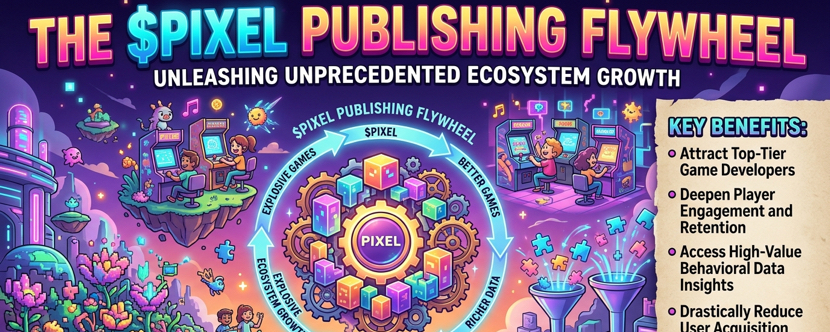
At its heart, the model is refreshingly straightforward and brutally pragmatic. It begins with better games. Through an accessible publishing layer, creators use $PIXEL to build, launch, and iterate on new experiences inside the ecosystem. The incentive is direct: higher-quality titles attract real players who stick around because the gameplay delivers, not because of token promises.
Those engaged players then produce richer data. Session patterns, creative outputs, spending behaviors, and community interactions generate granular, actionable insights that traditional analytics simply cannot match. This data loop is not a nice-to-have; it becomes the fuel for smarter iteration. Developers see what actually resonates and adjust accordingly, while the system learns how to surface the right experiences to the right users at the right time.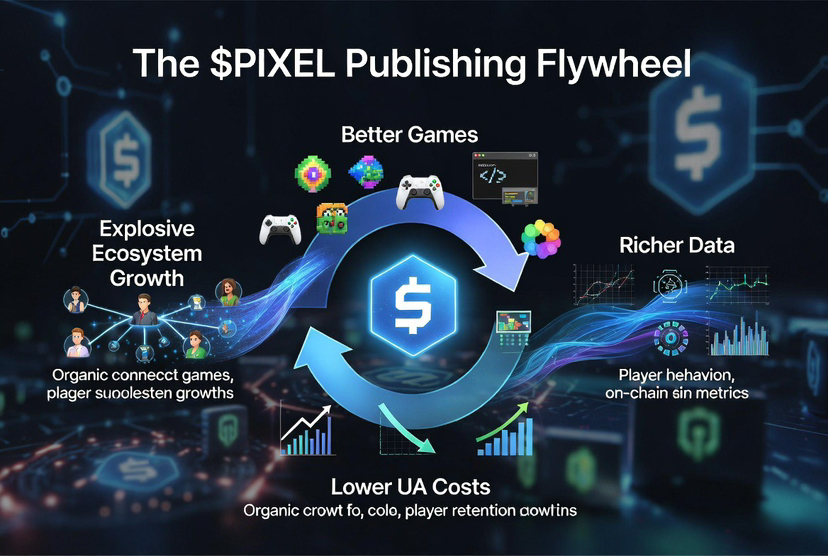
The result?
Lower user acquisition costs. In an industry where UA spending can devour budgets, the flywheel flips the script. Data-driven targeting, organic community referrals, and proven retention mechanics mean projects spend less to acquire and more to retain and expand. Every new player brought in through genuine word-of-mouth or personalized recommendations compounds the effect. Costs drop, margins improve, and the ecosystem can reinvest in even better content.
This creates explosive ecosystem growth not the manufactured kind driven by incentives, but the durable kind rooted in daily usage. The flywheel spins faster with each rotation.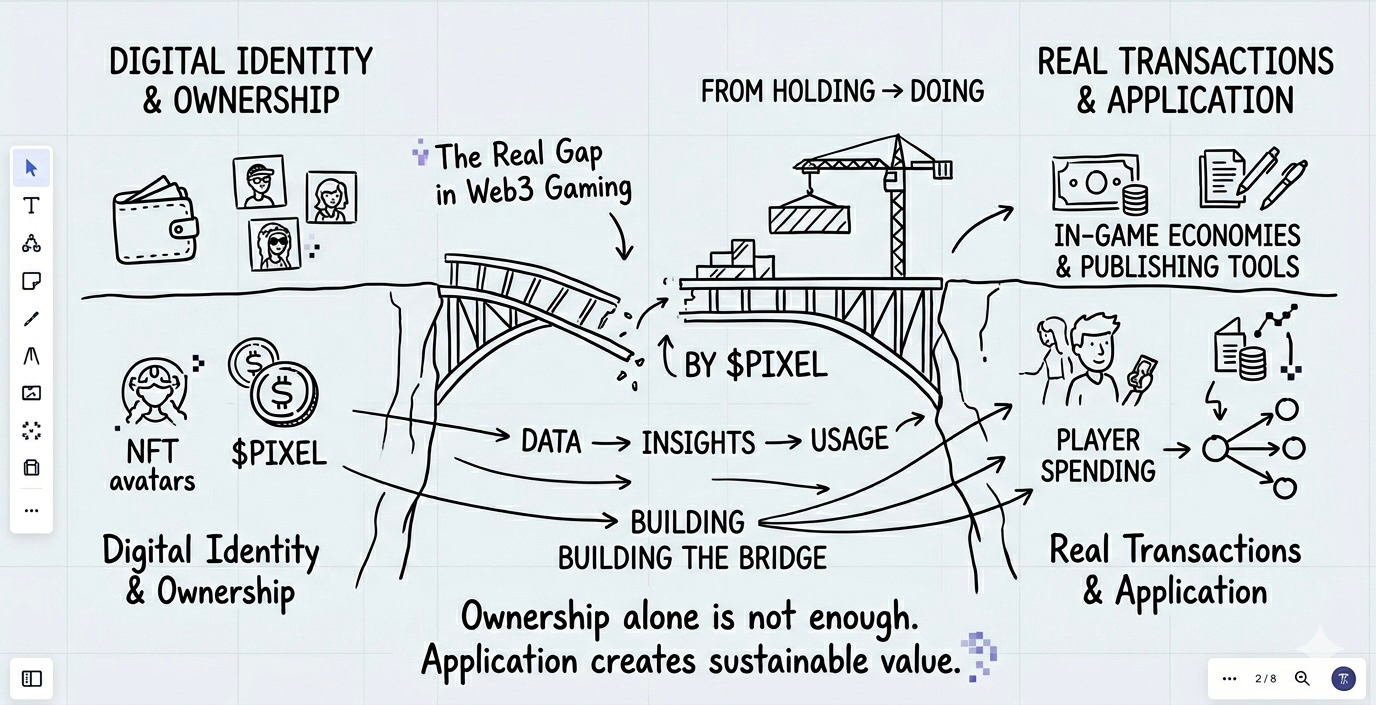
Critically, none of this works without market discipline. Here the specific signals are telling. Liquidity in PIXEL trading pairs has matured to levels that support efficient, low-slippage activity even during volatile periods an indicator that participants can actually move in and out without punishing friction. Holder distribution tells another story: a healthy spread across thousands of wallets rather than concentration in a few large positions, pointing to broad-based conviction rather than whale-driven control. Most importantly, organic demand is visibly outrunning speculation. On-chain activity tied to actual gameplay and publishing events now drives volume more reliably than short-term price narratives.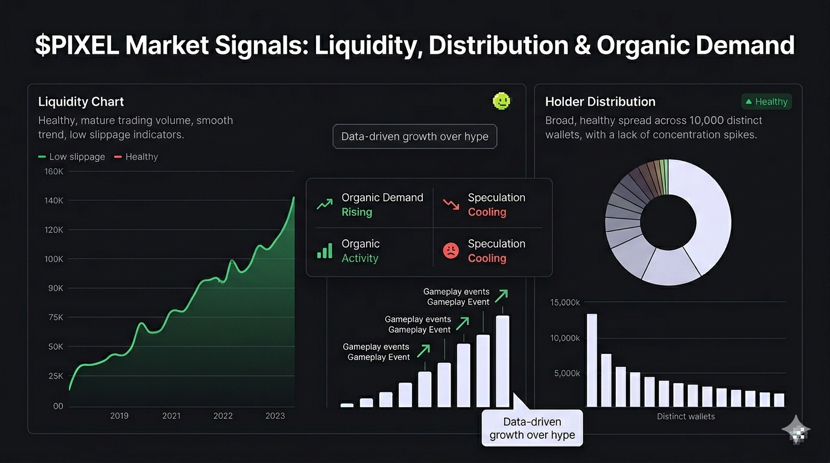
Of course, a critical eye is necessary. Flywheels are easy to diagram and hard to sustain. Execution risks around data governance, creator tooling quality, and token velocity remain real. If the games themselves stop improving or the data feedback loop breaks, the entire mechanism loses momentum. Yet the structure itself tying publishing directly to usage data and economic incentives addresses the ownership-application gap more honestly than most attempts in web3 gaming.
The relevance of this model extends beyond any single project. In a maturing market increasingly skeptical of pure speculation, the PIXEL approach demonstrates how digital identities can finally deliver on their original promise: not just store value, but generate and circulate it through repeated, voluntary transactions. Creators publish without prohibitive barriers. Players transact, build, and earn inside living economies. The flywheel turns ownership into application, speculation into participation, and hype into habit.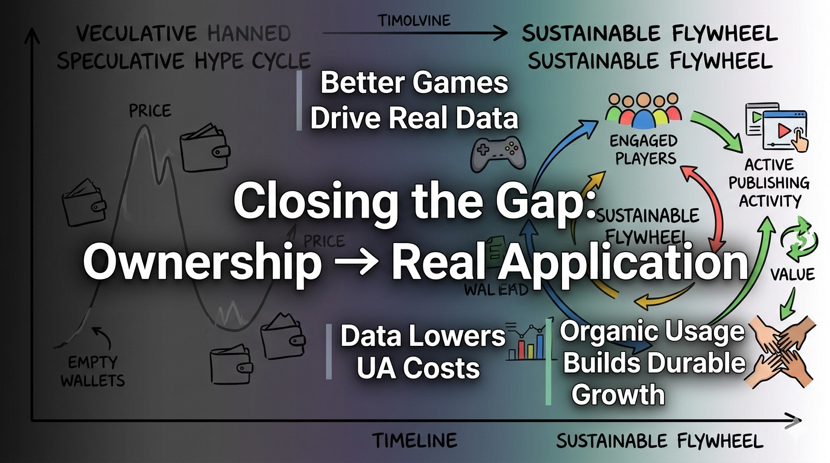
That shift, more than any single chart or token price, is what sustainable growth looks like. One better game at a time, the bridge is being built.