

When we talk about PIXELS games, many people think of leisurely virtual farms. But I am contemplating a grander topic: what would happen if the reward logic of Stacked were introduced into social governance? Imagine a small town that no longer relies on a single discussion by the city council when facing public resource allocation decisions, but instead utilizes Stacked's AI module to analyze the participation, contribution records, and preferences of the townspeople, designing a reward-driven decision-making mechanism.
Everyone in the town has a contribution-based $PIXEL wallet. Residents earn $PIXEL by participating in public activities, community volunteering, waste sorting, accompanying the elderly, and other actions. The AI assigns 'governance weights' to residents based on these actions, giving those who contribute more in the community greater influence on significant issues. For example, whether to build a new park in the town, the AI calculates a 'priority construction index' based on residents' willingness to contribute pixel votes, rather than simply adding one vote per person. This model theoretically reflects social capital and participation more effectively than traditional voting systems, making group decision-making feel fairer.
Of course, this mechanism may also bring risks: will it allow a few 'wealthy' individuals to dominate decision-making? Therefore, the system can also set rules for rewarding anti-corruption, limit the weight cap of a single account, and provide additional multipliers for low-income groups to ensure balance. This multidimensional weight system relies on the experiences Stacked has accumulated in games: providing appropriate rewards, punishments, and budget adjustments based on behavior analysis. Interestingly, pixel is a governance token and also a point of social credit, which residents can use to pay for public services, exchange for cultural event tickets, or even donate to families in need.
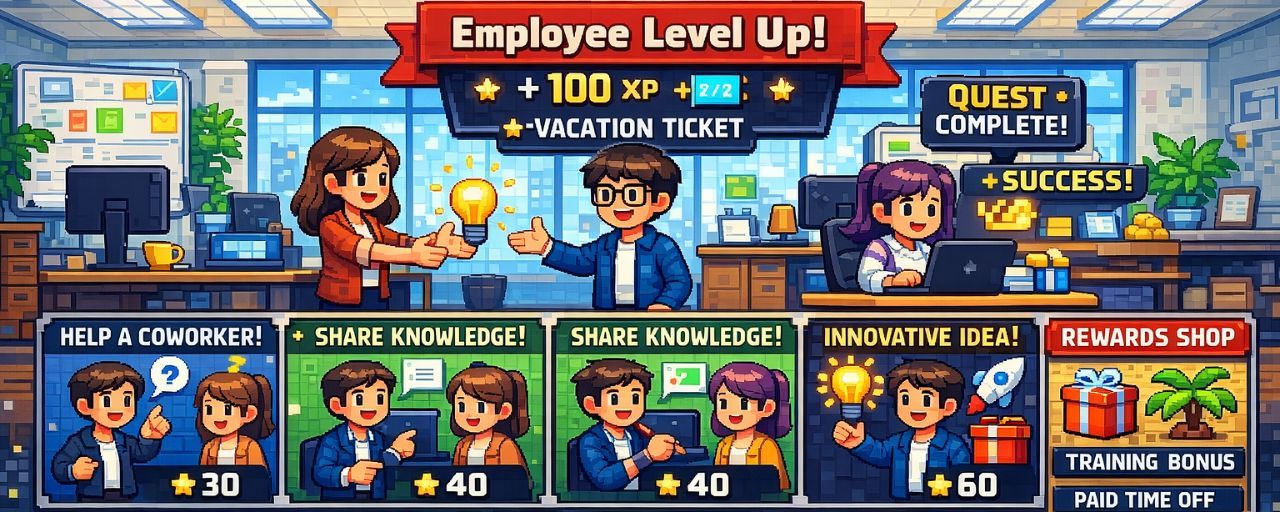
In the future, this kind of experiment will not be limited to a small town. Imagine using Stacked as a decision-making tool to guide collective wisdom in corporate governance, owner committees, and even public welfare organizations. In the work scenario, employees earn $PIXEL by completing company tasks, proposing innovative ideas, assisting colleagues, and training newcomers. Their 'governance weight' is not only tied to their position and salary but also linked to their contributions. When the company needs to decide on major projects or benefit systems, employees with high contributions can have greater voting power. This provides a new alternative to the traditional 'pyramid management': contribution-driven decision-making from the bottom up. What attracts me most about this concept is its scalability. The AI layer of Stacked can continuously learn collective behaviors, identify patterns, and adjust rewards, just like adjusting player churn rates in games. $PIXEL$PIXEL level serves as social governance points, directly linking contributions to rights. Although social governance in reality is much more complex than in games, this grand experiment may prompt us to begin considering: can future democracy be 'gamified' and allocate discourse power more fairly? It can become a 'tool' to incentivize citizen participation in public affairs. The concept of exchanging rights for contributions is disruptive and worthy of further consideration regarding its applicable boundaries and ethical risks. I also realize that future citizen participation might resemble playing a deep strategy game, where every action affects the decision-making of the entire community.@Pixels #pixel $PIXEL