
 Binance Square has recently been promoting the land economy of Pixels again. The 15M PIXEL CreatorPad prize pool is dizzying, with narratives all over about "land as productivity" and "passive income." But as an old coder who has combed through every corner of the white paper, I just want to say: you’ve mistaken liabilities for assets.
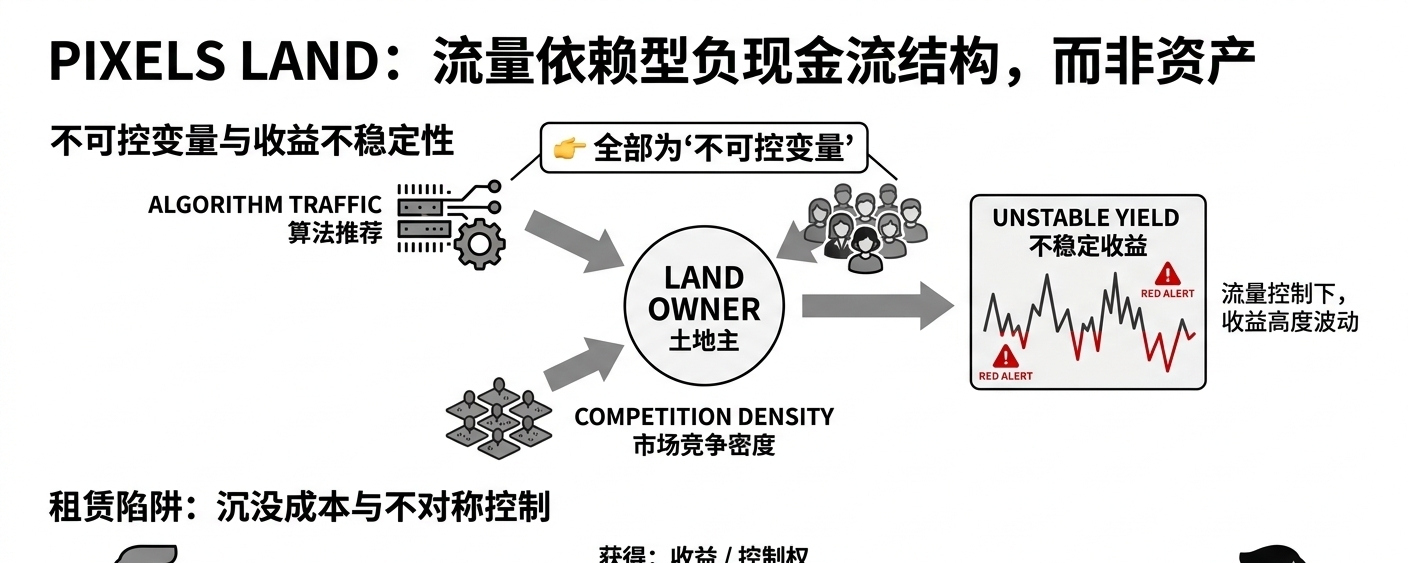
The land system of Pixels has a deliberately beautified core setting: land yield = visitor traffic × interaction depth × token price. These three variables, landowners cannot control any of them.
First, let's look at traffic. The plots in the game do not have natural exposure points; visitors come from algorithm recommendations, social graph diffusion, or random roaming. The "programmable metadata" and PixelScript engine in the white paper sound very enticing—you can customize plot logic, set resource nodes, and configure interactive gameplay. But the problem is: there’s no guarantee that anyone will come to play your script. You’ve built a fancy amusement park, but which way the gate opens, how tickets are distributed, and even whether anyone knows this place exists all depends on the platform's index layer black box.
This is the dark side of Off-chain State Event Indexing. What you see as "my plot is online" is merely a temporary variable in the memory of a centralized server. The real traffic allocation logic—whose plot is at the top of the recommendation list, whose interaction weight is algorithmically weighted—is completely opaque. The project team does not need to change the smart contract; they only need to adjust a parameter at the index layer, and your "productive land" can turn into a digital ghost town.
The rental market is even harsher.
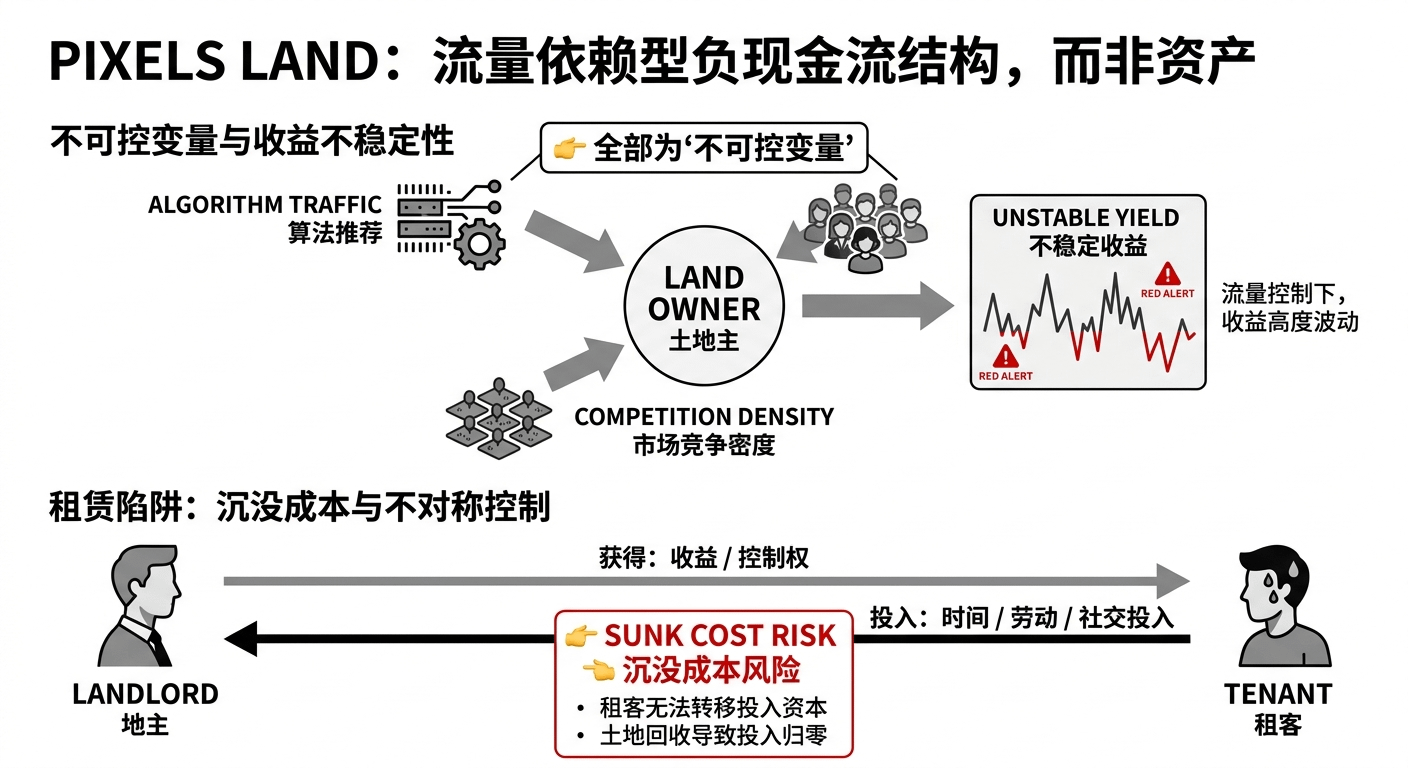
CreatorPad and Pixels officially package land leasing as a "low-threshold participation" remedy. Can't afford land? Rent it. Sounds very Web3 and democratic, right? But if you look into the technical documentation, you will find that the leasing terms are entirely set unilaterally by the landlord—rent, profit-sharing ratios, contract durations, renewal conditions, all decided by the landlord. The tenant bears all sunk costs: time investment, social relationships, in-game reputation, but the landlord can reclaim the land after any period ends or raise the price.
This is not a DeFi AMM liquidity pool; it is a tenant contract of digital feudalism. The tenant is not accumulating assets; they are providing liquidity buffer for the speculative land holdings of the landlord—with your labor, maintaining the valuation of his land.
Then there is the most overlooked crafting economy dependency chain.
The crafting system of Pixels is indeed more complex than most chain games. Resource nodes, recipe synthesis, upgrade consumption—it seems like a closed loop. But most people have not read that inconspicuous chapter in the white paper: the input for crafting comes from land harvesting, and the output rate of land harvesting is dynamically adjusted by real-time inventory across the network.
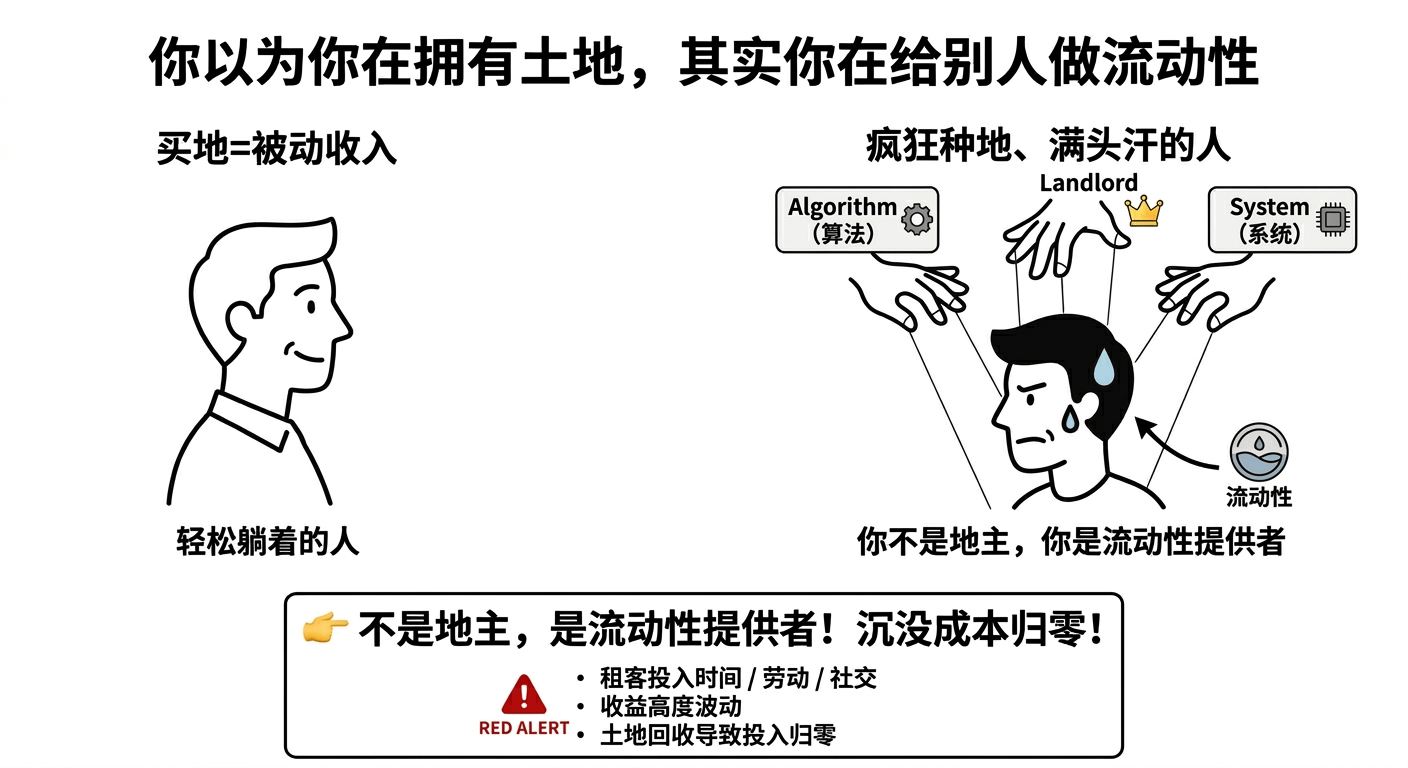 What does it mean? When you discover that a certain resource is particularly sellable now and decide to plant it on a large scale, the system's algorithm has already been automatically reducing the output probability of that resource based on the overall network supply. You will never outrun this dynamic balance mechanism—it ensures the economic system does not collapse, but also guarantees that ordinary players cannot arbitrage through information advantage. Crafting is not a player-driven market economy; it is an algorithmically controlled planned economy, and you are merely the execution layer.
And that governance paradox that no one dares to mention.
PIXEL is promoted as a governance token, where holders can vote to decide the direction of the game. Sounds decentralized? But the essence of token-weighted governance is that capital equals voice. Big players (early land investors, institutional wallets, arbitrage bots) crush the voting weight of regular players. And regular players—those who are genuinely completing tasks, renting land, and experiencing the economic system—the "median player"—often do not participate in governance forums at all.
The result is: the voting that determines your daily task rewards, crafting costs, and energy recovery prices is dominated by a group of people who do not play this game. Their time horizon is the token price curve, not your gaming experience. This is not democracy; this is a structural failure of representative governance.
But the most ironic thing is that this system indeed "works."
Pixels has not collapsed; land NFTs still have liquidity, and the 15M prize pool of CreatorPad is still attracting people to join. Why? Because it precisely utilizes the human demand for the illusion of certainty. The upward channel in the real world is narrow, but in the world of code, at least the rules are transparent—even if that transparency is the transparency of algorithmic tyranny.
We are staking land, crafting, and voting in this pixel wasteland, essentially fighting against a deep sense of nihilism. When that unemployed youth in Tokyo and the programmer in Silicon Valley water the same pixel land, they gain a strange sense of equality—equality in being harvested by algorithms.
So, when you are staring at the task list of CreatorPad, hesitating whether to invest time in that "high-yield land," it might be worth asking yourself:
Are you buying productive assets, or a flow liability that requires continuous payments to maintain its value?
Are you participating in a player-driven open economy, or an algorithmically preset pressure test container fueled by your attention?
The answer lies in that index layer black box you will never see, hidden in every "completed" task that is delayed in settlement, buried in the contradiction of knowing it is a play yet still choosing to act.
Although this fire is weak and carries a meticulously calculated flavor, it indeed gives many people the illusion of confirming their existence through labor in the cold bear market.
And this may be the true product-market fit of Pixels.