
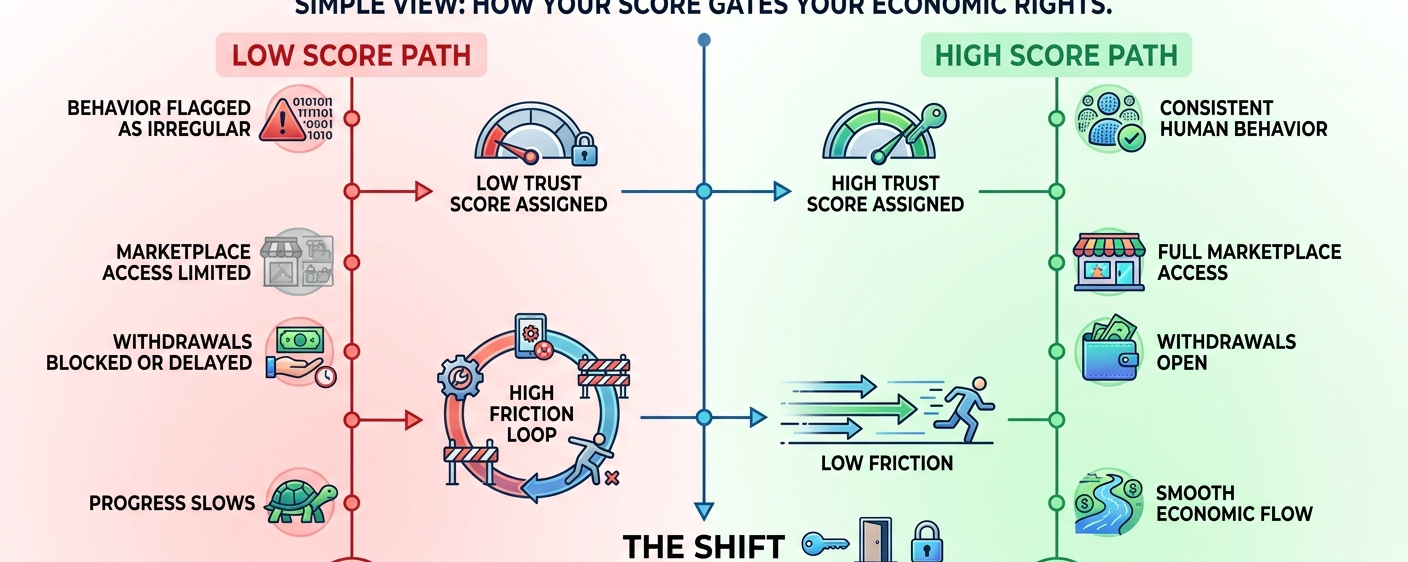

When a game builds a permission layer instead of a leaderboard
nobody announced this. there was no blog post that said “we are converting this farming game into an economic permission system.” it just accumulated quietly, layer by layer until one day you looked up and realized the game is making decisions about what you’re allowed to do inside it. based on how it reads your behavior.
that’s not a game mechanic. that’s infrastructure.
i’ve been sitting with the Pixels trust score system for a while now and the more i map it out the more it stops looking like an anti-cheat feature and starts looking like something structurally much more interesting. it’s a reputation layer. and reputation layers, once they exist, tend to do a lot more than one job.
let me explain what i mean.
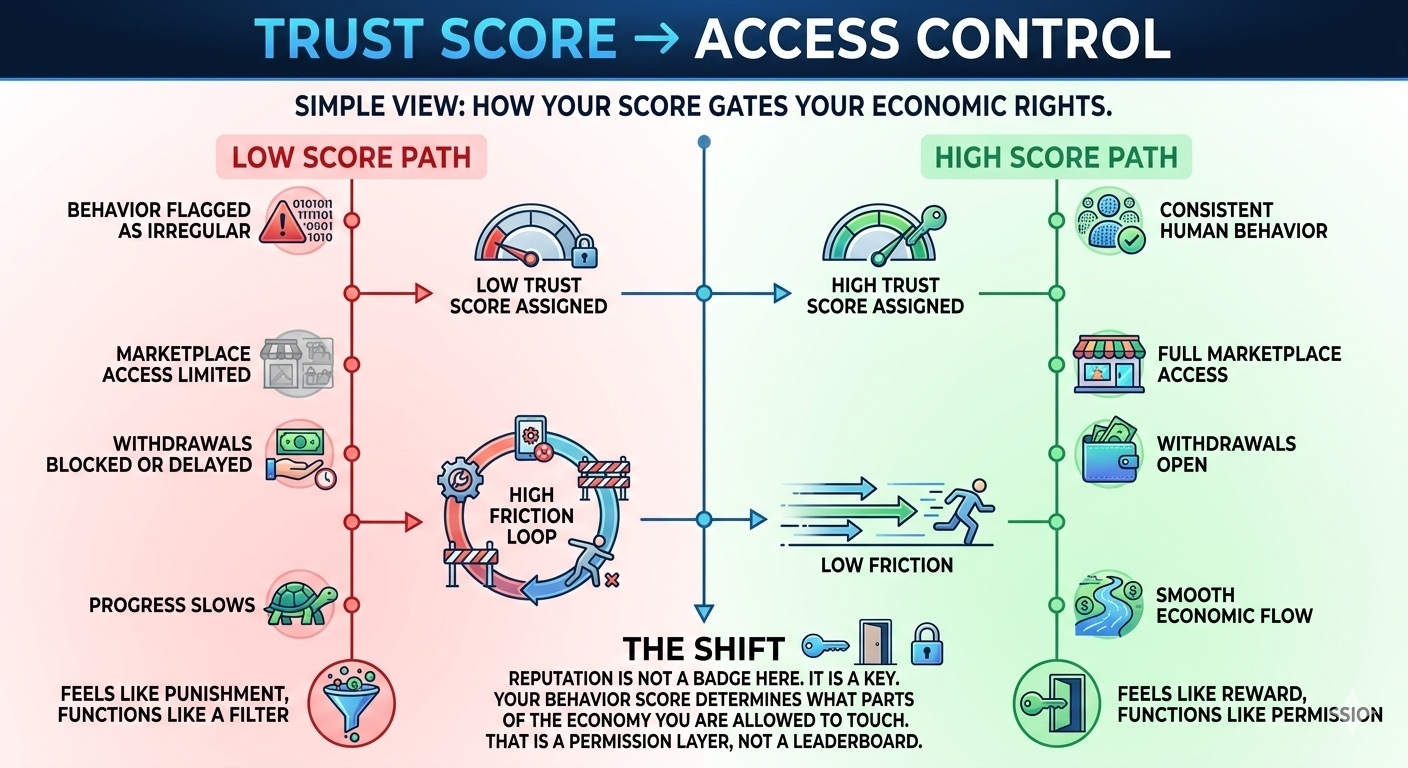
most games give everyone the same economic rights. you play, you earn, you spend, you withdraw. the rules are flat. Pixels broke that flatness deliberately. and the reason why matters a lot more than people are giving it credit for.
the reason is bots.
anyone who spent real time inside P2E ecosystems in the last four years watched the same cycle play out. project launches, rewards flow, bots arrive within days, economy drains, real players leave, token dumps, repeat. the Pixels team didn’t just watch this happen to other games they lived through versions of it themselves. Stacked came out of that experience. not theory. actual damage control turned into system design.
the trust score is one output of that. it’s the behavioral signal layer that sits underneath everything else. before a player can access the full economic stack marketplace, withdrawals, $PIXEL rewards the system has already been reading their activity patterns. how they move, when they act, what they do between sessions. not to spy. to distinguish.
a bot has patterns. a real player has irregularity. and irregularity, weirdly, is what the system is actually rewarding.
purai obak lagche when you think about it that way — the system is rewarding you for being unpredictably human.
and this is where it gets philosophically interesting to me and i say that as someone who has been tracking web3 game economies for a while.
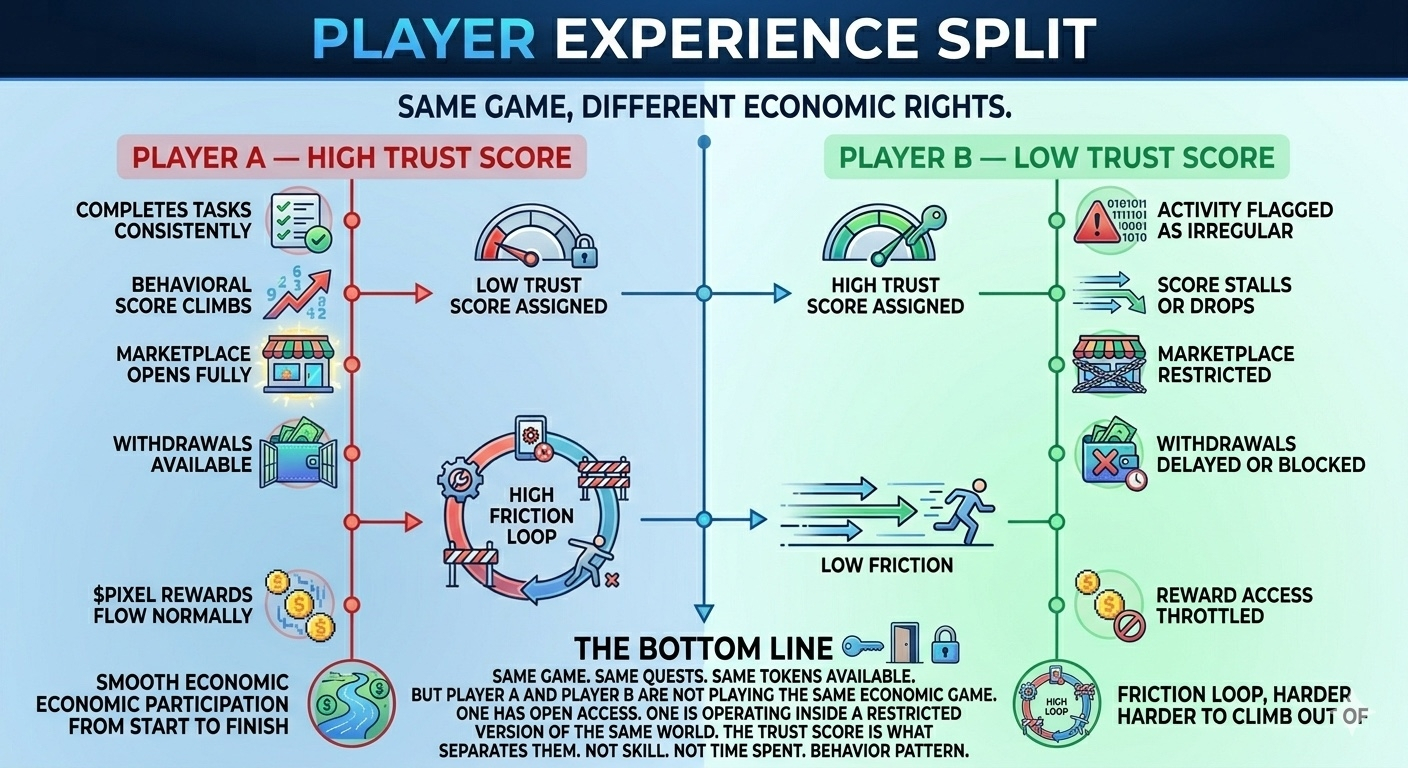
most games have one economy. one set of rules. everyone operates inside the same system. Pixels is quietly building something different — a tiered economic reality where your access level is dynamic, behavioral, and always being recalculated.
that’s a big design decision. and it has consequences beyond anti-bot protection.
because once you have a trust score that controls economic access, that score starts doing multiple jobs at once. it’s not just filtering bots. it’s controlling inflation. it’s throttling reward leakage. it’s shaping how $PIXEL flows through the ecosystem at a velocity the team can actually manage.
Stacked sits underneath all of this as the engine. the AI economist layer isn’t just analyzing which players are churning it’s feeding behavioral data back into the reward targeting system. who gets what reward, when, at what rate. it’s not random. it’s calculated. and the trust score is part of what informs those calculations.
200M+ rewards processed. $25M+ in Pixels revenue. built in production, not in a deck. when the team says the system works, they have the receipts to show it.
what i find genuinely underappreciated is how this changes the risk profile of as a token. most single-game tokens are one bad season away from a death spiral. Stacked is turning $PIXEL into cross-ecosystem rewards currency — more studios plug in, more demand surface, more behavioral data informing the reward system. the token isn’t just tied to whether Pixels the game has a good month. it’s tied to whether the infrastructure is being used. that’s a different bet entirely.
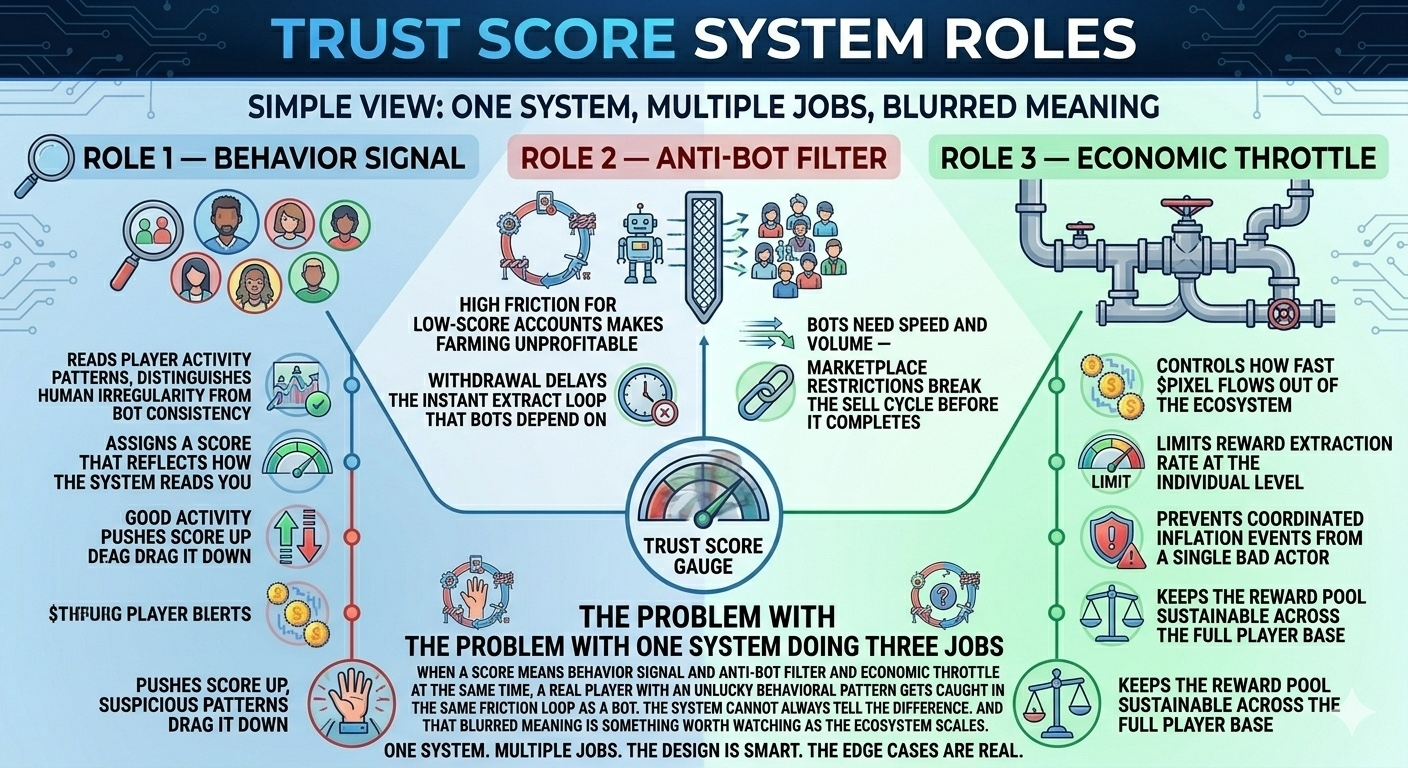
THE PROBLEM WITH ONE SYSTEM DOING THREE JOBS
when a score means behavior signal AND anti-bot filter AND economic throttle at the same time, a real player with an unlucky behavioral pattern gets caught in the same friction loop as a bot. the system cannot always tell the difference. and that blurred meaning is something worth watching as the ecosystem scales.
one system. multiple jobs. the design is smart. the edge cases are real.
this is not me being negative on Pixels or Stacked. i think the infrastructure is genuinely one of the more serious things being built in web3 gaming right now. the fraud resistance, the behavioral data at scale, the AI economist layer these take years to build properly. most teams ship a quest board and call it a reward system. Stacked is something else.
but the trust score conversation matters because it shows how complex these systems get once they’re live at scale. you design one thing anti-bot protection and it quietly becomes three things permission gating, economic throttling, behavioral surveillance. not bad things necessarily. but things worth understanding clearly before you’re inside the system wondering why your marketplace access looks different from someone else’s.
the game is no longer just a place to relax. it’s a small digital operation you’re running inside a behavioral economy that is always reading you.
i don’t know if that’s the future of gaming or something we’ll look back on as too complicated. but i know i haven’t stopped thinking about it.
which probably means something 👀