
What is the role of the Strait of Hormuz currently?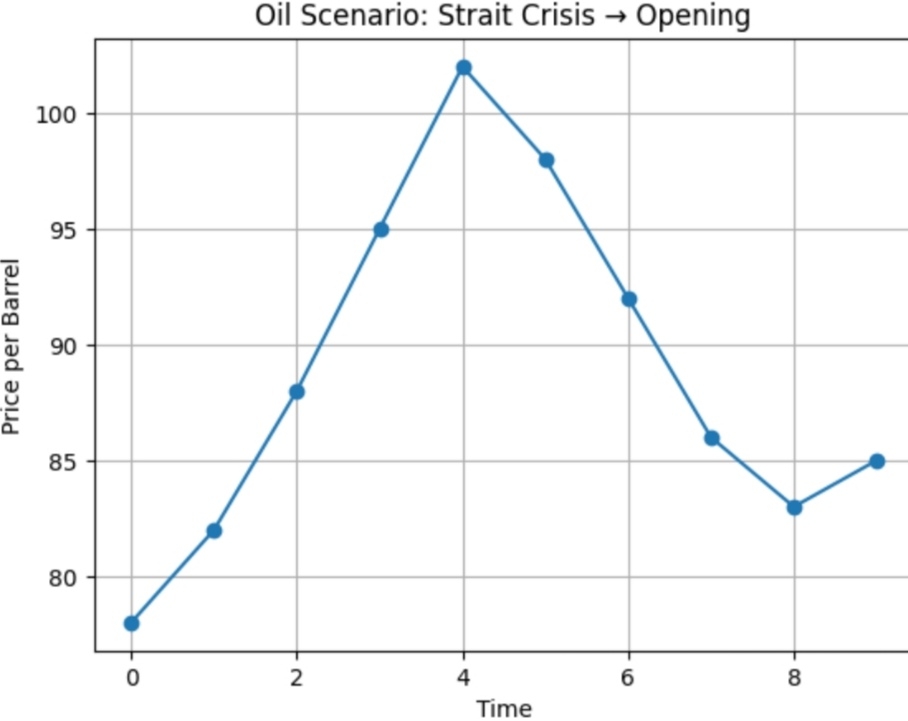 $USDC
$USDC
Strait of Hormuz
About 20% of the world's oil and a large amount of gas pass through it from the Gulf (Saudi Arabia, UAE, Qatar, Kuwait, Iraq, Iran).
This means that any tension in it directly affects energy prices and the global economy.
Can it be dispensed with in the future?
The short answer: it cannot be completely dispensed with, but the world is indeed trying to find alternatives to reduce reliance on it.
Let's look at the important alternatives 👇
1️⃣ Pipeline lines to bypass the strait (the main alternative)
Gulf countries have been working for years on transporting oil by land instead of sea.
Main lines:
East-West line in Saudi Arabia
Saudi Aramco
Transports oil from the Gulf to the Red Sea (Yanbu port).
This means oil can exit directly via:The Red Sea
Then:
Suez Canal
UAE pipeline to Fujairah port outside the strait.
These projects have a clear goal:
➡️ Reduce dependence on Hormuz in case of war or closure.
But the capacity of these lines still doesn't cover all the oil.
2️⃣ Alternative maritime corridors
Even global shipping is thinking of diversifying routes:
Suez Canal + Red Sea
India-Europe corridor project via the Gulf, Israel, and Europe (a major geopolitical project)
But the problem:
⚠️ Gulf oil must first exit from the Gulf... and here the Hormuz Strait remains important.
3️⃣ Energy transition (the biggest long-term alternative)
The biggest real solution is to reduce dependence on oil altogether:
Renewable energies
Electric vehicles
Green hydrogen
As oil demand decreases ➜ the importance of Hormuz decreases.
The key takeaway
In case of closure or risk in the Hormuz Strait:
Short term:
There will be reliance on pipelines + global inventory
Prices will rise sharply
Medium term:
Expansion of pipeline lines
Increase in alternative energy projects
Long term:
👉 The importance of the strait will gradually decrease
But its role won't disappear soon because it is the largest oil gateway in the world.
If you want, I can explain the economic scenario:
What will happen to oil prices and the global economy if the strait actually closes? 💡
After opening the passage, will it lead to a decrease in gasoline and diesel in the market?
Important question 👍
If you mean reopening the Hormuz Strait after tension or temporary closure, the answer is:
Yes, likely the price of gasoline and diesel may decrease... but under conditions 👇
🔹 Why might the price drop?
Because:
Oil passage returns to normal
Market fear decreases
Speculation calms down
Refining companies return to normal supply
Usually, global oil prices drop immediately after tensions ease.
🔸 But... will it drop immediately in Morocco?
In Morocco, the price is linked to:
Global oil price
Dollar price
Transportation and refining costs
Margins of distribution companies
⏳ Therefore, the decline is not immediate, but:
It takes two weeks to a month to show at the stations
Unless the decline is significant and sustained
⚠️ Important point
If the previous rise was only due to temporary fear, then after the passage opens likely:
✔️ Oil decreases
✔️ Gasoline and diesel gradually decrease
However, if there are:
Widespread war
Sanctions on producing countries
Global production shortage
So the price may remain high.
Simple summary:
🔵 Opening the passage = Less pressure on the market
🟢 Likely a decrease in prices
🟡 But not immediately or 100% guaranteed
If you want, I can calculate approximately how much the liter might drop if oil decreases by, say, 10 dollars 👌
Gold market
The gold market is directly linked to any global tension or problems in energy supplies like we talked about regarding the Hormuz Strait.
Let me give you the clear picture 👇
Why does gold move with crises?
Gold is called a safe haven.
This means when fear grips the world, people flee to gold to preserve their wealth.
Main reasons:
Wars and geopolitical tensions
Rise in oil and energy
Weakening dollar
Inflation
The relationship between gold, the Hormuz Strait, and oil
If tension occurs in the Hormuz Strait:
Oil is rising
Inflation is rising
Market fear is increasing
Investors are buying gold
➡️ The result: Gold likely rises.
But if:
The situation has calmed down
Oil has decreased
Confidence has returned to the markets
➡️ Gold often decreases or stabilizes.
What happens to gold after the passage opens?
Usually this scenario occurs:
Immediately after the strait opens:
Fear decreases
Oil calms down
The dollar usually strengthens
👉 Expected outcome:
🔻 Downward pressure on gold
But the decline is:
Gradual and not a collapse
Because the world still has many tensions
Why won't gold collapse?
Even if the passage opens:
Global wars are still ongoing
Global inflation is still high
Central banks are aggressively buying gold
For example:
Chinese central bank
Russian central bank
This keeps gold strong in the long term.
The summary
After opening the Hormuz Strait:
Short term:
⬇️ Gold might drop slightly
Medium term:
↔️ remains volatile
Long term:
⬆️ The overall trend is still bullish