
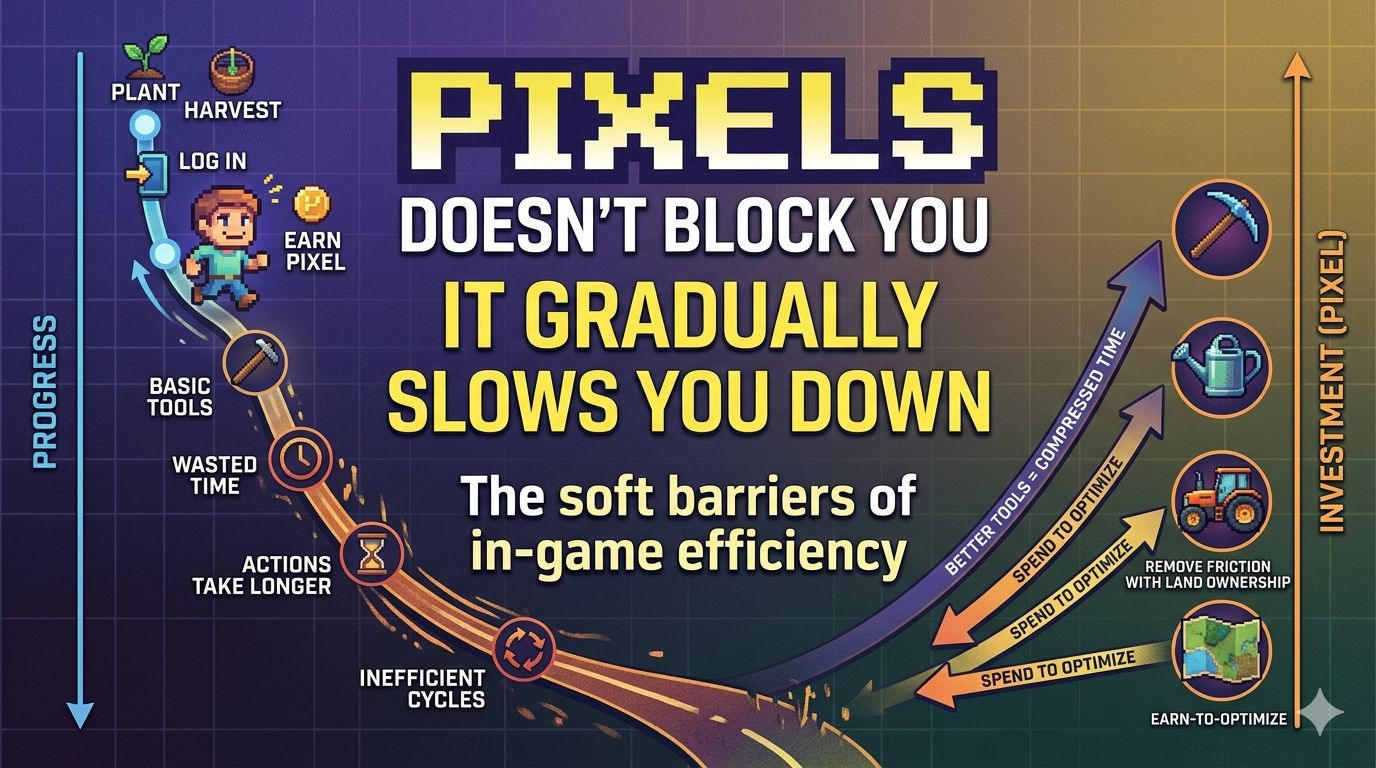

Pixels is not blocking you. It’s guiding you.
You can log in, plant crops, run quests, and earn PIXEL without spending anything...
It feels open. Fair, even. But after a few sessions the pattern becomes obvious.
Free to play isn’t free. It is just slower.
I felt it inside the farming loop. Early on, everything works. You plant, harvest, repeat. Rewards come in. But the moment you try to scale your time stretches. Actions take longer output barely improves.
Nothing is locked but everything is slightly inefficient.
Tools are the first signal. Basic tools get the job done, but they waste time. Better tools don’t unlock new gameplay. They compress time. Faster harvests. Cleaner cycles. More output per session. Without them you are not stuck you are just behind.
That is the soft barrier.
Land works the same way. You can farm on shared land. You can collaborate. But you are always giving something up. A percentage. Control. Flexibility. Owning land doesn’t unlock the game. It removes friction.
And in Pixels removing friction is everything.
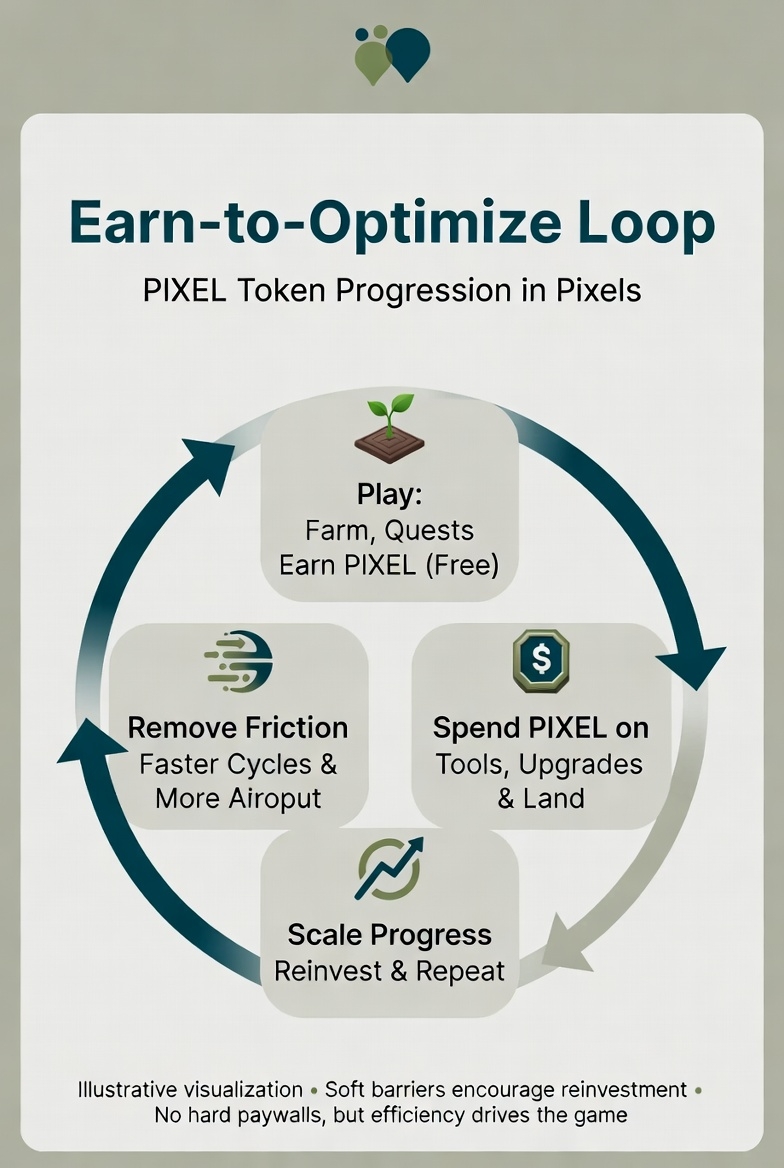
This ties directly into the PIXEL token. You earn it through farming, quests, and small optimizations. But earning isn’t the real progression. Spending is. Tools, upgrades, access all of it pulls PIXEL back into the system.
So the loop is not just play to earn. It is earn to optimize.
On Ronin this loop feels smooth. Transactions are cheap and fast. You don’t hesitate to upgrade or trade. That is important because Pixels depends on constant small decisions. The economy only works if players keep adjusting their setup.
But this is where I start questioning things.
If efficiency is the real advantage then early optimizers gain a lasting edge. New players can still join but they enter a system where others are already running faster loops. It’s not locked but it is not equal either.
Social gameplay tries to balance this. You can use other players land. You can collaborate. But even here, there is a structure. Someone owns. Someone depends.
It is subtle but it shapes everything.
I also think about sustainability. This system works as long as players keep reinvesting. As long as upgrades feel worth it. As long as new players enter and interact with existing assets.
But what happens when optimization becomes standard?
If everyone is efficient, margins shrink. If fewer new players arrive, demand for upgrades slows down. The same system that pushes growth can start tightening.
Pixels doesn’t force you to pay. It doesn’t block your progress. It just keeps presenting small inefficiencies until you decide to fix them.
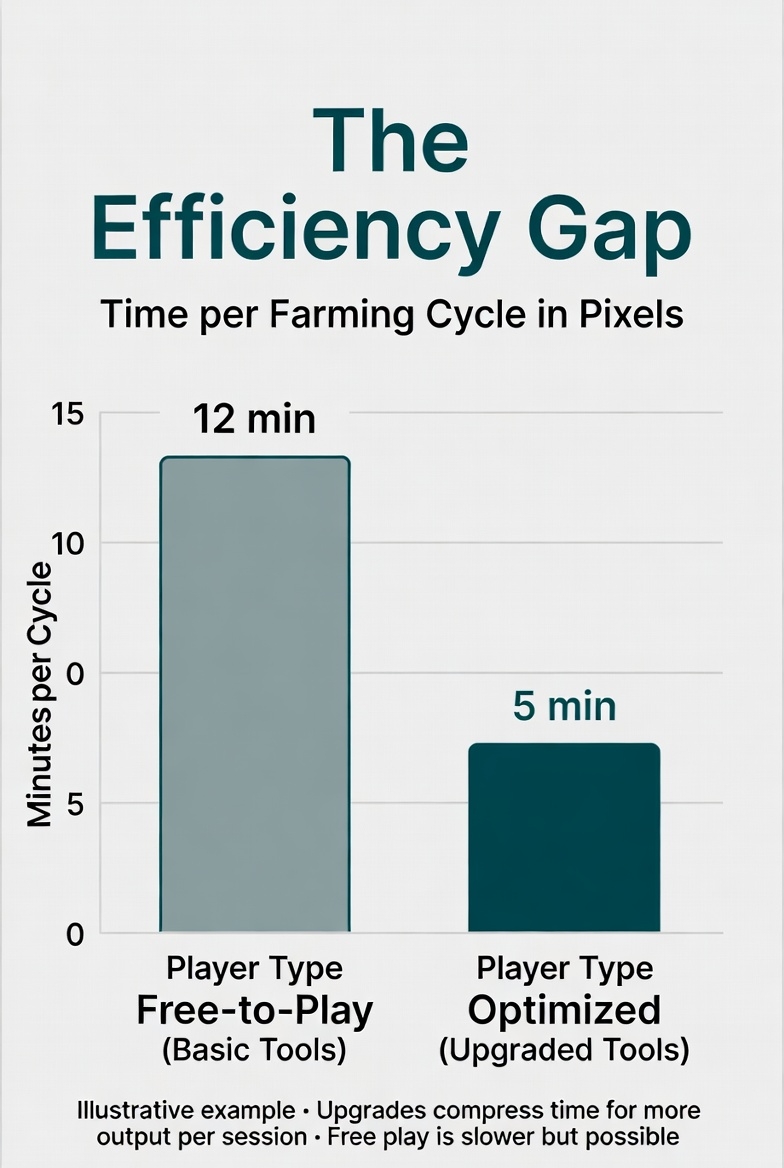
And that decision point is where the real game begins.
So the question isn’t whether Pixels has paywalls. It’s whether these soft barriers quietly create the same divide over time.