
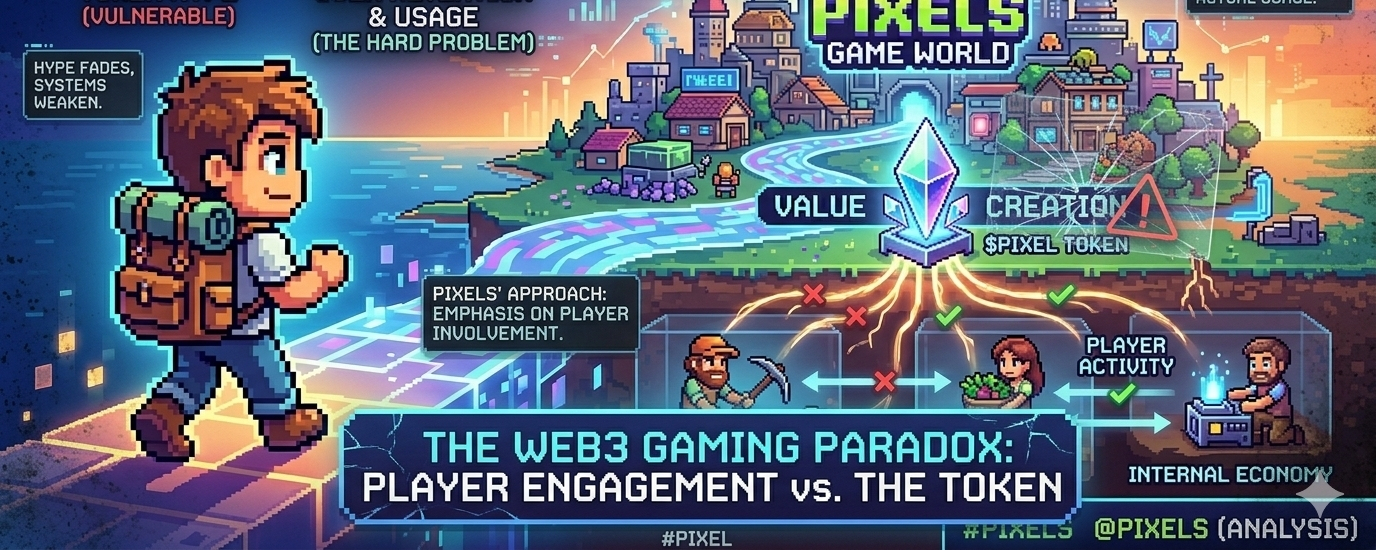
Here’s something I’ve been thinking about — what if the biggest mistake in Web3 gaming is putting too much focus on the token too early?
Most projects launch with strong hype, attract attention quickly, and then struggle to maintain momentum because users don’t stay. Once activity drops, the entire system weakens, no matter how strong the token looked at the beginning.
With @Pixels , the approach seems slightly different. From what I can tell, there’s more emphasis on player involvement and ongoing interaction rather than just early attention. That doesn’t guarantee success, but it does change the foundation the project is built on.
This is where $pixel becomes interesting in a different way. Instead of being driven purely by speculation, its role appears to be connected to how active the ecosystem becomes over time. If participation grows, the token gains relevance through actual usage rather than short-term interest.
I’m not saying this solves everything — retention is still one of the hardest problems in Web3 gaming. But compared to the usual pattern, @Pixels seems to be at least addressing the right issue.