
There’s something a bit unexpected about Pixels (PIXEL) when you first come across it. You go in thinking it’s just another Web3 game trying to grab attention with tokens and big promises, but it doesn’t really behave that way. It feels slower, more grounded… almost like it’s not in a hurry to impress you. And that actually works in its favor.
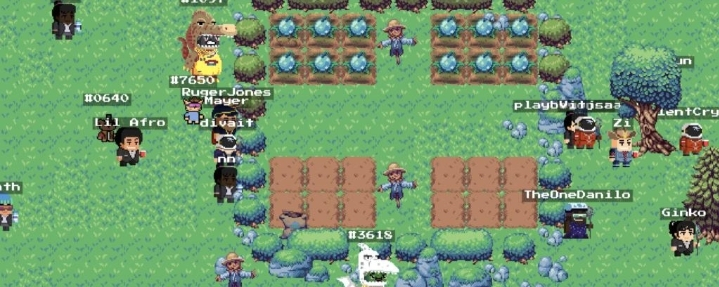
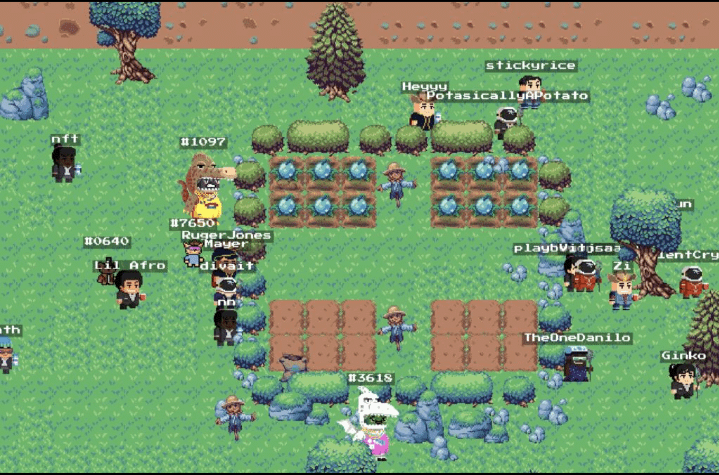
At the surface, it’s a farming and exploration game running on the Ronin Network. You plant crops, gather resources, craft items—nothing you haven’t seen before, right? But the difference is in how it all comes together. The game doesn’t push you to rush through things. You’re not immediately thinking about efficiency or profit. You’re just… playing. And that’s a strange feeling in a space where most games are designed around maximizing output as quickly as possible.
Spend a little more time in it, and you start noticing small details that make it feel more like a world than a system. Your farm, for example, slowly becomes familiar. Not just something you own, but something you shape. You arrange things, you improve it, you come back to it again and again. It’s not flashy progress, it’s gradual—and somehow that makes it feel more real.
The whole idea of ownership in Pixels is handled in a way that feels less aggressive than what you usually see in Web3. Yes, land exists as NFTs, and yes, it has value, but it’s not thrown in your face every five minutes. Instead, it quietly affects how you play. Owning land gives you more control, more flexibility, a bit of an edge—but it doesn’t completely lock others out. Even if you don’t own anything, you can still participate, explore, and build your own rhythm inside the game.
And then there’s the social side, which kind of creeps up on you. It’s not loud or overly gamified, but it’s always there. Guilds, reputation, events… they slowly start to matter. You realize that being active, showing up, interacting—it all adds up. Reputation isn’t just a number sitting in a corner; it actually changes things like fees and access. So over time, your presence in the game starts to carry weight. Not because you spent the most, but because you stayed, contributed, and became part of the flow.
The token, $PIXEL, fits into this in a way that feels surprisingly natural. It’s used for upgrades, crafting, and a few deeper systems like staking, but it doesn’t dominate the experience. You’re not constantly being reminded of it or forced into decisions that revolve around it. It’s there, doing its job in the background, supporting the economy without turning everything into a transaction.
That balance is probably one of the hardest things to get right. Too much focus on the token, and the game starts feeling like a marketplace. Too little, and the economy falls apart. Pixels seems to sit somewhere in the middle, where the token matters—but not more than the actual experience.
A big part of why this works is the infrastructure behind it. Ronin Network was built specifically for games, so things like transactions and onboarding feel smoother than what you’d expect from typical blockchain interactions. You don’t constantly feel like you’re dealing with wallets or gas fees. The technical side fades into the background, which lets the game breathe a little.
What’s interesting, though, is how Pixels quietly shifts your mindset over time. At first, you might come in thinking about rewards or potential value. But after a while, that stops being the main reason you log in. You check on your farm, maybe complete a task, maybe just walk around. It becomes routine in a way that feels oddly comfortable.
And that’s not something you can force. You can design systems, you can create incentives, but you can’t easily manufacture that feeling of wanting to return just because the world feels… yours.
Of course, it’s still evolving. Any game that mixes real economies with player behavior is going to face challenges. As more people join, dynamics shift. What feels casual today could become competitive tomorrow. That’s just the nature of these systems.
But Pixels doesn’t feel like it’s chasing perfection. It feels like it’s experimenting—trying to find a balance between ownership, gameplay, and community without overcomplicating things. And maybe that’s why it stands out a bit.
It’s not trying too hard to prove anything. It just gives you a space, lets you settle into it, and slowly, almost without noticing, you start to care about what happens there.