

Over the years, I have seen too many of these dramas in Web3.
A project suddenly becomes popular, and countless people rush in like starving ghosts reborn, typing furiously on their keyboards, hoping to exchange the 'diligence' of a few hundred accounts for a ticket to freedom. This was the case during the Axie era, and it was the same for the early Pixels farms. Back then, everyone called this Play to Earn, which sounded like a great productivity revolution. However, peeling away the pixelated veil reveals nothing but naked desire—people are not here to play that farming game at all; they are just here to 'get something for nothing.'
This is essentially a liquidity mining game dressed in a gaming guise, where everyone tacitly consumes the project's life value until the token drops to a point where even the network fee can't be covered, and then everyone disperses to find the next mine.
But after recently finishing Pixels' V3 white paper, I took a sip of cold coffee, and there was only one thought in my mind: the good days for those gold-farming free riders are really over.
Is this a game white paper? This is clearly a KPI assessment manual from a big internet company.
The Pixels project party has finally realized that they no longer plan to accompany this group of "vampires" playing that cat-and-mouse game of chasing each other. In the past, blockchain games issued money with their eyes closed; as long as you came, as long as you clicked, I would dare to issue tokens. Now? The project party is no longer pretending, directly taking a calculator to stand at the door, and even invented a new term in the white paper called RORS.
Sounds pretty grand, right? Actually, it translates to "token return rate" in plain language.
In the past, the project party issued tokens based on mood, now it's based on reports. If I give you a token, and you can't contribute more than one token's worth in the game, then you are the "ineffective asset" that gets cleaned out. The project party's current North Star metric is to get this return rate above 1; in plain terms, it's like the casino owner starting to check the monitoring and catch the vampires.
Pixels' transformation is actually a rather cruel "de-bubbling".
They have come up with something called vPIXEL, and the white paper describes it in extravagant terms, both as a technological innovation and as a means to reduce pressure. But to us veterans, this thing is just "non-withdrawable consumption tokens", or "joy beans that can only be spent in the game".
Do you want to dump your rewards on the exchange? Sure, pay a hefty "farmer's tax", and the project party will skin you alive. Don't want to pay taxes? Then leave your money in the game to buy items, upgrades, or VIP. This trick is quite brilliant; it forcibly locks liquidity that originally belonged to the secondary market into the internal cycle of the game. You think you've made money, but in reality, you've just obtained a bunch of "production materials" to continue working in this pixel world.
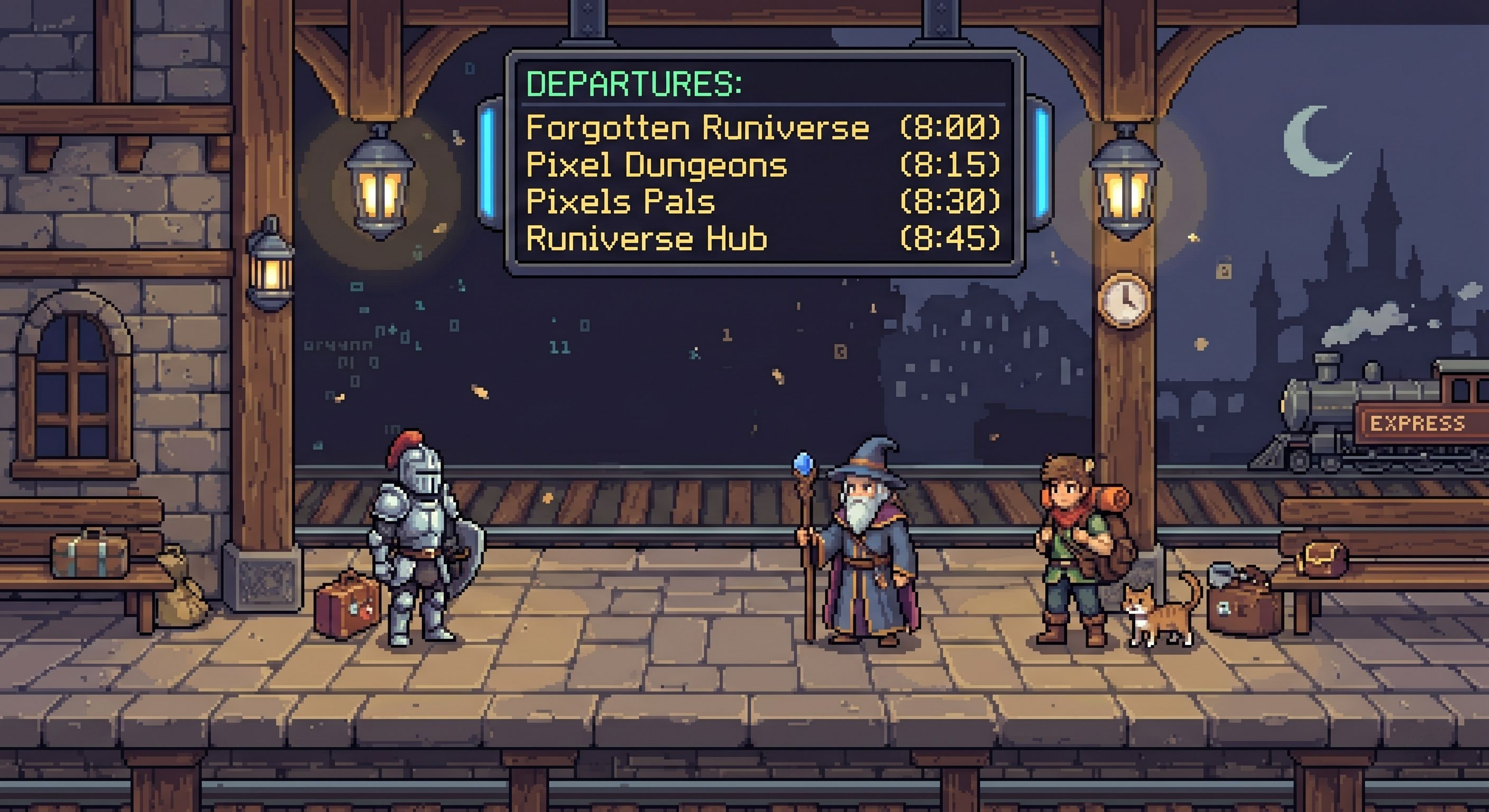
This extremely real sense of "stinginess" and "accounting" has completely shattered the previous illusion of "picking up money as soon as you come in" FOMO.
But what is this called?
What does Pixels want to do?
I find the positioning of that "on-chain advertising intermediary alliance" in its white paper quite honest. In that hypocritical circle that shouts about the "metaverse dream" and wants to return sovereignty to players, Pixels' counter-narrative of being "just an advertising buying platform that calculates ROI" actually exudes a rare clarity.
It no longer talks to you about "changing the world"; it sees you as a data label, traffic that can be calculated for lifecycle value. It even wants to sell this capability to other game developers: come buy traffic from me, I have hundreds of thousands of already trained, willing to grind games day and night for that little reward "high-value beings".
This logic is actually very Web2, very much like big internet companies. It turns every reward action into a miniature advertisement. You complete the beginner tutorial, and you get some tokens; you invite three friends, and you get some tokens. In the past, the project party handed money to Zuckerberg to buy ad space; now, the project party directly gives this budget to those willing to work.
This sounds fair, but the underlying subtext is: you are no longer a participant in the game; you are just a consumable in the entire marketing chain.
Looking at it from a different logic: can this kind of "targeted tipping" really save the collapsing token economy?
Maybe. At least it is more long-lived than the previous model of blindly throwing money. It has learned to counter that greedy human nature with the most boring, cold commercial logic. You want to freeload? No way. You want to spend real money in the game? Then I will give you a rebate. This "consumption-driven" model is the color that allows all commercial civilizations to survive, rather than the Ponzi scheme where latecomers pay for early entrants.
But I have to say something heartfelt.
Pixels' evolution towards extreme rationality also means that the original wildness of blockchain games, that explosive power that gets the blood boiling, is fading away. It is becoming an extremely precise "data abacus", where every pixel's pulse has its cost calculated.

It can no longer return to the FOMO era when everyone was frantically gold-farming. Now, it resembles a "chain-based part-time platform" dressed in a gaming skin, or a new, digitized "Foxconn".
You can still make money here, but you have to honestly follow its rules. You need to upgrade your plot, buy VIP, and pass its layer upon layer of assessments. It is no longer a myth that allows you to achieve class transition; it is just a piecework wage job that allows you to earn a little pocket money in your spare time.
Finally, let's take a look at the cost of this transformation.
The white paper also admits that this kind of "surgery" done for health may temporarily affect user data. Of course, if you kick out those parasites who only care about siphoning off without spending a penny, the data will naturally shrink. But this is actually a kind of screening; the project party is betting that those who are willing to stay, the "true fans" and "whales", can support a positive commercial cycle.
Ponzi schemes will always collapse, but advertising intermediaries will always make money.
In this world full of gold-farming vampires, Pixels chooses not to be the drained host anymore, but to turn into the administrator who holds the faucet permission. If this works out, it is the AppsFlyer of Web3; if it doesn't, it is just another lab specimen that dies in data backtesting.
So, stop complaining to me that this game is getting harder to earn from and the rules are getting more complicated.
The reason the rules are complex is to prevent you.
The project party has finally learned not to fight against human nature, but to tame it with code. This is quite ironic; we who came in waving the banner of decentralization have to carefully calculate whether our every seed can break even within a code logic that is even stricter than centralized big companies.
Code doesn’t lie, but code does account.
This is probably the most authentic bottom line after Web3 sheds its divine power.