
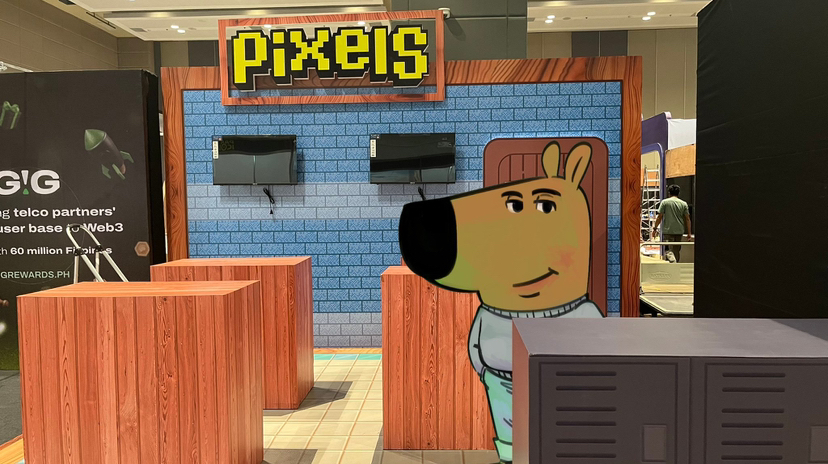
 Look @Pixels when I look at it, I am more concerned not with its superficial farming, exploration, or social gameplay, but with the fact that it is actually answering a very critical question: How can an on-chain game first become a 'game' and then become an 'asset system'?
In the past, many GameFi projects focused on earnings, airdrops, and token incentives right from the start. The result was often that the data looked lively, and community sentiment was once very high, but the reason users stayed was not the content itself, but rather the expectation of arbitrage. Once external liquidity weakens or the marginal incentives decline, retention and activity will drop rapidly. The issue has never been that players are unwilling to participate, but rather that many projects put 'financialization' ahead of 'playability.'
But @Pixels is taking a smarter and more challenging path. It does not make itself a shell that exists purely for rewards; instead, it first builds an open world that is light enough, daily enough, and easy enough to facilitate social interaction. Farming, exploration, resource circulation, player relationships—these designs may not seem radical, but they precisely form the most stable retention foundation. Because what truly supports a game's lifecycle is not a single event or a market trend, but whether users have a reason to want to log in tomorrow.
This is also why I revisited $PIXEL . Many people only see tokens as price curves, but if we put them back into the game, we will find that they are more like key media connecting behavior, output, consumption, and community collaboration. Whether a token has long-term significance is not just about its popularity, but whether there are continuous behavioral scenarios behind it, whether there is a stable source of demand, and whether there are real user relationships to support the flow of value. Talking about tokens outside of the ecosystem will ultimately just turn them into trading symbols; but when placed into a mature content cycle, tokens could become part of a long-term system.
So in my view, #pixel is worth discussing not because it is 'just another popular chain game', but because it represents a more mature Web3 gaming approach: first create content carriers, then establish economic connections; first let players stick around, then let value settle down. The ones that truly have a chance to transcend cycles are not those that can generate short-term emotions the best, but those teams that are willing to spend time on user experience, social relationships, and ecological structures. @Pixels at least shows me that on the path of chain games, some are not just making 'token-releasing games', but are seriously creating 'sustainable on-chain worlds'.