
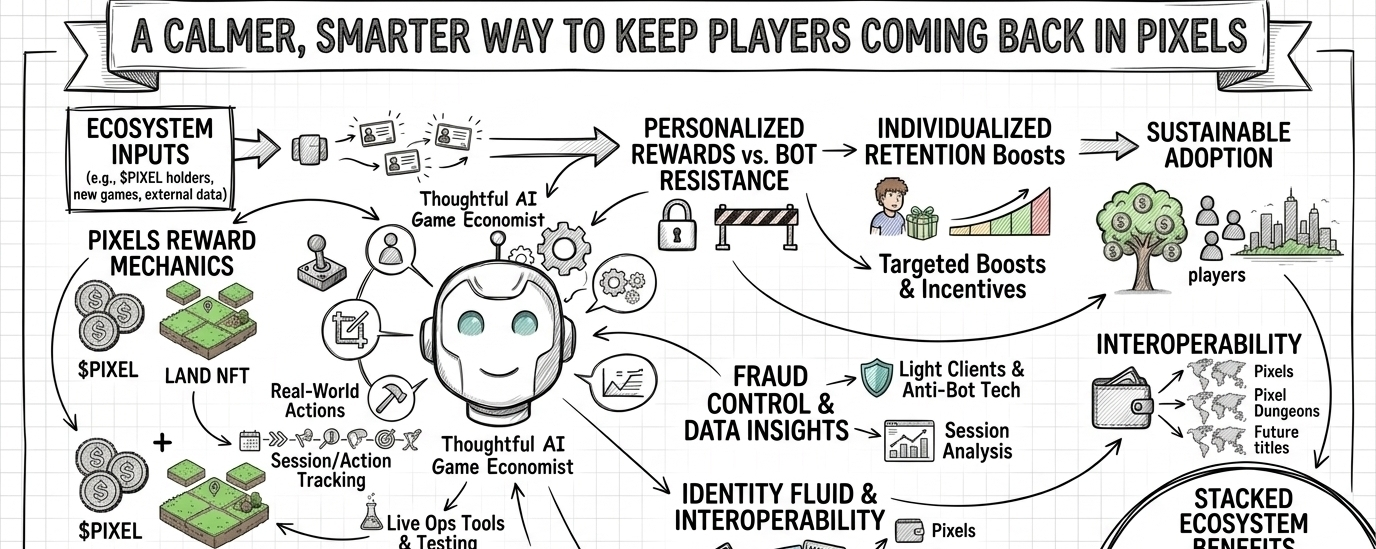
I've spent a lot of time thinking about why so many web3 games start strong but then fade away, leaving players disappointed and economies in ruins. It usually comes down to how rewards are given out — too much too fast, or not enough in the right places, and suddenly everything feels unfair or empty. That's why I keep coming back to what the team at @Pixels has quietly put together over the years with their Stacked ecosystem. It grew straight out of running Pixels day after day, facing the same problems everyone else hits, and slowly building something that feels more thoughtful and lasting.
Stacked started as an internal tool the team used while managing their own game. They saw firsthand how bots could drain resources, how players would burn out after a short burst of activity, and how generic rewards often failed to keep people coming back. Instead of guessing what might work, they created a smart layer that sits underneath the games and helps make better decisions about engagement and incentives. At its heart is this AI game economist that acts almost like a careful partner who truly understands the rhythm of play.
This AI doesn't just hand out points or tokens the same way to every player. It watches real behavior in real time — every session, every small action, every pattern that shows up as someone moves through the game. It looks closely at things like which players might be starting to drift away after a certain number of days, which groups enjoy the experience but aren't spending as much as they once did, or where tiny leaks in the economy might be happening without anyone noticing right away. From all that information, it quietly suggests rewards that feel personal and timely — maybe a small boost for someone who's been steady and loyal but hasn't made a purchase lately, or a gentle nudge right when a new player is close to their first meaningful milestone and might otherwise walk away feeling nothing special happened.
What touches me about this is how it shifts the whole feeling of rewards from something mechanical to something that actually respects the player. On the more technical side, Stacked brings in live operations tools that let the team track different groups of players carefully, run small experiments to test what really helps, and apply strong fraud controls so that only genuine activity gets recognized and rewarded. No more everyone grinding the exact same boring daily tasks that lose their meaning after a week. Instead, the system can spot underserved segments, highlight drop-off points during onboarding, or create offers that gently improve retention without wasting the reward budget or feeling pushy.

Early tests inside the Pixels world already showed meaningful results, like noticeable jumps in how often players decided to spend and solid returns on the incentives that were used. That kind of outcome gives me confidence that this isn't just clever on paper — it's something that has been refined through real use with millions of daily players and actual revenue behind it. The AI helps studios ask simple questions in plain language, like why certain loyal players stop showing up around day thirty or which mechanics seem to support longer-term enjoyment, and then it digs through the data to offer clear insights and ready-to-use suggestions.
For anyone holding $PIXEL, this setup changes the feeling of staking in a quiet but important way. It moves beyond simply locking tokens for passive returns. Your stake now helps support the wider ecosystem, giving you a real voice in which new experiences or features might receive more resources while you earn returns that feel connected to careful, measured growth. The monthly emissions stay capped, which helps prevent the kind of flooding that can hurt long-term value. And because Stacked already connects Pixels smoothly with other titles like Pixel Dungeons and more that are coming, your progress, your land holdings, and your contributions can flow from one world to another without the usual frustrating breaks that make everything feel separate.
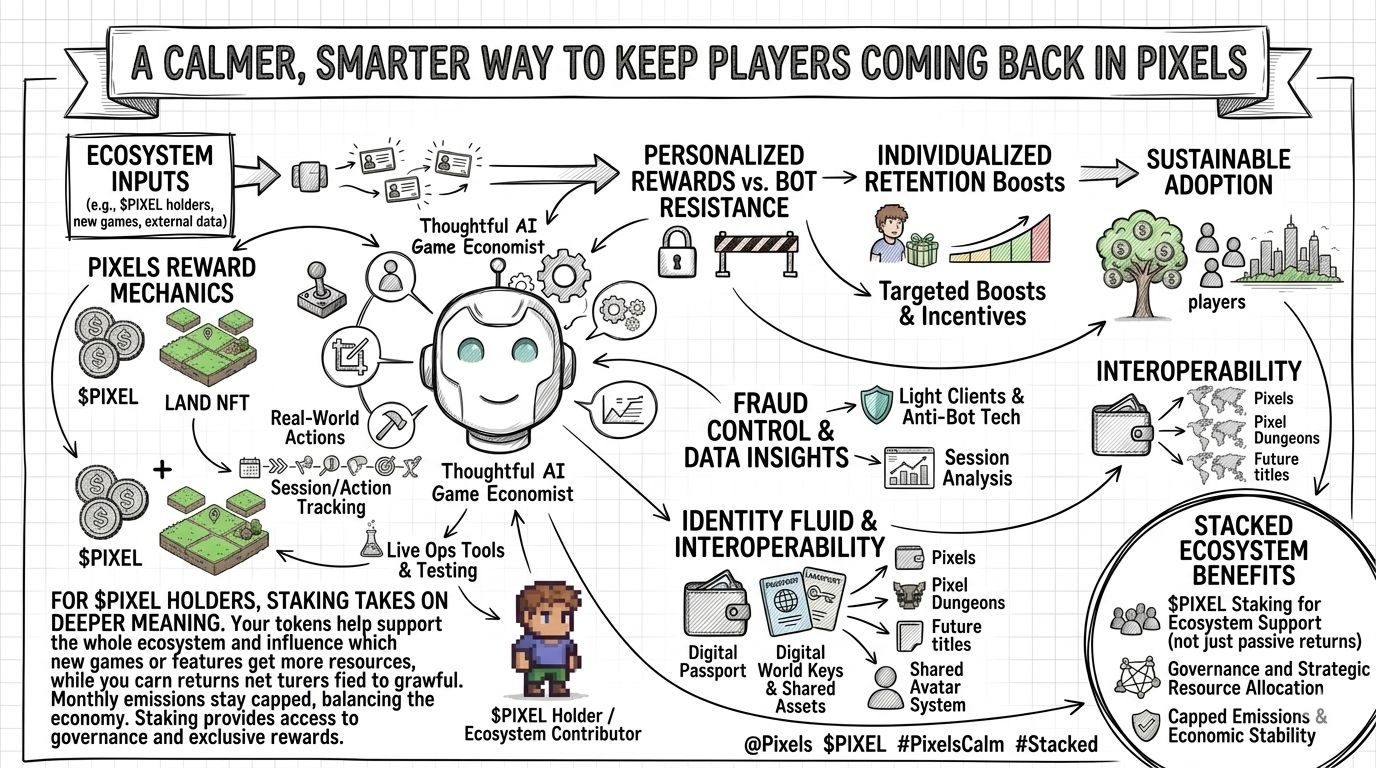
I often sit with the thought that true ownership in these spaces can start to feel hollow when everything stays isolated in its own little corner. With Stacked, your land NFTs, the time you invest playing, and the way you engage all feed into one shared, living economy. It rewards the actions that truly matter over time — showing up regularly, making steady progress, helping build a healthy community loop — rather than chasing short bursts that burn bright and then disappear. By shifting everyday routine rewards toward more stable options where it makes sense, while keeping closely tied to staking, governance, and special features, the whole system reduces unnecessary selling pressure and creates a foundation that has a real chance to grow steadily instead of collapsing under its own weight.
What moves me most deeply is that none of this came from copying trends or chasing quick hype. It came from years of the @Pixels team living inside their own game, reaching huge numbers of daily users, generating real revenue, and learning the hard lessons about what breaks economies and what actually keeps communities alive and caring. The AI game economist builds directly on that lived knowledge. It helps spot players who might need a little extra attention, suggests ways to fix weak spots in the early experience, and creates targeted offers that can improve how long people stay without ever feeling manipulative or wasteful. For everyday players like you and me, it means the missions and incentives start to match how we actually like to play — whether that's calm farming sessions, deeper exploration with friends, or building something meaningful in a guild.
Watching so many other projects struggle with reward systems that either dry up too soon or cause chaos when they overdo it, I find the Stacked approach from @Pixels refreshing in its calm honesty and care. It doesn't promise overnight riches or endless easy farming. It focuses instead on creating an environment where coming back day after day feels natural and rewarding, where your efforts add up in ways you can see and feel, and where the shared economy truly serves the players instead of the other way around. Your land becomes part of a bigger living world. Your playtime contributes to something that grows with you. Your staked helps shape what comes next for everyone.

In the quieter moments, when I step back and look at the bigger picture of web3 gaming, this kind of thoughtful infrastructure gives me genuine hope. Games can explode with hype in the beginning, but the ones that last are the ones that treat players with real respect, use data wisely without losing the human touch, and build systems that get better with time instead of fighting against their own success. Stacked feels like one of those meaningful steps forward — born from genuine experience, refined through years of real-world use, and now opening up to help other studios create healthier experiences too. It shows that sustainability isn't just a nice-sounding word thrown around in presentations. It can actually be designed into the heart of how rewards and player engagement work.
If you've ever felt the disappointment of games that pulled you in with big promises only to let you down once the early excitement faded, spending time in the Pixels world with Stacked quietly supporting it might quietly change how you see things. It opens up space for steady enjoyment, fair recognition of the effort you put in, and a shared economy that can keep growing without forcing anyone into uncomfortable or exhausting loops. The team has poured real heart, hard-earned lessons, and careful attention into this, and you can sense it in how smoothly everything connects across different experiences.
The more I sit with these ideas, the more I believe this calmer, more data-guided path could help web3 gaming move past the short, painful cycles that have hurt so many communities in the past. It invites people to stay longer, to invest their time and care without fear of sudden collapse, and to feel like they truly belong in the worlds they are helping to shape. That's a special thing in any game, and especially in one built on blockchain where ownership and real contribution can mean so much more than just holding a token.
#Kalshi’sDisputewithNevada #BitcoinPriceTrends #CZ’sBinanceSquareAMA #USInitialJoblessClaimsBelowForecast