
I didn’t open @Pixels looking for depth. I was just checking one thing: does it feel easy to get into?
Because that’s usually where Web3 games fall apart.
Not in the big ideas, but in the first five minutes. You load in and everything feels slightly off. Buttons don’t explain themselves. Menus assume you already understand the system. Wallet issues happen quietly, leaving you guessing. It doesn’t feel like onboarding, it feels like catching up to something you missed.
Pixels doesn’t have that problem, at least not at the start.
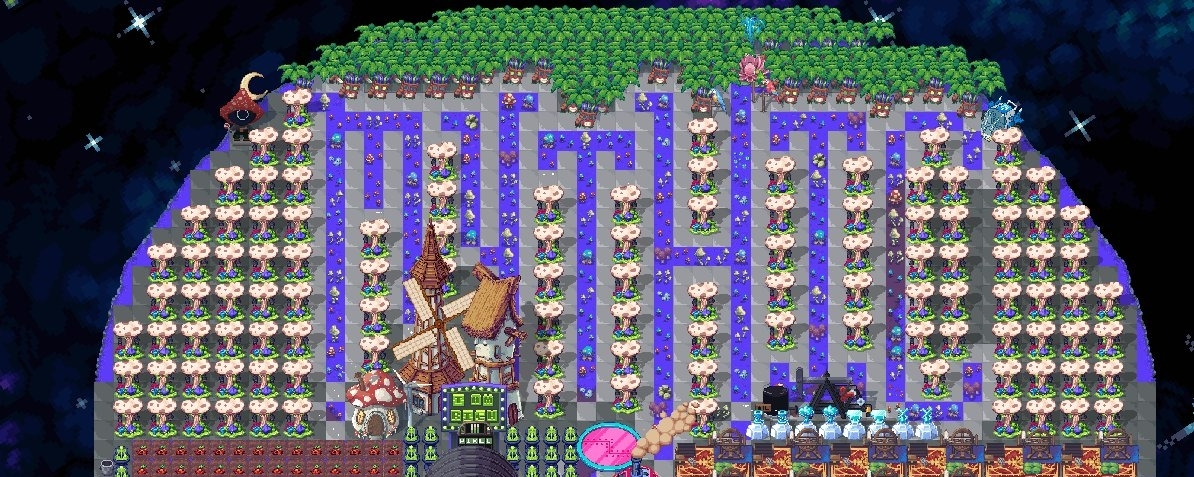
It opens clean. No downloads, no setup loops. Just a browser, a wallet connection, and you’re in. The pixel art style helps more than it seems, it sets the tone early. Simple visuals make the space feel approachable, like you’re allowed to learn as you go instead of needing to know everything upfront.
And for a while, that works.
You move around, explore, interact with things, and nothing really pushes back. The interface stays out of your way. The hotbar makes sense. The map is clear. You don’t need to think too much to start playing, and that alone puts it ahead of a lot of similar projects.
But what’s interesting is not where it works—it’s where it changes.
Because Pixels doesn’t suddenly break. It slowly shifts.
The moment you start interacting with on-chain mechanics, the rhythm changes. Crafting something tied to a transaction doesn’t feel like part of the world anymore. It interrupts it. You confirm, you wait, and then you return—sometimes unsure if anything actually happened. That hesitation is small, but it matters. It creates a gap between action and feedback.
And once you notice that gap, you start seeing others.
Not as bugs, but as signals.
The deeper systems in Pixels don’t just expand the game' they reshape how you approach it. The Tier 5 update is a good example of that. On paper, it’s just progression: more content, more depth. But in practice, it introduces structure that guides behavior.
Access to certain industries is restricted. Timers are introduced through expiring slots. New resources require different loops to obtain. None of this is forced, but it’s all directional. The system begins to suggest how you should play.
And that’s where the experience subtly changes.
It becomes less about reacting and more about planning.
The introduction of deconstruction is especially telling. Instead of only building forward, you’re encouraged to break things down and reallocate value. It’s efficient. It’s logical. But it also shifts your mindset. You start viewing your progress less as something you’re growing, and more as something you’re managing.
And that changes your relationship with the game.
You don’t just ask “what should I do next?”
You ask “what makes the most sense right now?”
That difference is small, but it builds over time.
As rewards scale higher in advanced tiers, early gameplay starts to feel transitional. Something you move through, not something you stay in. Systems like slot expiration reinforce that feeling. You’re not just playing—you’re keeping up.
None of this is inherently negative.
In fact, it shows a level of design maturity that most Web3 games don’t reach. Pixels isn’t throwing features together, it’s building interconnected systems with purpose. There’s a clear understanding of how economy, progression, and player behavior influence each other.
But there’s a trade-off.
The more intentional the system becomes, the more it asks from the player. Not just in time, but in attention. In awareness. In decision-making.
And not every player is looking for that.
Some people want to optimize. Others just want to exist in the world without thinking too much about it. Right now, Pixels sits between those two experiences, trying to support both.
That balance is what defines it.
Because the core is still there. When you ignore the layers and just move through the world, it feels light. Responsive. Playable. But the deeper you go, the more the structure reveals itself.
And once you see it, you start interacting with it differently.
So the question isn’t whether Pixels is easy to pick up.
It is.
The question is what happens after you do.
Does it stay a place you play?
Or does it become something you learn to navigate?
Right now, it hasn’t fully chosen and that’s exactly what makes it interesting.