
I don’t start with hype anymore. I start with data.
That’s where I am right now watching on-chain activity, tracking behavior, trying to see what actually holds up when things get messy. Because they always do. You can talk all day about “next-gen gaming” but if the numbers don’t back it, it’s noise.
And honestly, that’s why Stacked even got my attention.
Not because it sounds exciting. It doesn’t. It sounds… practical. Almost boring. But that’s the point.
Let’s rewind a bit.
GameFi right now? It’s a mess. Straight up. You’ve got projects raising millions, calling themselves AAA, showing cinematic trailers… and then disappearing in a few weeks. Not exaggerating. Weeks.
I’ve seen this movie before.
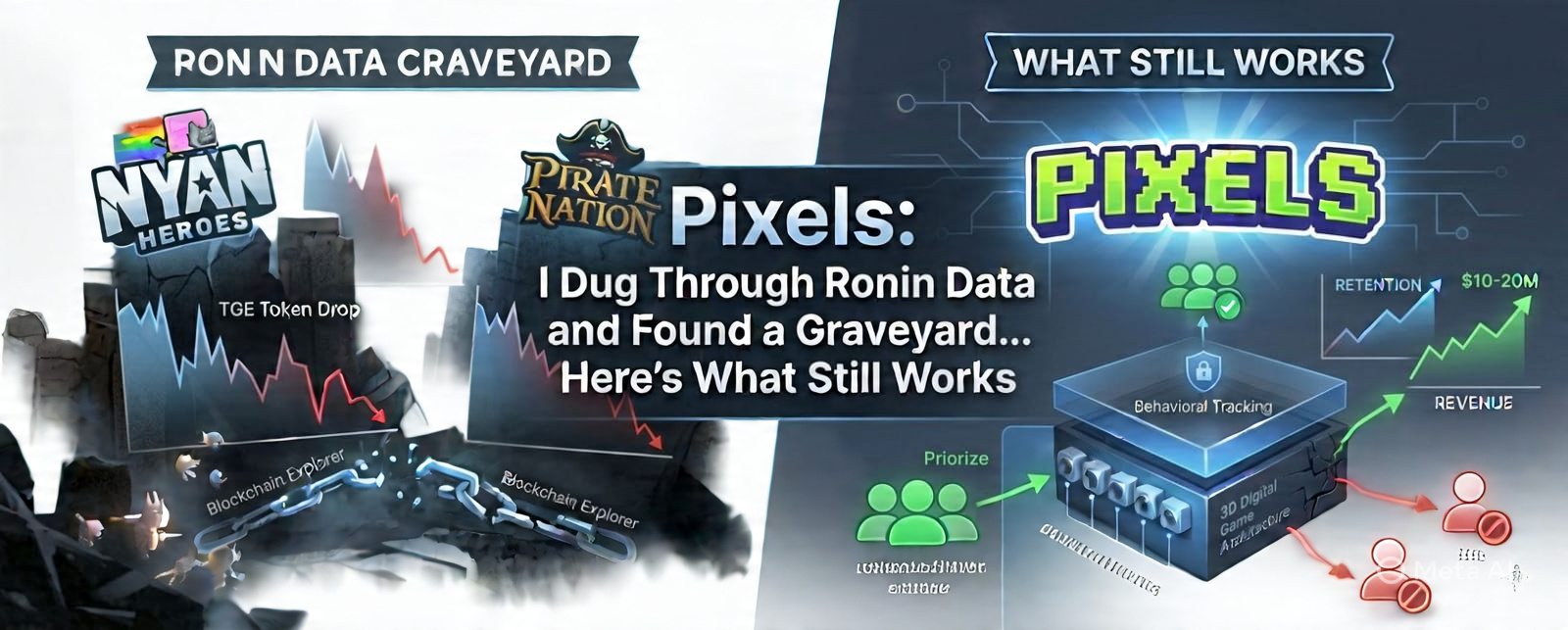
Remember Pirate Nation? Big funding, big vision, talked about reshaping RPGs. Then the token drops after TGE, hard. And that whole NFT burn-for-certificate move? Yeah… that wasn’t some genius pivot. That was survival mode.
Same story with Nyan Heroes. Huge buzz on Solana. People were genuinely excited. Then bots rolled in, farmed everything, and the system just couldn’t handle it. Servers struggled, the economy cracked, and players ended up holding tokens that barely covered transaction fees.
That’s where things get tricky.
People think these projects fail because of bad ideas. Not really. Most of them fail because their reward systems don’t work. Simple as that. If you can’t control who earns rewards, bots will take over. Fast.
And once bots win, real players leave. Why wouldn’t they?
Now here’s where it gets interesting.
I started digging through Ronin’s blockchain explorer recently. Not for fun it’s actually kind of painful to look at but because I wanted to see what’s real. What’s actually happening under the hood.
And it felt like walking through a graveyard.
So many dead projects. So many abandoned wallets. You scroll long enough, you start remembering all those “big launches” from 2022. All the promises. All the noise.
Gone.
That’s when Pixels came back into focus for me.
I’ve been watching it since early days. Back when it looked outdated, almost ignored. But the team, especially Luke, kept focusing on one thing: bots.
And bots today aren’t stupid. Let’s be real. They mimic human behavior, fake browser fingerprints, simulate actions. Some of them blend in better than actual players.
Pixels didn’t throw CAPTCHAs everywhere. They went deeper. They tracked behavior click patterns, movement timing, resource usage. They built a system that learns what real players look like.
That didn’t come from theory. They got hit by bots hard, almost broke, and adapted.
Stacked comes from that experience.
It’s basically that anti-bot, behavior-based system turned into a product for other games. No fancy storytelling. Just solving a real problem.
And compared to other tools? The difference is obvious.
Stardust helps bring users in, sure. But its reward templates feel predictable. Cheap for bots to exploit. Sequence nailed infrastructure and wallet experience, no doubt. But it doesn’t step into gameplay behavior. It makes the entry smooth, but it doesn’t protect what happens next.
Stacked focuses on the core who actually earns rewards and why.
Think about it like this. You run a shop. You spend money on ads, people come in, but most of them don’t buy anything. Some even exploit your system. You lose money. Now flip that reward only the people who actually engage, spend time, and come back.
That changes everything.
Pixels reportedly pulled in around 10 to 20 million in revenue last year using this logic. Not hype. Not speculation. Just retention and filtering.
That’s hard to ignore.
And the reward model? That’s the part I like. Instead of dumping money into ads, they redirect it to high LTV players. People who actually matter. And it’s all on-chain, so you can verify it. No guessing, no trusting marketing.
But I’m not jumping in blindly.
Let’s be real this space has burned too many people. Big projects with massive funding have collapsed overnight. Ember Sword raised over 200 million selling land, then shut down. MetalCore had to shift toward Web2 just to survive. Even major studios couldn’t fix broken economies.
So yeah, I stay careful.
Right now, I’m testing the idea the only way that makes sense through data. Watching how new projects using this system perform. Do players stick around longer? Do bots get pushed out? Does revenue actually sustain?
If yes, then it’s worth something.
If not, it’s just another story heading to the graveyard.
GameFi isn’t some easy win. It’s a battlefield. You either adapt or you disappear.
Stacked doesn’t feel like a savior. And honestly, that’s why I’m paying attention. It’s not trying to fix everything. It’s just fixing one problem that keeps killing games.
And right now, that’s more valuable than any big promise.
So yeah, I’m watching. Quietly. Closely.
Because hype fades fast.
Data doesn’t.