
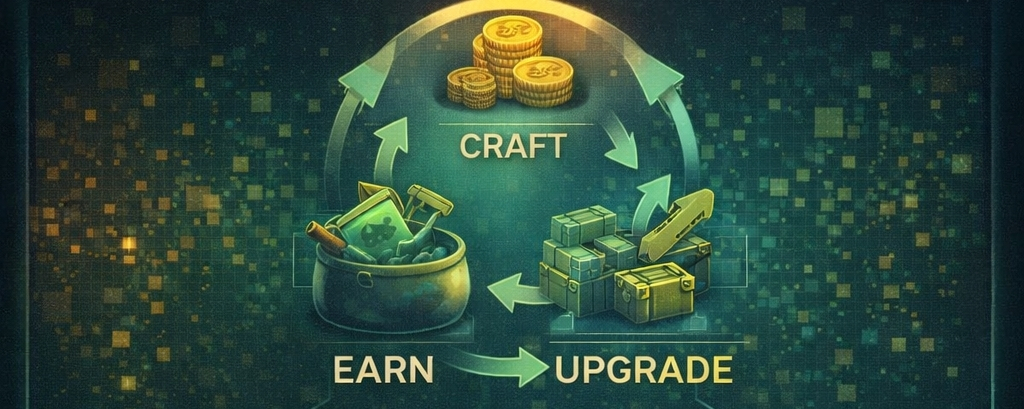
Exploring @Pixels more deeply made me realize that the biggest improvements are not coming from adding new features, but from fixing the foundation of the game itself.
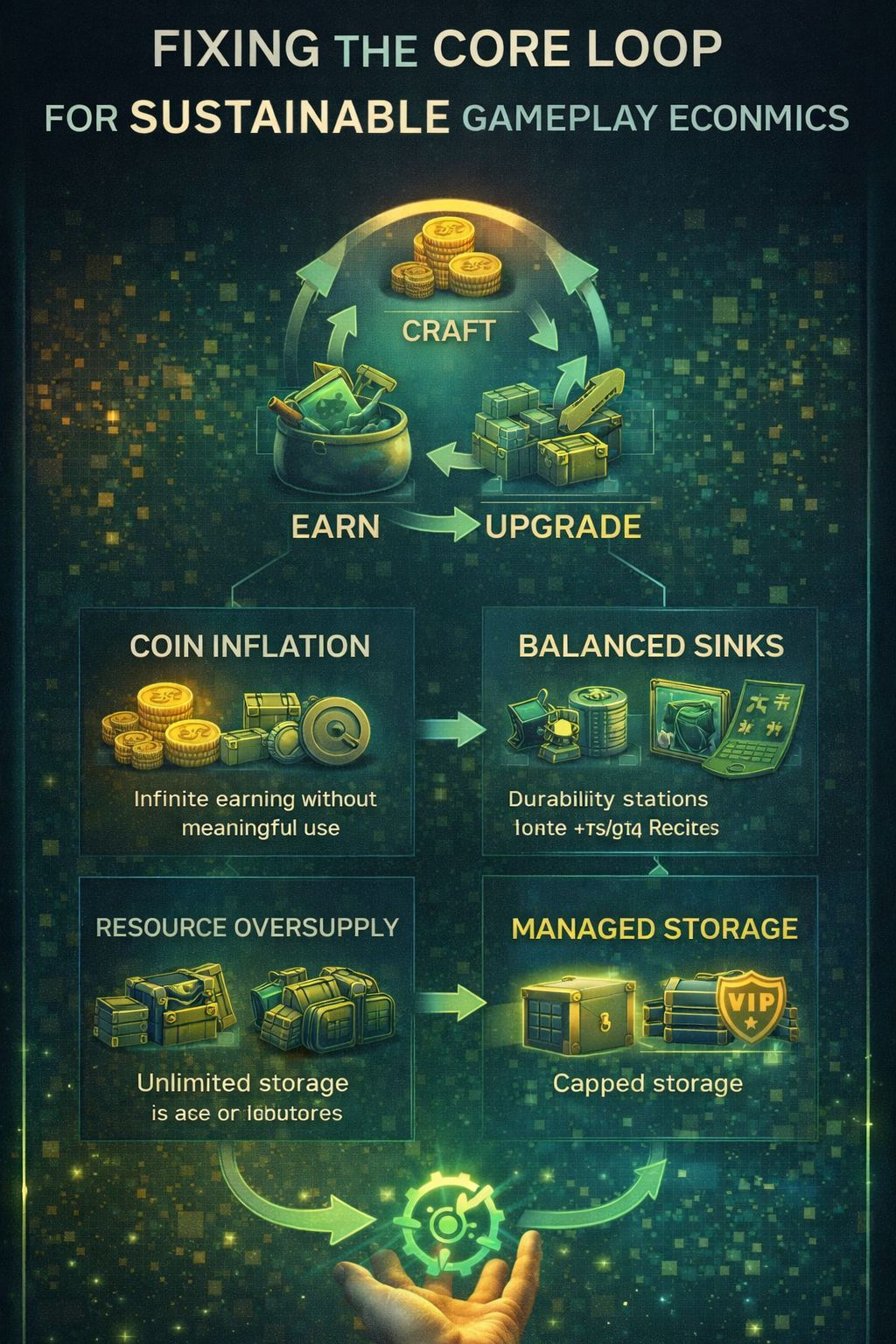
In many Web3 games, the focus is often on rapid growth and constant rewards. But over time, this approach creates hidden problems. One of the most common issues is economic imbalance. Players continue to earn resources, but there are not enough meaningful ways to use them. As a result, value starts to dilute, and the entire system becomes less engaging.
Pixels seems to be taking a different approach by focusing on the core gameplay loop.
Instead of allowing resources and coins to endlessly accumulate, the system is being redesigned so that everything has a purpose. Crafting is no longer just a one-time action — it becomes part of a cycle where items degrade, upgrades require effort, and resources constantly flow back into the system. This creates a more dynamic environment where players are encouraged to stay active and involved.
Another interesting shift is how resource management is being handled. In many games, players tend to store everything without any real limitation. Over time, this leads to hoarding behavior, where items lose their importance because there is no pressure to use them. Pixels introduces controlled limitations and progression-based storage, which forces players to make decisions instead of simply collecting.
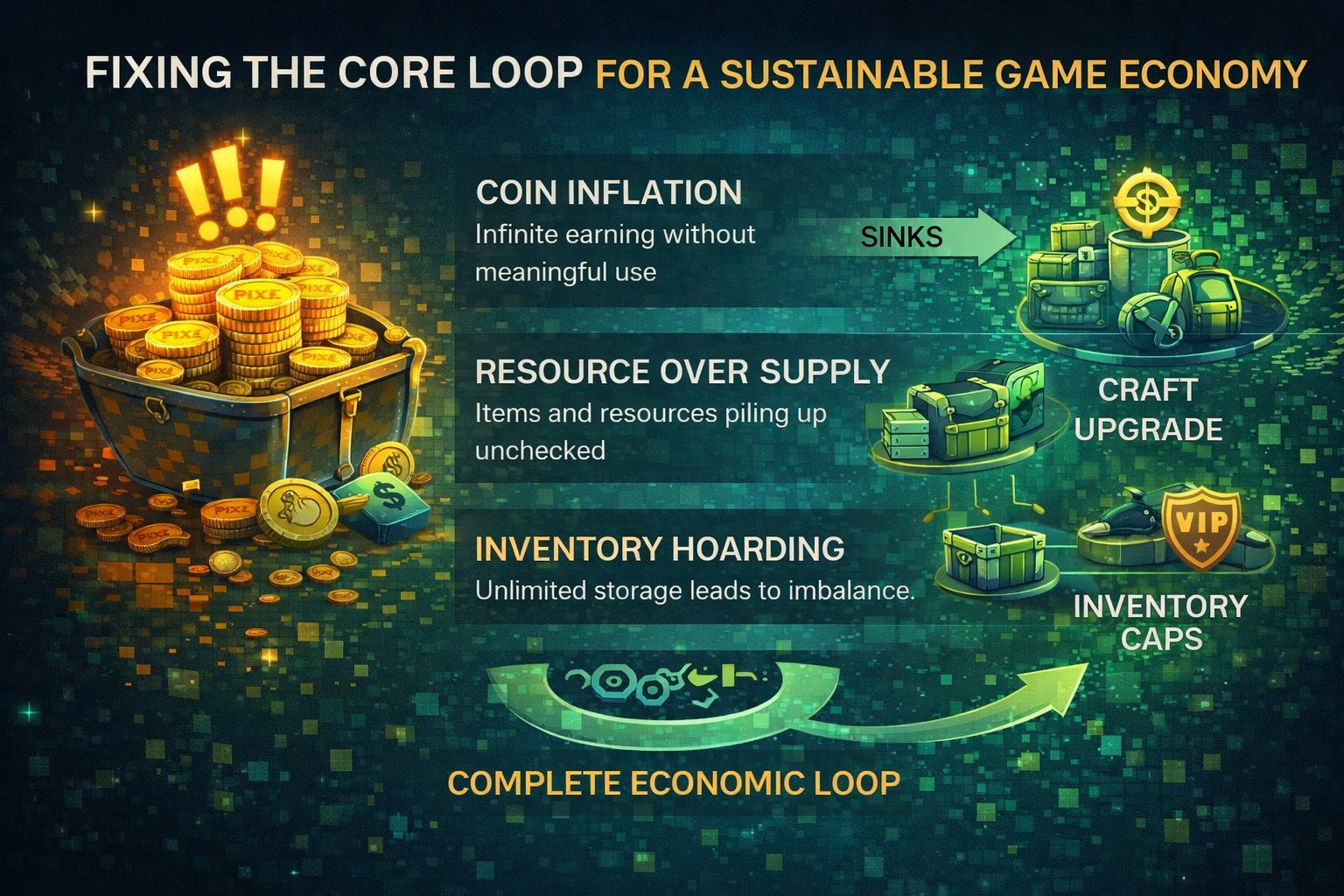
What stands out to me is how this changes player psychology.
When resources are limited and actions have consequences, every decision starts to matter more. Crafting, upgrading, and managing inventory become part of the strategy, rather than background mechanics.
There is also a clear effort to create structured progression. Instead of everything being accessible instantly, certain features and earning paths are layered behind progression systems. This adds a sense of achievement and direction, which is often missing in traditional play-to-earn models.
From a broader perspective, this redesign is about completing the economic cycle. A healthy game economy needs continuous movement — resources should be created, used, and reinvested. When this loop is broken, the system becomes unstable. Pixels is actively working to ensure that this loop remains balanced and sustainable.
To me, this is what makes the project interesting.
It’s not just about building a game where players can earn. It’s about designing a system where earning, spending, and progression are all connected in a way that keeps the ecosystem alive over time.