

the economy breaks before the game does
i’ve watched it happen enough times now that i can almost predict the sequence. project launches with real energy, rewards start flowing, bots arrive within two weeks, real players notice the economy feels off, token starts leaking, team scrambles, it’s already too late. the game might still be running but the economy is gone. and without the economy the game empties out slowly until one day the servers are still on but nobody’s there
 Pixels lived through versions of that. not as observers. as the team actually trying to hold the economy together in real time while players are inside it
that experience is what Stacked actually is. not a product roadmap item. not a whitepaper concept. it’s the system that got built because the alternative was watching everything collapse again
and the more i understand how it works the more i think the interesting story isn’t the rewards. it’s the infrastructure underneath the rewards
let me break it down properly
the trust score layer is where it starts. before you touch the marketplace, before withdrawals open, before $PIXEL flows to you the system has already been reading your behavior. not your level, not your quest completion rate. your behavioral pattern. how you move between sessions, when you act, what the rhythm of your activity looks like over time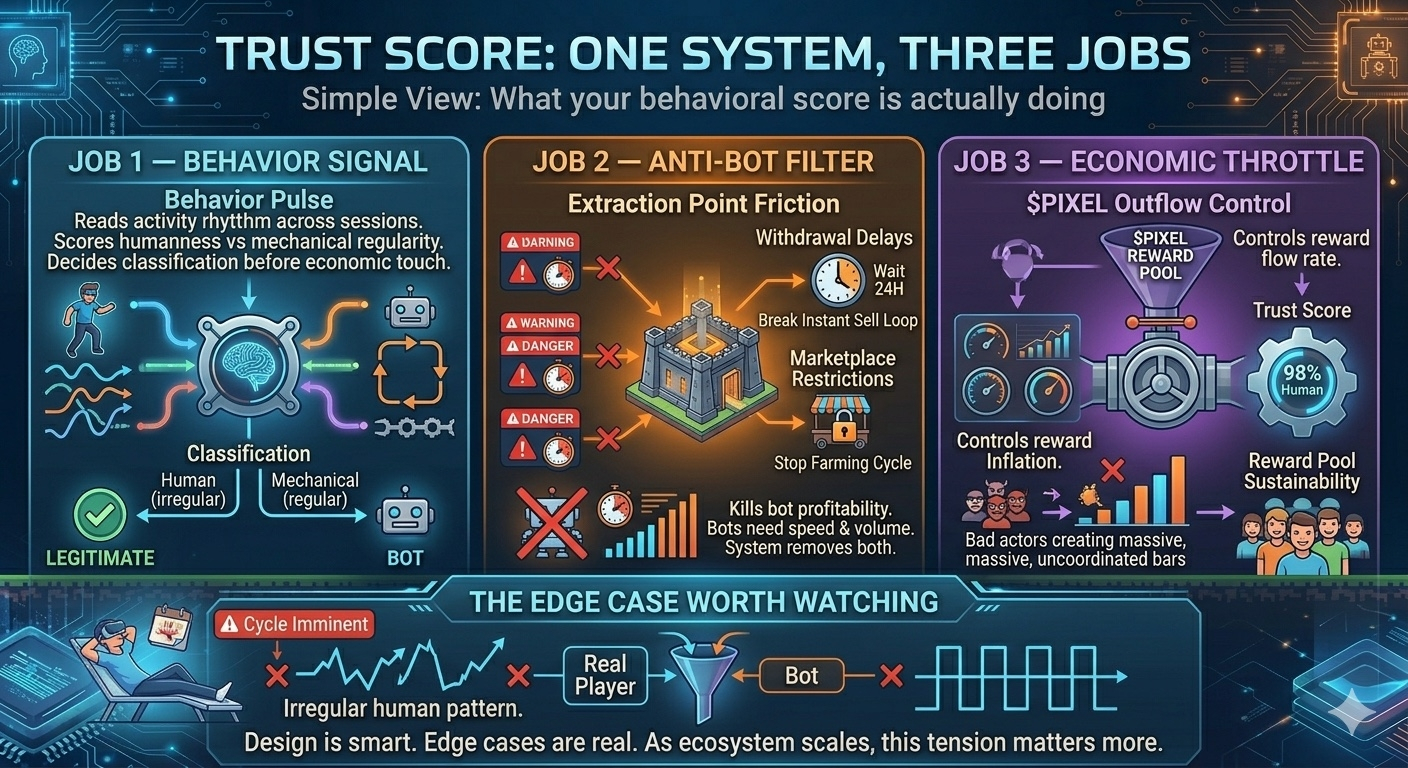
a bot has mechanical regularity. a real player has human messiness. the trust score is built to find the difference between those two things and gate economic access accordingly. low score means friction restricted marketplace, delayed withdrawals, throttled rewards. high score means the full economic stack opens up
purai obak lagche when you actually map this out — the system is rewarding you specifically for being unpredictably human. irregularity is the signal it’s looking for
but here’s where it gets more interesting
the trust score isn’t doing one job. it’s doing three simultaneously. it’s a behavior signal, an anti-bot filter, and an economic throttle all running as one system. and that overlap creates edge cases that are worth understanding clearly
a real player with an unlucky behavioral pattern maybe they grind heavily for two days then disappear for a week, or their session timing looks irregular for legitimate reasons can catch the same friction loop as a bot. the system cannot always distinguish intent from pattern. that’s not a flaw exactly. it’s the cost of building something that has to survive adversarial usage at scale. but it’s real and it’s worth knowing
Stacked sits underneath all of this as the actual engine. the AI economist layer isn’t just watching for churn. it’s analyzing cohorts, identifying where reward budget is leaking, designing experiments worth running, then executing those experiments inside the same system without a waiting period between insight and action. studios can ask why whales are dropping between D3 and D7, which mechanics correlate with retention past day 30, where flow is leaking out of the ecosystem and get answers they can act on immediately
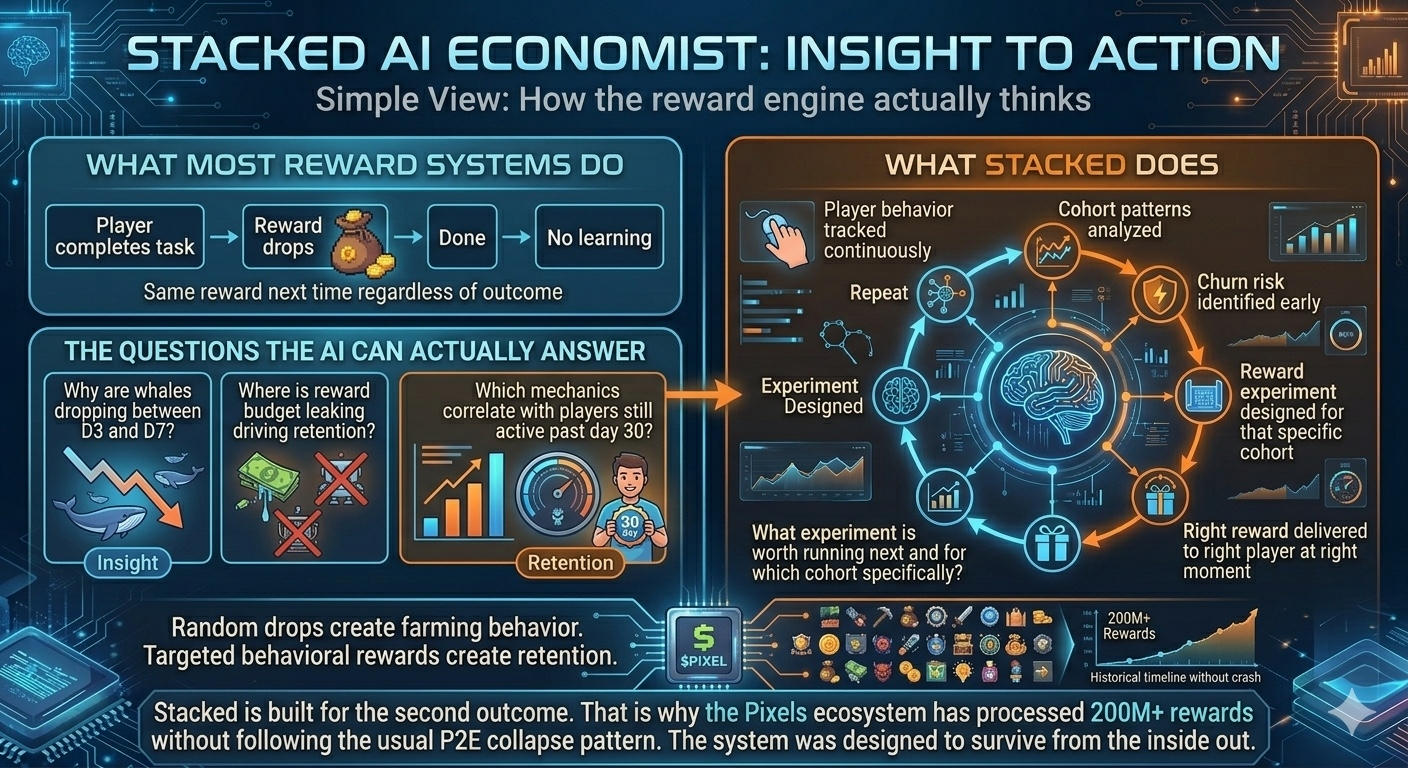 200M+ rewards processed. $25M+ in Pixels revenue. built in production, not in a deck. when the team says the system survives adversarial usage at scale — they have receipts
and the $PIXEL token story is changing quietly because of all this. it’s moving from single-game token to cross-ecosystem rewards currency. more studios plug into Stacked, more demand surface for the token, more behavioral data feeding back into the reward targeting system. that’s an infrastructure bet, not a game bet. completely different risk profile than most web3 game tokens
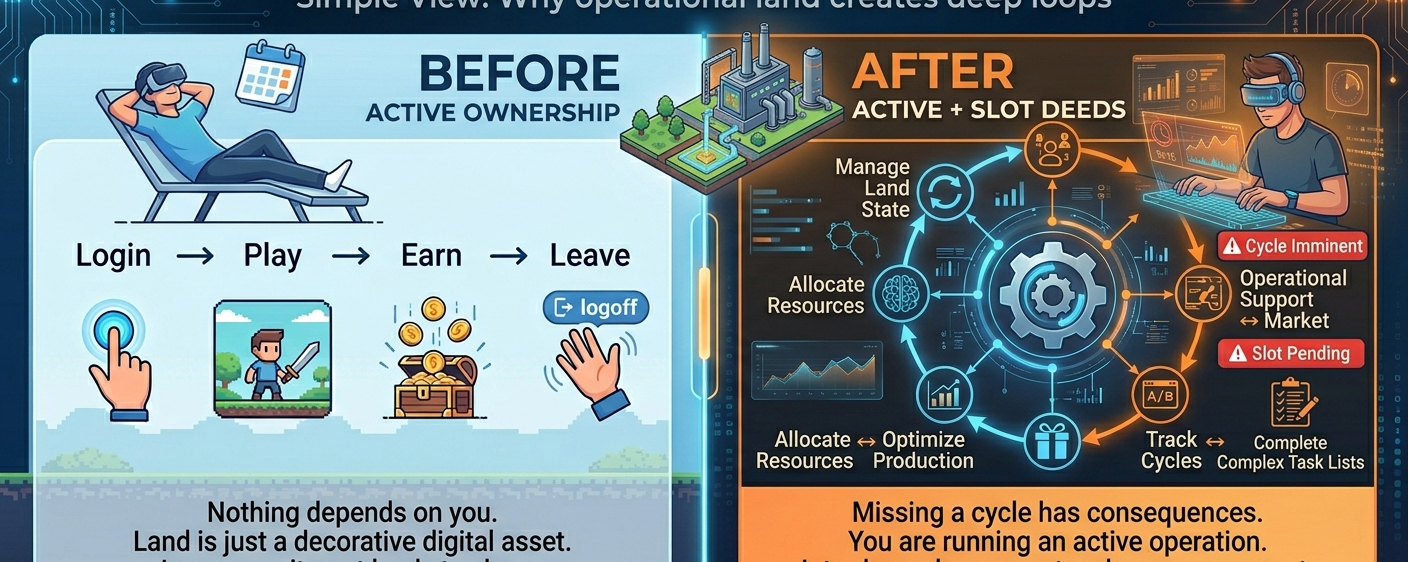
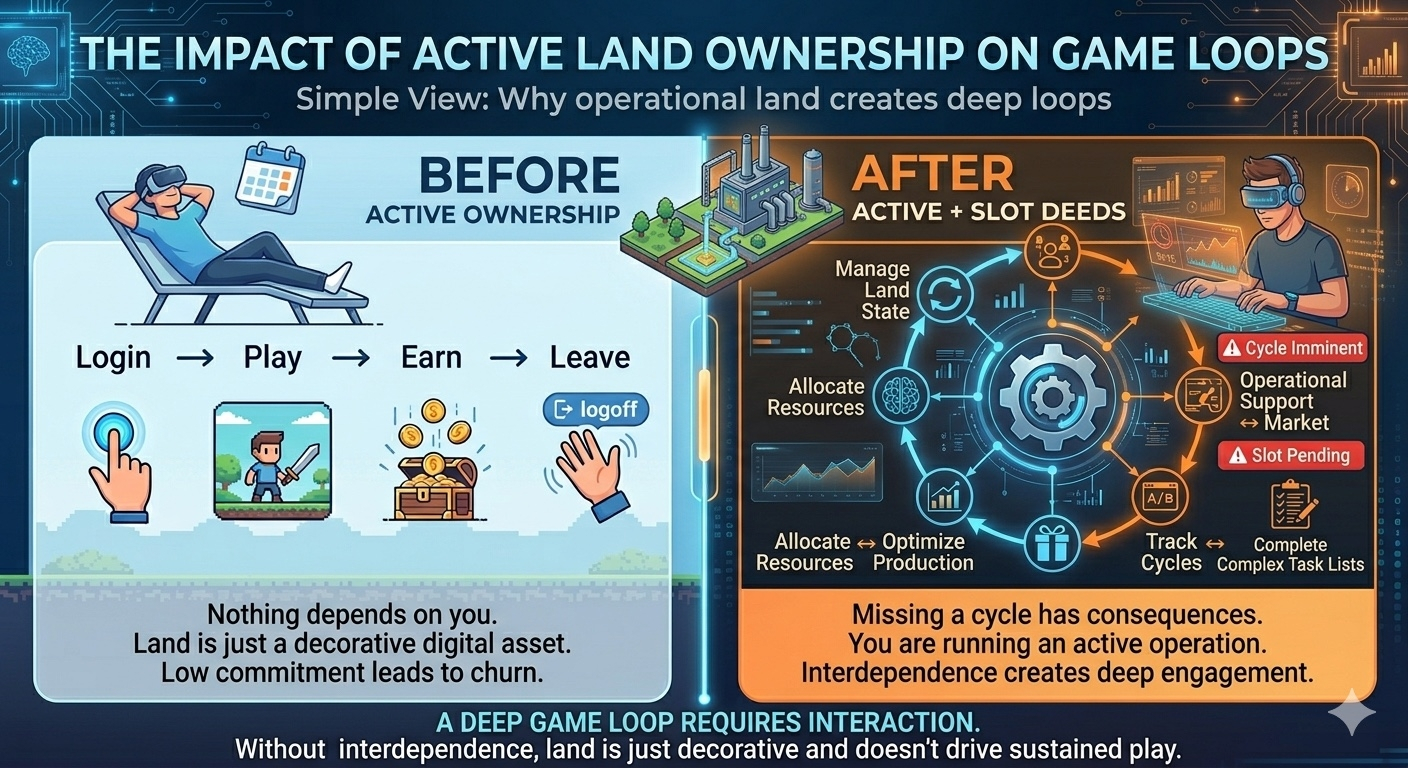
the boundary between playing a game and running a small digital operation inside a behavioral economy got very blurry very quietly. i don’t think most players noticed when it happened
i’m still thinking about what that means 👀