
Pixels looks like freedom. That’s the first impression. Bright fields, cozy farming, wandering around, crafting whatever you feel like. It’s relaxed. It’s calm. Honestly, it almost feels like the kind of game where nothing really matters — and that’s exactly why people like it.
But here’s the thing.
Spend enough time in Pixels, and you start noticing something… off.
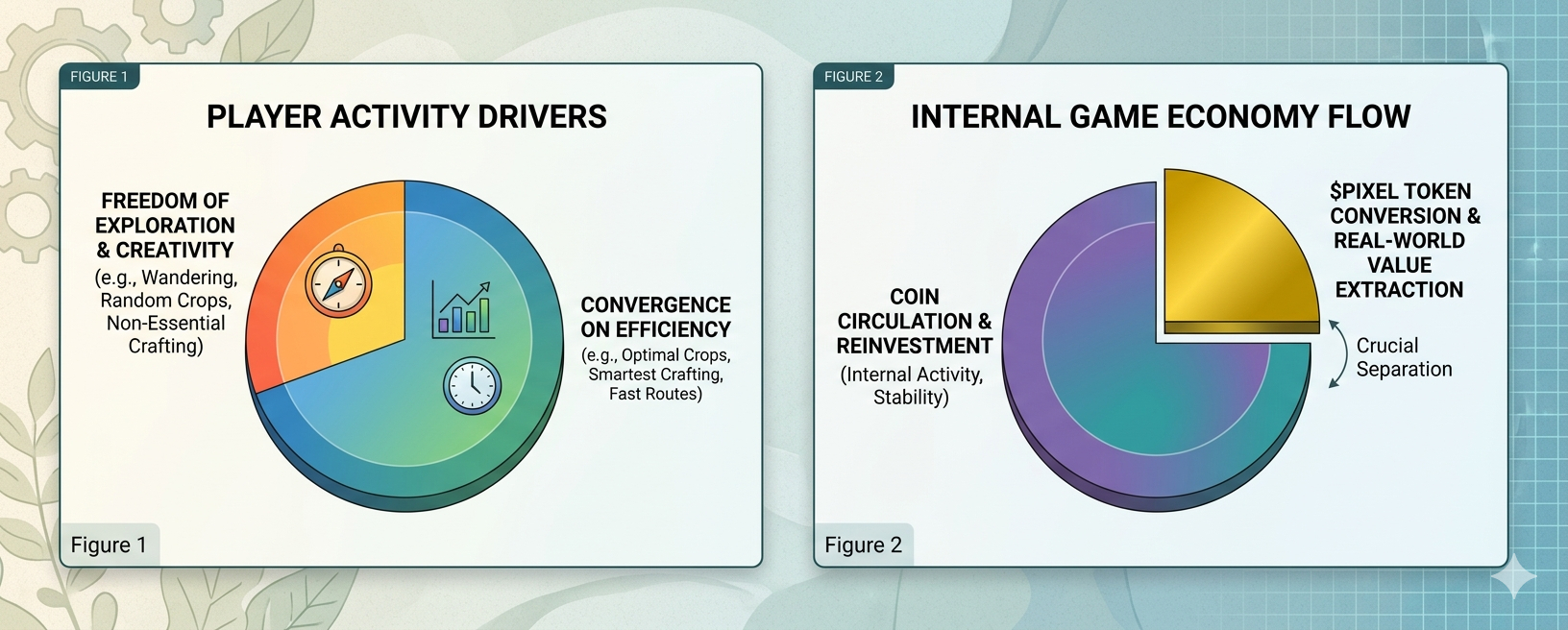
You begin like everyone else. You wander. You try random crops. You explore areas just because they look interesting. You craft things you don’t even need. It’s messy. It’s fun. It feels open.
Then slowly — and I mean slowly — you start changing.
You notice some tasks pay better.
Some crops feel smarter.
Some loops are just… faster.
So you adjust.
Not because the game forces you. It doesn’t. That’s the clever part. You still can do whatever you want. Nobody stops you. There are no walls. No restrictions. No "you must do this" moments.
But only certain things actually matter.
And once you see that, it’s hard to ignore.
You can plant anything… but only one thing really pays.
You can craft anything… but only some items make sense.
You can explore anywhere… but only a few routes are efficient.
That’s not restriction.
That’s relevance.
And honestly? That’s way more powerful.
I’ve seen this before. Games don’t need to lock you in. They just need to make one path smarter than the rest. Players will do the rest themselves. Every time.
And that’s where things get interesting.
Because suddenly… everyone starts doing the same thing.
No coordination.
No instructions.
No announcement.
Just quiet alignment.
You log in. Players are farming the same crops. Running the same routes. Doing the same loops. It’s weird at first. Then you realize — you’re doing the same thing too.
That’s not an accident.
The Task Board quietly pushes everyone toward stability. It rewards consistency. It rewards efficiency. Creativity? It’s still there. Sure. But it’s optional now.
Efficiency isn’t optional.
That’s the shift.
People don’t talk about this enough, but this is behavioral design, not just game design. Pixels isn’t telling players what to do. It’s shaping what feels smart. And once players figure out what’s smart, they converge.
Naturally.
And then there’s the economy. This part is honestly genius… and a little cruel.
Most of your effort in Pixels turns into Coins. Not the PIXEL token. Just Coins.
You’re active. You’re farming. You’re crafting. You’re doing everything right. But a lot of that effort stays trapped inside the game’s internal economy.
Only a smaller portion connects to real value.
Let’s be real — that’s intentional.
If everything turned into $PIXEL, the economy would explode. Inflation would kill it. We’ve seen that story already. Play-to-Earn games tried that. It didn’t end well.
Pixels avoids that problem by separating activity from value.
Everyone plays.
Everyone earns Coins.
But only some players extract meaningful value.
That creates something subtle. A quiet hierarchy.
Casual players keep the world alive.
Optimizers extract the value.
Nobody says it out loud. But it’s there.
And honestly? It works.
Players stay active because they’re always progressing. The economy stays stable because value is controlled. Retention improves because the system feels fair — even when it’s not perfectly equal.
That’s the balance Pixels pulls off.
But there’s another layer here. The psychological one.
When rewards become predictable, players feel comfortable. When loops become efficient, players feel productive. When the economy stays stable, players trust the system.
And trust matters. A lot.
Because most Web3 games lose players when trust disappears. Pixels keeps players because the system feels steady. Calm. Reliable.
It’s still a cozy farming game on the surface.
Underneath? It’s pure optimization.
That’s the twist.
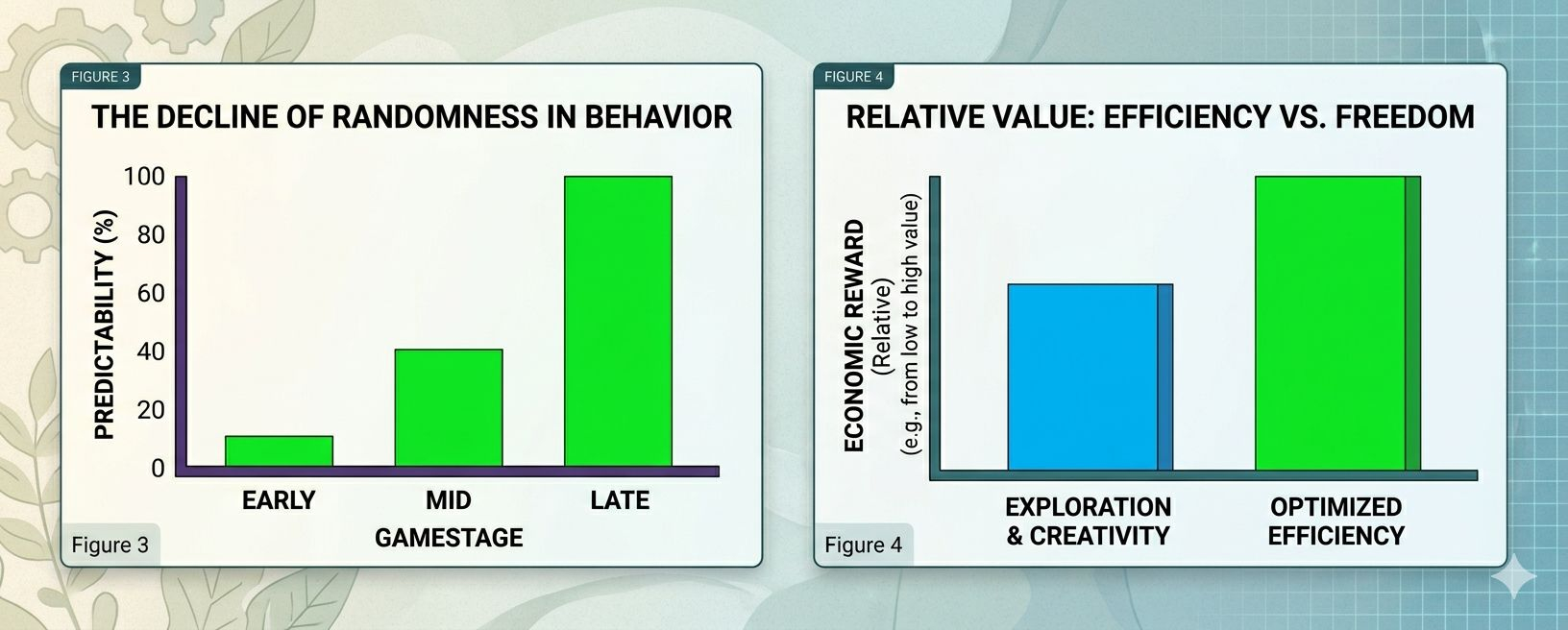
Pixels didn’t remove freedom. It just made efficiency more attractive. And once players taste efficiency, it’s hard to go back.
You stop wandering.
You stop experimenting.
You start optimizing.
Randomness fades.
The world stays open, but behavior becomes predictable. Players converge. Systems stabilize. Economies strengthen.
Pixels didn’t just fix Play-to-Earn.
They figured out something deeper.
They made players choose efficiency… instead of freedom.
No hard limits.
No forced paths.
Just incentives.
And human nature does the rest.
Look, I’ll be honest — that’s both impressive and a little unsettling. Because once players learn the optimal path, they rarely go back to wandering. Even if they technically can.
So here’s the real question.
If the Task Board disappeared for a day…
Would players explore again?
Or would everyone still run the same loops?
Because once randomness dies…
It usually doesn’t come back.
