
First, let's admit one thing: I have lost money in Pixels, and not just once. 😭
Now the square is full of posts about 'three days to break even' and 'monthly income over a thousand', which makes people excited and eager to rush in and start farming immediately. But today I want to write something different— as someone who has been struggling in this game for three months, barely breaking even after some losses and gains, I want to talk about those 'pits' that no one tells you about.
If you are considering entering the market, or if you have already entered but feel that something is off, this article might be more useful than a hundred call posts. Really.
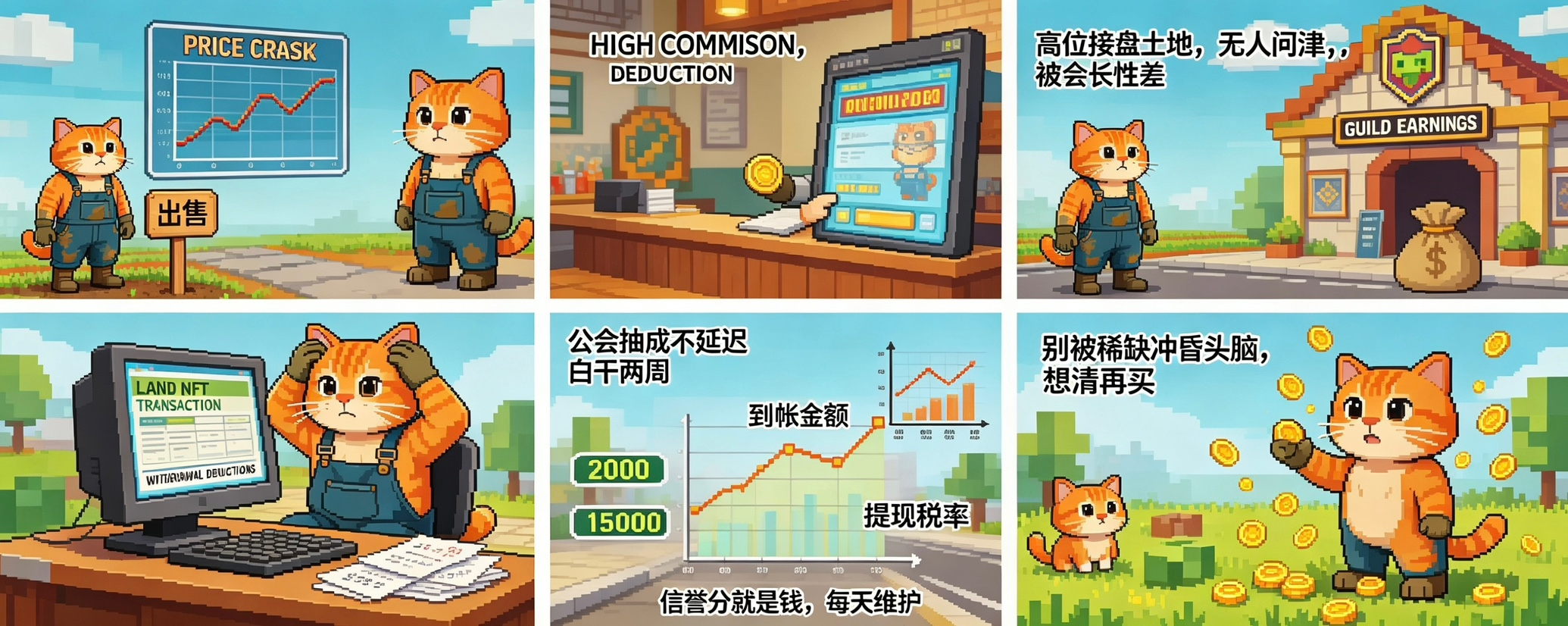
The first pitfall: Buying land at a high price, thinking I’m a landlord, but actually being a leek.
At the end of last year, when land NFTs were at their peak, I spent a considerable amount of money in the market to buy a Speck. My mindset at that time was very simple: there were only 5,000 plots in total, a scarce resource; once purchased, I could collect rent and make money while lying down. How great is that? 😎
So what happened?
Only after buying did I realize that the 'rent collection' logic of land is far from as good as advertised. Indeed, if someone farms on your land, you will earn a commission, but the premise is that someone must be willing to come and farm it. My plot was poorly located, low level, and had no features; it was on the market for a month with hardly anyone visiting. Later, I proactively lowered the price, renovated, and even organized a small event to attract people, yet still very few came. During that period, I refreshed the market page daily, watching the visitor count remain at zero, and my mindset broke several times 💔.
What’s worse, the liquidity of land is extremely poor. When I wanted to sell, I found that the asking price had been pushed down to below half of what I bought it for, and after two weeks, there wasn’t even a single inquiry. In the end, I gritted my teeth and sold it at a loss, getting back less than half of my U. That night, I lay in bed tossing and turning, with only one thought in my mind: Am I stupid?
What’s the lesson? Don’t assume that scarcity equals value. The real value of land lies not in 'having,' but in 'where it is' and 'how well it is managed.' A plot with no traffic and no features is just a digital wasteland, even weeds won’t grow. Don’t ask me how I know; just ask my aching heart.💸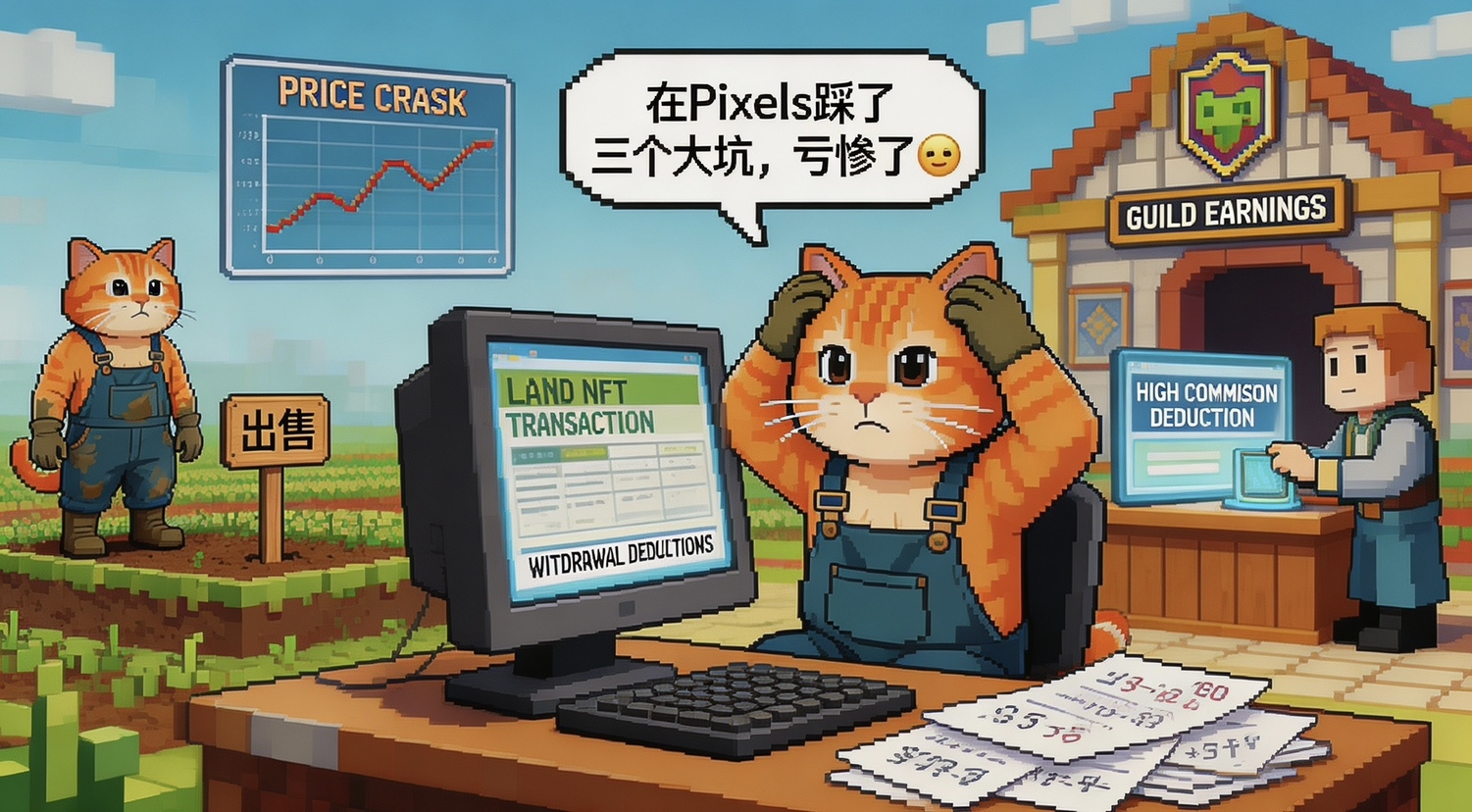
The second pitfall: Doubting life from being siphoned by the guild.
After losing everything in land, I got smarter and stopped messing around myself; instead, I found a seemingly active guild to join. The leader spoke beautifully: the guild shares resources, tackles big tasks together, and the profit-sharing is fair. When I heard that, I thought, isn’t this just 'clinging to the strong'? I hurriedly paid the deposit to join.
After joining the guild, my output did indeed increase a bit—more big orders appeared on the task board, and the guild buffs also increased significantly. But when I calculated my actual earnings, I found something was off, and very off.
The guild automatically deducts 15% from each member’s output as 'guild funds.' Note, this is total output, not profit. This means that what I worked hard to cultivate was sliced away before it even warmed up. Where did the money go? The leader says it's used to buy shared tools and maintain guild facilities, but I've never seen a detailed bill. Every time I ask, the leader just says, 'Recent expenses are high, we’ll disclose next time,' and that’s where it ends.
Later, someone in the guild secretly told me that the leader’s account withdrawal records were unusually frequent. Only then did I realize that most of that 15% commission never flowed back to the guild but went straight into the leader's wallet. I worked hard to cultivate, but I wasn’t nurturing myself; I was nurturing the leader. At that moment, I truly felt like a hardworking donkey 🐴.
When I left the guild, the guild system also deducted a 'penalty fee' from me. That’s right; leaving the guild also costs money. I was so angry I wanted to smash my keyboard.
Lesson: Before joining a guild, make sure to clearly understand the commission rate, whether the funds are transparent, and how the leader is perceived in the community. If the guild only shouts slogans but doesn’t take action, if the leader never discloses the accounts, and if the commission is particularly high—run fast, don’t look back.🙅♂️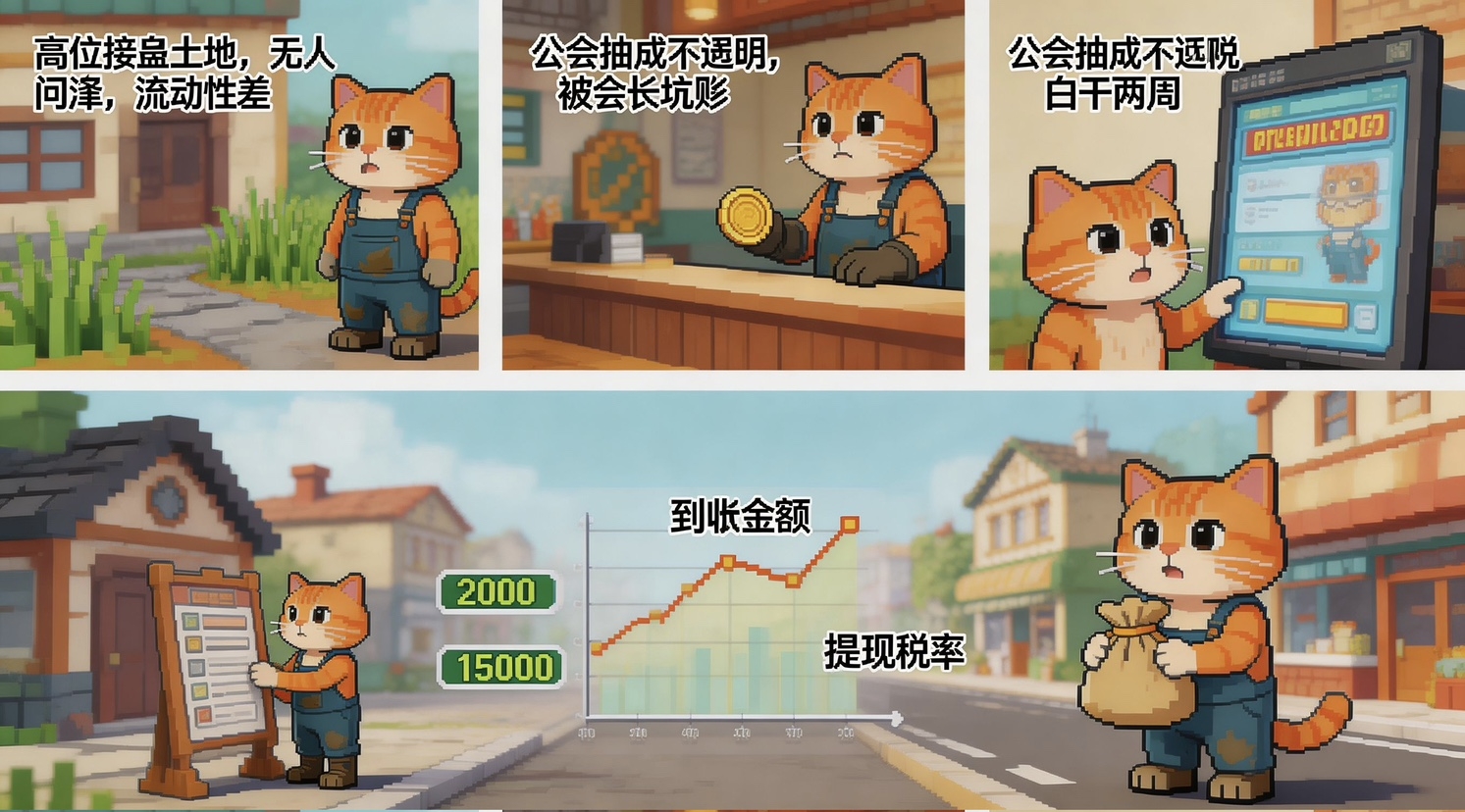
The third pitfall: Miscalculating the cash-out tax, wasted two weeks of effort.
This is the dumbest mistake I’ve ever made, bar none.
After saving for two months of $PIXEL , totaling several thousand coins, when the price was decent, I prepared to cash out a portion. Because I’ve always been a casual player, my credit score wasn’t high (just over two thousand), and I hadn’t paid much attention. When I tried to cash out, the system popped up a box, and I saw: Farmer Fee, deduction rate of about 40%.
I was stunned 😱. I calculated that after deductions, the money I received, minus electricity, internet fees, and the occasional bought acceleration tools, resulted in a net loss. This means that during those two months in Pixels, I didn’t earn a single cent, but instead lost money. Every night for those two months, I was clicking away, my fingers sore, only to find it all in vain.
Only later did I seriously study the credit score mechanism. It turns out that the cash-out tax rate is directly linked to the credit score: around 2000 points deduct 40%, and over 40,000 points only deduct 5%-6%. How big is the difference? For the same earning of 1,000 coins, you get 600 coins, while others get 950 coins. This back and forth is more than a double difference.
How to increase your credit score? Daily activity, quality of task completion, binding social accounts, holding VIP status, participating in staking… Each of these requires continuous investment, not just fishing for three days and drying the nets for two. I used to think, 'It’s just a game; why take it so seriously?' As a result, reality slapped me hard: if you don’t take it seriously, the system will seriously collect your taxes.😤
Since then, I started logging in daily, completing tasks, and maintaining my credit score. After three months, my credit score climbed from two thousand to around fifteen thousand, and the cash-out tax rate dropped to over 20%. Although it's not yet at the lowest tier, at least I'm no longer in a 'wasted effort' state. I cashed out last week and nearly cried when I saw the amount credited—it finally felt promising.#pixel
In conclusion: Three things Pixels taught me.
After stepping into these three pitfalls, my biggest realization is: @Pixels is not a place for you to 'make money quickly'; it’s a place for you to 'learn to count.'
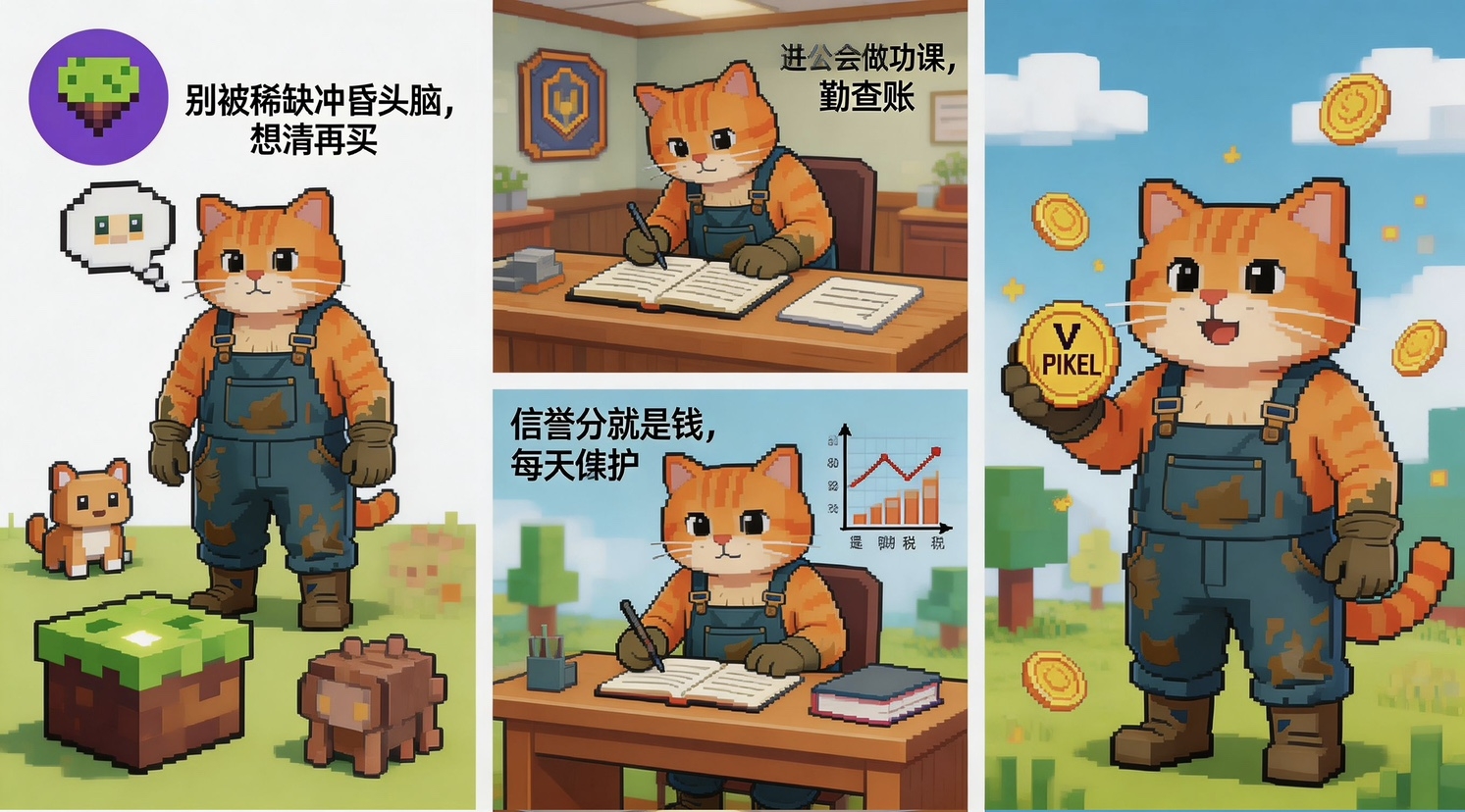
First, don’t let scarcity cloud your judgment. Land NFTs, limited pets, rare skins—whether these things are valuable does not depend on 'how many there are,' but on 'how many people want them.' Think carefully before buying; don’t become the one stuck with the bag. The money I lost on that land could have bought me two months of takeout. 🍱
Secondly, guilds are a double-edged sword. A good guild is an accelerator, while a bad guild is a siphon. Do your homework before joining a guild, and check the accounts diligently after joining; if something seems off, run immediately. Don’t be like me, realizing the issue only after being siphoned for several months.
Thirdly, credit points are money. Don’t find it troublesome; spend ten minutes daily to maintain it, and you’ll thank yourself when cashing out. Now, I log in daily like clockwork, not to earn much, but to further reduce the tax rate.
Now I no longer expect to get rich overnight in Pixels. I treat it as a 'digital habit': logging in daily to manage things, accumulating credit points, occasionally buying things I like with vPIXEL, and watching the tax rate gradually decrease when cashing out, while sometimes also receiving staking dividends. Although it's not much, that feeling of 'getting better bit by bit' is much stronger than diving in like gambling.
As for making money? That’s a byproduct.
What is truly valuable is what you learn in this process—how to distinguish a good guild, how to calculate the real return cycle, and how to accumulate credit over time. These things are applicable in any game.
I hope you don’t have to pay tuition for all three of these lessons like I did.🙏