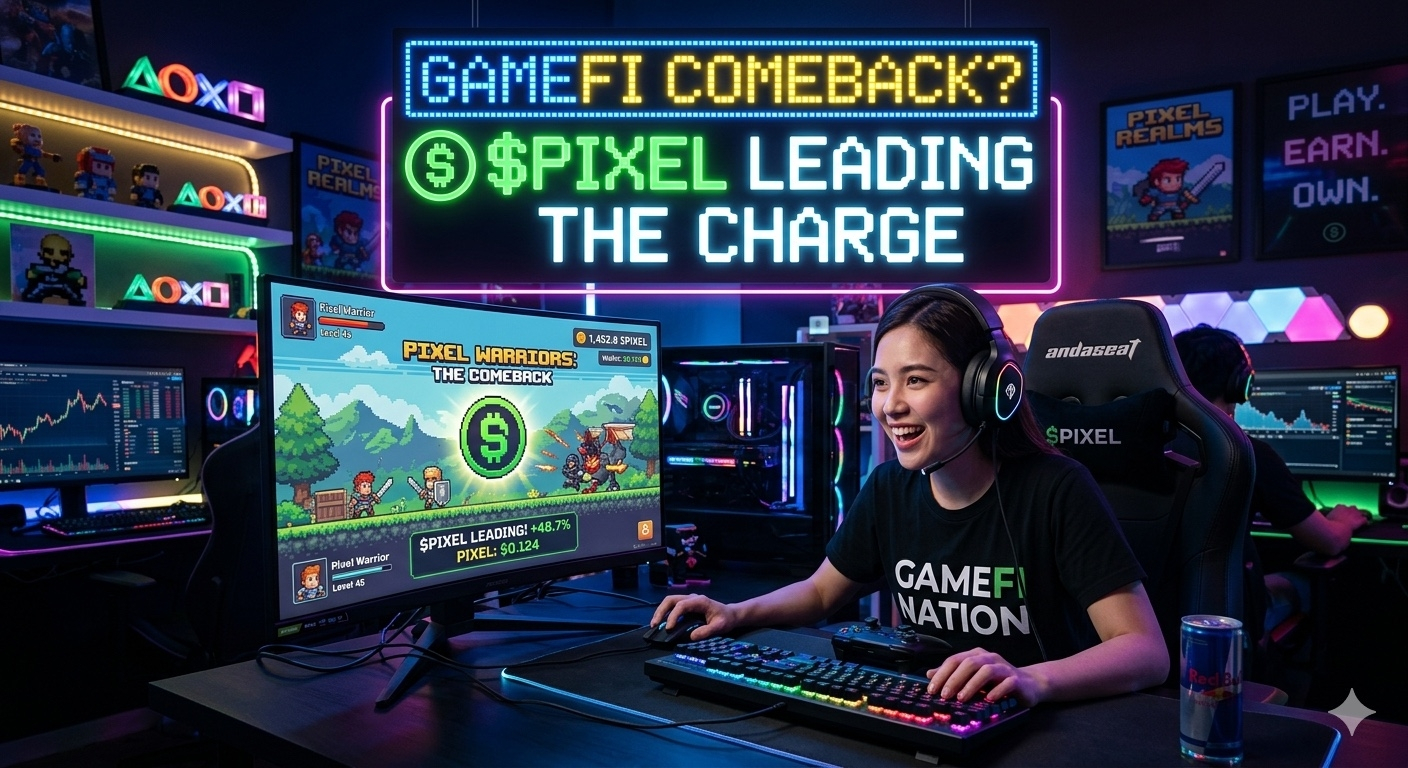
The GameFi narrative is quietly coming back to life, but this time it feels different. It’s no longer driven by hype cycles or unsustainable rewards. Instead, the focus is shifting toward real usage, stronger in-game economies, and communities that actually stick around. In that environment, PIXEL is starting to stand out as one of the more interesting examples of what GameFi 2.0 could look like.Pixels has evolved beyond the typical “play-to-earn” label. Built on the Ronin Network, it started as a simple farming-style RPG but has gradually transformed into a much larger social and economic world. Players are not just participating in gameplay—they are actively engaging in systems that resemble a functioning digital economy. They own land, manage resources, trade assets, and collaborate through guild structures that add depth to progression.
This matters because it creates something many earlier GameFi projects failed to achieve: consistent in-game demand. When players are deeply involved in an ecosystem like this, the token stops being just a speculative asset and starts becoming a utility tool inside the game itself.
The strength of PIXEL comes from its embedded utility. It is used for upgrades, crafting, and progression systems that directly impact gameplay. It also plays a role in guild interactions, NFTs, and social advancement within the ecosystem. On top of that, future updates around staking and rewards are designed to further integrate the token into long-term participation rather than short-term speculation. This kind of structure helps reduce dependency on hype cycles and instead builds demand through continuous user engagement
A major reason Pixels has managed to survive where many others failed is its approach to design philosophy. Instead of prioritizing token rewards first, it leaned into gameplay and retention. Many GameFi projects from earlier cycles collapsed due to inflationary reward systems and lack of real engagement loops. Pixels took a slower but more sustainable path by focusing on making the game enjoyable first and integrating crypto mechanics second. That difference is starting to show its value now.
As the ecosystem has expanded, so has its complexity. Updates like larger world systems, production chains, and guild-based collaboration have introduced deeper economic mechanics. The game is no longer just about simple tasks—it now includes layered systems where supply, demand, and coordination matter. This naturally leads to stronger internal economies where player activity directly influences token usage.
From a market perspective, PIXEL is also beginning to show early signs of renewed interest. Activity levels, trading volume patterns, and overall sentiment in the GameFi sector are gradually improving. While it is still far from peak hype conditions, the structure forming now is often what early recovery phases look like—slow accumulation, growing attention, and narrative rotation back into gaming tokens.
The bigger picture is that GameFi itself is likely transitioning into a new phase. The first wave focused heavily on “earn-first” models that ultimately proved unsustainable. The next phase appears to be moving toward “play-first” ecosystems where long-term engagement, user retention, and actual in-game economies matter more than short-term yield mechanics. In that context, projects with real gameplay loops and active communities have a stronger chance of surviving and growing.
PIXEL fits into this emerging framework. It combines accessibility, a growing ecosystem, and meaningful in-game utility in a way that aligns with what the next generation of GameFi is trying to achieve. It is not positioned as a guaranteed winner, but it is clearly part of a category that the market is starting to pay attention to again.
If GameFi does make a broader comeback in the next cycle, it likely won’t be led by hype-driven launches. It will be led by ecosystems that stayed alive during the quiet periods and continued building when no one was watching. PIXEL is already part of that group.