

Pixels (PIXEL) is supposed to be this social, casual Web3 game built on Ronin, built around farming, exploring, creating… all the soft, familiar ideas that sound harmless until you remember how many times crypto has already tried to package them and sell them back as something new.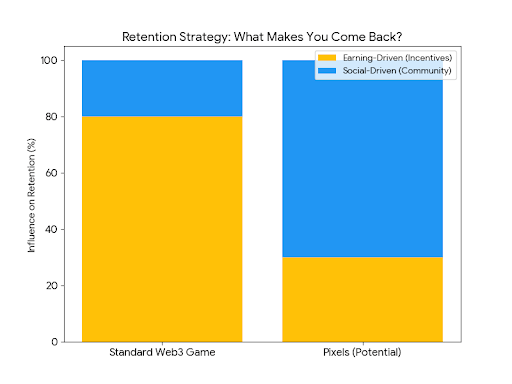
I’ve seen this setup before. Too many times, honestly. It usually starts with a clean-looking world, a simple loop, a promise that this one is different because it’s “player-driven” or “community-first.” Then you dig a little deeper and it slowly turns into the same pattern—people optimizing rewards instead of actually playing, attention fading the moment incentives weaken, and a game that feels more like a system than a place.
That’s why I didn’t take Pixels seriously at first. It looked too easy to understand. Farming, walking around, interacting. No heavy mechanics, no big claims. Just a soft entry point. And in crypto, “simple” usually means “temporary.”
But I didn’t close the tab either.
There’s something slightly uncomfortable about how normal it feels. Not exciting. Not groundbreaking. Just… normal enough that you can imagine someone logging in without thinking about tokens first. That alone puts it in a different category than most Web3 games, which often feel like they were designed for dashboards instead of people.
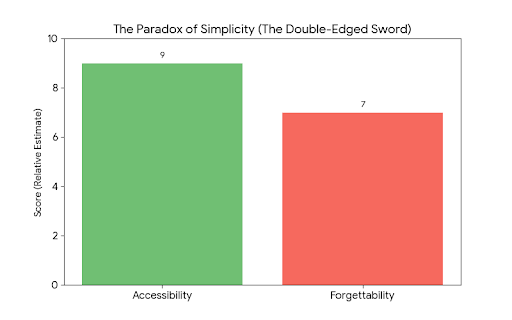
Still, I don’t trust that feeling completely. Because simplicity cuts both ways. It can make something accessible, or it can make it forgettable. And I’m not sure yet which side Pixels lands on. You can plant, move around, do your thing—but what actually makes you come back tomorrow? Not the idea of coming back, but the real pull. That’s where most of these projects quietly fail.
The social layer is probably the strongest piece, but even that needs time to prove itself. It’s easy to say a game is social. It’s harder to create a space where people actually care about being there, even when there’s nothing to gain. Most crypto communities only look alive because there’s something being earned. Take that away, and things get quiet fast.
Ronin helps, of course. It gives Pixels a kind of environment that’s already used to gaming, already familiar with these loops. That lowers the barrier, makes it easier for people to show up. But showing up is the easy part. Staying is where things usually fall apart.
And that’s where I’m stuck with it.
I don’t see anything obviously broken. But I also don’t see anything that guarantees it sticks. It sits in this middle space where it works just enough to keep your attention, but not enough to lock it in. And maybe that’s intentional. Or maybe it’s just unfinished in a way that time will either fix or expose.
What keeps me watching is that it doesn’t feel loud. It’s not trying to force a narrative. It’s just there, running, letting people interact with it however they want. That’s rare in a space where everything is constantly trying to prove itself.
But quiet doesn’t always mean strong. Sometimes it just means unnoticed.
So I’m still looking at it the same way I started—without hype, without dismissing it either. Just watching how people behave inside it, how long they stay, what happens when the initial curiosity fades.

It might turn into something real. Or it might just be another case where something feels close, but never actually crosses that line.