

After being in this industry for a long time, you will notice an interesting phenomenon: the projects that often die first are those that constantly talk about 'changing the world' and 'metaverse dreams', while those that thrive are usually the ones who find ways to 'settle accounts' with you.
I have read the recent white paper updated by Pixels three times. The more I read, the more interesting it becomes. It no longer talks to me about pixel style sentiment, nor does it repeat the almost worn-out story of 'play-to-earn (P2E)'. On the contrary, it shows a near-cold honesty. It lays its cards on the table: I am not here to create a game for everyone to exploit for free; I want to create a precise advertising buying platform.
The subtext of this transformation is actually very heart-wrenching— in this world full of gold mining vampires, the project party has finally learned to counter human nature with the most boring and realistic Web2 business logic.
But what exactly is this called?
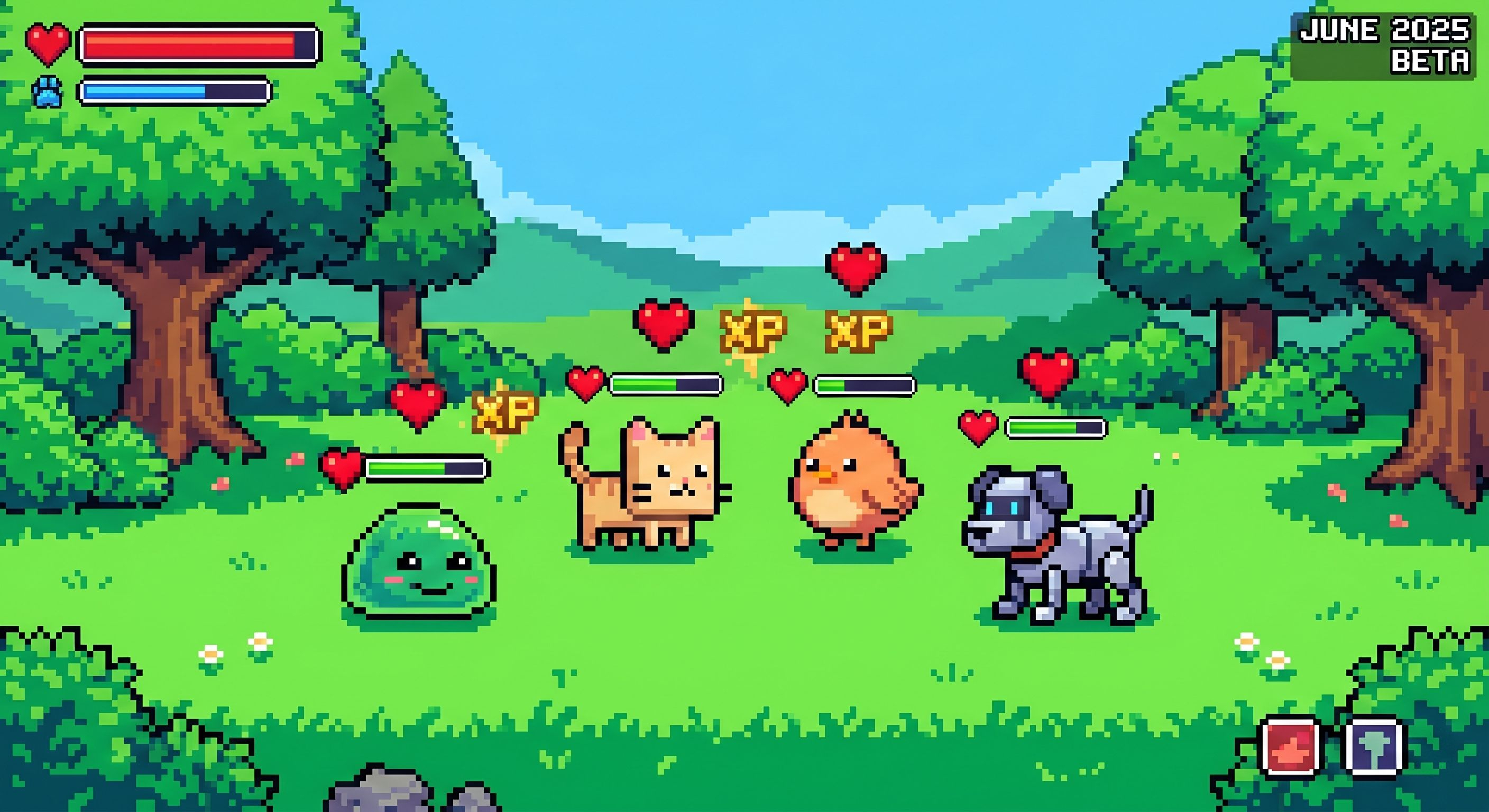
Pixels was indeed a miracle. During that period when chain games were in dire straits, it surprisingly generated astonishing daily active users with its extremely simple farming, sericulture, and decoration. At that time, no one realized the coming crisis; everyone was immersed in a FOMO illusion of 'as long as I click the mouse a few times every day, the project party will send me money'.
That is a utopia full of bubbles, also a liquidity mining dressed in the guise of a game.
But reality is always cruel. When the number of freeloaders exceeds the number of willing payers, and the selling pressure is so great that even calculators cannot keep up, even the most steadfast faith will collapse in the face of a shrinking wallet. Pixels has experienced that kind of pain, so the things it brings out now are simply a 'KPI assessment manual for Internet giants'.
In this white paper, you won't find any lengthy discussions about 'gameplay', but instead, a metric called RORS (gold mining return on investment).
I laughed out loud when I saw this term. In the world of Web2 user acquisition, this thing is called ROAS (Return on Advertising Spend). Pixels is no longer pretending; it sees every token given to players as a 'user acquisition expense'.
The logic of the project party has become extremely clear and stingy: I give you a coin, how much profit can you bring back to me?

If you are a professional hair-pulling party that only thinks about cashing out, I’m sorry, but Pixels' system will mark you like the most precise surveillance camera. The 'Smart-Reward' they are implementing now is, to put it bluntly, a discriminatory treatment. If you are willing to spend real money to buy VIP, buy decorations, and spend time socializing in the game, it will give you a rebate; if you simply want to suck blood, it has a hundred ways to make you gain nothing.
This extreme sense of 'stinginess' makes me feel that this industry is beginning to get grounded.
The previous chain games were giving out money with their eyes closed, trying to buy loyalty with cash. Now, Pixels stands at the door with an abacus, treating players as data tags, as LTV (lifetime value). It repeatedly mentions in its white paper that it wants to be a 'chain-based advertising intermediary alliance'; how is this the metaverse? This is clearly a Web3 version of AppsFlyer or Applovin.
This anti-narrative stands out as particularly alternative in the Web3 circle that constantly shouts about 'starry seas'.
But looking at it from a different logic: is this kind of honesty a rare clarity?
Pixels is trying to build a closed loop. It has introduced the so-called 'joy beans (vPIXEL)' that can only be spent in the game; this move is simply vicious yet clever. If you want to cash out the profits you’ve earned, it will charge you a hefty exit fee; if you are willing to stay in its ecosystem to consume or play other games on its platform, then there will be no fees.
This is essentially playing the logic of 'casino tokens'. Don't leave after winning money; the second floor has saunas and buffets. If you are willing to spend your chips here, I might even give you a little more.
The ultimate goal of this strategy is to solve the ultimate problem that has plagued chain games for three years: token inflation. When most of the value in a system no longer flows to sell orders in the secondary market but turns into in-game vouchers and circulating 'joy beans', this Ponzi structure may last a bit longer, or even transform into a viable business model.
Pixels even dragged other game companies that joined its ecosystem down with it. It does not demand that these games be incredibly fun; it only asks that these games can contribute data and help it to make the 'gold mining return on investment' positive. In one system, the game itself has become a 'validator'. This is no longer about validating code but about validating human nature—seeing who can retain users the longest and who can make users spend more money.
You have to admit that treating players as data on an assembly line and treating games as precise advertising placements is very un-Web3. It lacks the romanticism of decentralization and is instead full of the shrewdness of centralized giants that calculate every penny.
But looking back, where are those romantic experiments now?
Most of them lie in the graveyard of public chains, becoming fodder for later ridicule. And Pixels' second-best approach, which has Web2 user acquisition genes, although boring and seemingly 'mundane', is really trying to solve the huge blind spot of reality that has been deliberately ignored: without a continuous stream of external consumption, all chain games are merely games of transferring money from one hand to the other.
Pixels' current strategy is essentially sending a letter of discouragement to all the hair-pulling parties. It is telling everyone: the era of 'just come in and pick up money' is over. The current game rule is that you must first demonstrate your value; you must first become a 'contributing consumer' before the project party is willing to let a bit of profit slip through their fingers.
This turning point signifies that chain games have officially shifted from 'faith-driven' to 'data-driven'.
Let me say something heartfelt.
Will Pixels be successful? I don’t know. This economic model built on complex algorithms and strict limitations still faces the ultimate challenge of human nature. If players feel that playing in your 'abacus' is too exhausting and too much like working, they will still choose to leave.
But this transformation provides an extremely realistic observation sample. It reveals that after experiencing the madness of disillusionment, Web3 games are helplessly returning to the commercial civilization of Web2. It no longer pursues becoming an independent, free virtual world but attempts to become a more efficient, on-chain commercial traffic tool.
This may disappoint those who pursue pure on-chain spirit, but for an industry that is already exhausted, a project that can calculate accounts and survive is far better than an illusion that can only draw a pie in the sky.
Pixels is becoming an extremely precise, on-chain data abacus. With the sound of the abacus beads, the fervent, blind, and nationwide gold mining FOMO era is speeding away from us.
As for how much 'game' quality is left in this precise user acquisition machine, I’m afraid no one cares anymore. Everyone is busy checking whether their RORS has met the standard, after all, in the face of reality, sentiment is usually the least valuable.
This is the current reality. Cold, shrewd, and extremely boring. But perhaps this is the only narrow path for Web3 games to the next cycle.
That illusion of 'coming in and picking up money' should remain in yesterday's dreams.