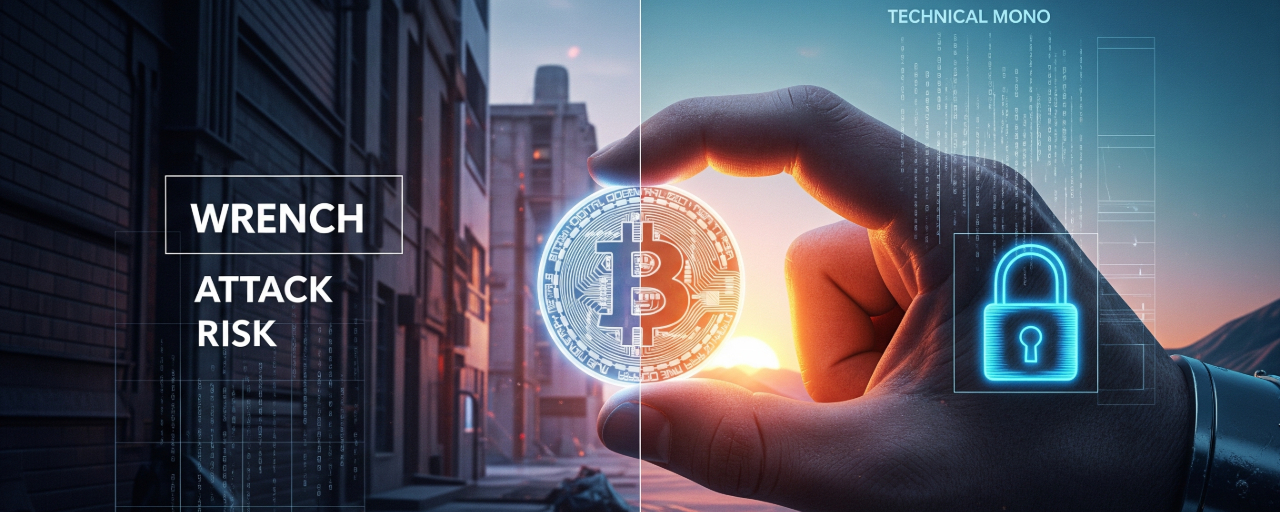
The crypto landscape of 2026 has shifted from a battle of code to a battle of physical and geopolitical resilience. As digital defenses harden, threats have turned "meatspace" (physical), while global tensions in the Middle East test the narrative of Bitcoin as a safe haven.
1. The New Threat Vector: "Wrench Attacks"🤯🤯
As of April 2026, the industry has seen a 75% surge in physical coercion incidents year-over-year.
What it is: Often called the "$5 wrench attack," this involves criminals using physical force, kidnapping, or home invasions to compel victims to hand over private keys.
The Epicenter: France has emerged as a high-risk zone, with at least 41 crypto-related kidnappings reported in early 2026.
Mitigation: Move beyond simple passwords. Use multi-signature (multisig) wallets that require approval from geographically separate devices or people, and maintain "decoy wallets" with smaller amounts to satisfy attackers under duress.
2. The Stablecoin Mirage🤫🤫
While stablecoins surpassed a $300 billion market cap in 2025, they remain structurally fragile.
Structural Weakness: In late 2025 and early 2026, several DeFi stablecoins like USDe and Yala YU suffered major depegging events, with some dropping as low as $0.02 during market shocks.
The Hidden "Run Risk": Even fiat-backed giants face "redemption friction." Regulators now define timely redemption as two business days, but during crises, this window can feel like an eternity.
3. Trending Alternatives: Digital Gold vs. "Digital Safety"😉😉
In this hour of need, capital is rotating toward assets that offer true non-correlation.
Tokenized Gold (RWAs): With the Middle East conflict driving trust away from fiat, tokenized gold has become a standout. These assets are 1:1 backed by physical gold but compressed into a liquid, blockchain-based format.
Bitcoin’s Dual Identity: In 2026, Bitcoin acts as a "hybrid asset." It often drops initially during geopolitical shocks (like a tech stock) but rebounds faster as narratives shift toward inflation and bank instability.
Privacy Hedges: Assets like Zcash (ZEC) have seen their correlation with Bitcoin drop, serving as a privacy-focused hedge for those needing to move capital discreetly in conflict zones.

4. Retaining Your Position Amid Middle East Tension🤔🤔
Maintaining a crypto presence during heightened geopolitical instability requires a "Low-Profile, High-Security" strategy:
Operational Stealth: Avoid linking your real-world identity to your public crypto activity. Use nicknames and avoid flaunting wealth on social media to prevent being profiled by wrench attackers.
Geographic Distribution: If you hold significant assets, use geographically distributed backups. Keep one key share in a local vault and another in a different jurisdiction to ensure a single regional crisis doesn't lock you out.
Self-Custody is Mandatory: In 2026, keeping large sums on centralized exchanges (CEXs) will be considered a critical error. Exchanges can freeze accounts during sanctions or political upheaval; non-custodial hardware wallets (like Ledger or Trezor) are essential for retaining true ownership. Don't forget to share your opinion!
#RWA #DePIN #Market_Update #crypto