

Economy|Energy|Indonesia
Save
Click here to share on social media
Share

Suhail Jassim
Published On 18/4/2026 18/4/2026
|
Last updated: 14:57 (Makkah time) Last updated: 14:57 (Makkah time)
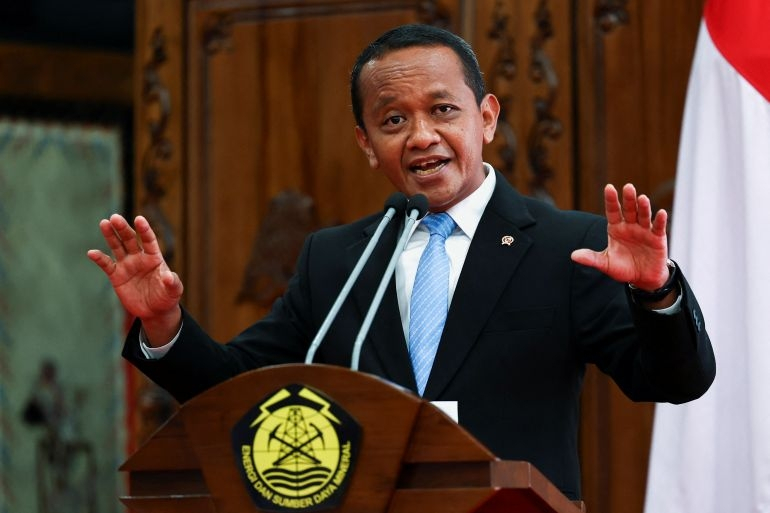
Indonesian Minister of Energy and Mineral Resources, Bhuwana Laha Dalia, confirmed that the country's crude oil reserves are secured until the end of this year, following Jakarta's agreement with Russia for long-term crude supply at competitive prices close to global market levels.
The Indonesian minister stated the day before yesterday in remarks made from the presidential palace after returning from Moscow, 'The situation is secure for crude oil from this month until December, so there is no need for concern, all we need to do is increase production from our refineries.'
Read also
list of 2 items
list 1 of 2New York Times: Tehran retains 40% of its drones and 60% of its missile platforms
list 2 of 2Wall Street rises after Iran announces opening of the Strait of Hormuz
end of list
Under the agreement with Russia, the understandings should include investments to modernize and expand Indonesia's energy infrastructure, particularly in refining and storage, although the final details of these investments have yet to be finalized.
Behlil clarified that this step comes in implementation of President Prabowo Subianto's directives, who visited Moscow last Monday and met with Russian President Vladimir Putin, to maintain the stability of national energy supplies amid global changes and tensions, noting that the government focuses on securing supplies while maximizing the benefits of local refinery capacity.
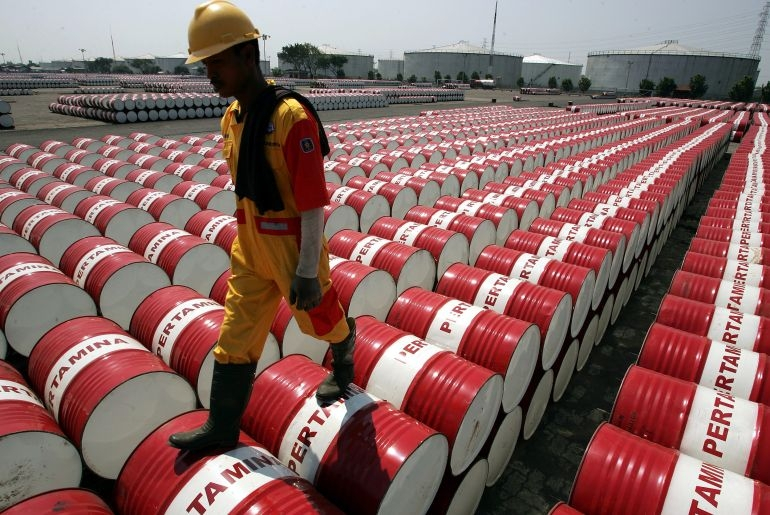
However, the minister did not disclose the volume of crude oil agreed upon with Russia, emphasizing that this aspect falls under a confidential bilateral agreement.
In response to reporters' questions, he said, 'I cannot disclose the volume because there is an agreement that we cannot talk about the details, but it is clear that the president is always thinking about how to maintain our supplies for a whole year.'
Commenting on Russian-Indonesian discussions regarding the import of Russian oil, the Russian ambassador to Indonesia, Sergey Gennadievich Tolchunov, stated in an interview with Sonora Radio in Central Jakarta that there are at least three key questions that must be jointly resolved if Indonesia is serious about importing oil and gas from Russia, concerning the method of transporting oil to Indonesia and the expected high price due to geopolitical tensions.
Announcement
The third challenge, according to the Russian ambassador, is the payment method that can be utilized between Indonesia and Russia given that Russia faces sanctions severing its connection with the SWIFT financial communication system, which, in the ambassador's view, may require resorting to transfers through arrangements involving a third country.
US oil imports continue
Regarding the impact of the agreement with Russia on the prior understanding of importing US oil, the Indonesian minister stated that the country's needs are significant, exceeding at least 300 million barrels annually, and that Jakarta will seek to leverage various agreements to secure its national stock.
Behlil confirmed the independence and effectiveness of his country's economic policy, noting that Indonesia engages with various countries, including the US, Russia, and several African nations, to serve its national interests.
It is worth noting that Indonesia did not rely on oil transiting through the Strait of Hormuz for more than a quarter of its imports, while the remaining quantity was imported from African countries such as Nigeria, Angola, Gabon, alongside the US and others.
In this context, data from Indonesia's Central Statistics Agency showed that the country's annual imports of oil and gas from ASEAN countries reached $15.2 billion in 2025, including about $9.7 billion via Singapore ports and $5.3 billion from Malaysia, while total oil and gas imports for Indonesia last year stood at $32.8 billion.
Last February, a trade agreement between the US and Indonesia stipulated that Jakarta would purchase $15 billion worth of oil and its derivatives from the United States. Recent press statements indicated that shipments of American petroleum products have started arriving in the past few days, alongside expectations of an increase in Indonesia's reliance on American liquefied petroleum gas (LPG) to 70% of total imports this year, according to estimates from Indonesian Pertamina. This comes after the US trade deficit with Indonesia reached $23.7 billion last year.
Indonesia's commitments to purchase US energy products, according to the agreement, are distributed among $3.5 billion for liquefied petroleum gas, $4.5 billion for crude oil, and $7 billion for refined gasoline.
Local production is insufficient
Indonesia produces locally from its refineries between 600,000 and 800,000 barrels per day, but this level is insufficient to meet local consumption, prompting it to import about 1 million barrels per day of crude or refined oil.
Indonesia also imports about 7 million tons of liquefied petroleum gas, with the minister confirming adequate stockpiles and secured shipments needed for the Indonesian market.
Despite Indonesian ministers' assurances that there will be no increase in subsidized fuel prices in the coming weeks and months, and that the government will do its utmost to maintain financial support for fuel prices for certain categories, the first uptick witnessed in the Indonesian market was in the price of avtur or jet fuel, which has started to rise in local and global markets by rates ranging from 72% to 80%.
Announcement
Indonesians woke up to a sudden and unprecedented rise in the prices of several premium diesel and gasoline categories this Saturday morning, without prior announcement. This was noted at fuel stations of various companies, while Pertamina maintained the prices of three categories of subsidized or semi-subsidized gasoline and diesel at their previous values for now, remaining below $1 per liter, which are used by the general public and commercial trucks and buses.
Last week, the Indonesian government announced through Coordinating Economic Minister Airlangga Hartarto an increase in domestic flight fuel fees by up to 38%, in line with the global rise in fuel prices, which will lead to an increase in domestic flight ticket prices by between 9% and 13%.
This marks the first change in fuel prices in Indonesia under the influence of the ongoing war and the crisis in the Strait of Hormuz, while other fuel prices remained below $1 per liter, regardless of their categories, including commercial and premium gasoline and diesel.
More exploration efforts
In this context, the special unit for implementing oil and gas sector activities in Indonesia aims to drill 100 exploratory wells this year as part of the government's efforts to search for new reserves amid the current crisis in the Strait of Hormuz.
Indonesian Exploration and Production Agency head Djoko Siswanto indicated that the number of exploration wells drilled last year reached 35, while the current program aims to drill an additional 39 wells this year, with plans to increase the total to 100 wells later.
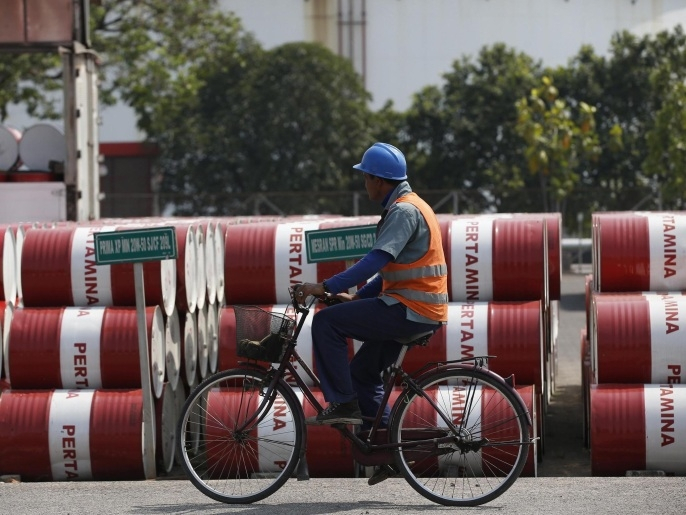
He added in previous statements, 'The goal this year was 39 exploratory wells, but only 3 wells have been achieved, which is about 8%. However, we aim to increase this number in 2026 to reach 100 exploratory wells.'
Djoko stated that his administration has prepared an ambitious program titled 'The Three Hundreds' for 2026, and to support it, the agency signed a memorandum of understanding with several companies to prepare the necessary drilling units.
Indonesian Energy Minister Behlil Lahadalia stated weeks ago that the government plans to extend the contract for the 'Cibul' field operated by ExxonMobil until 2055, with an additional investment of about $10 billion. He added that final touches are currently being made on several technical issues, including cost recovery plans, while current production ranges between 170,000 and 185,000 barrels per day.
The contract for exploring the Cibul field is set to end in 2035. ExxonMobil discovered the 'Banyu Urip' field in East Java, estimated to hold about 450 million barrels in reserves.