

At first, I thought Pixels was just another farming game. Simple tasks, slow gameplay, nothing too serious. I’ve seen similar concepts before, so I didn’t expect much.
But after spending some time, I started noticing small differences.
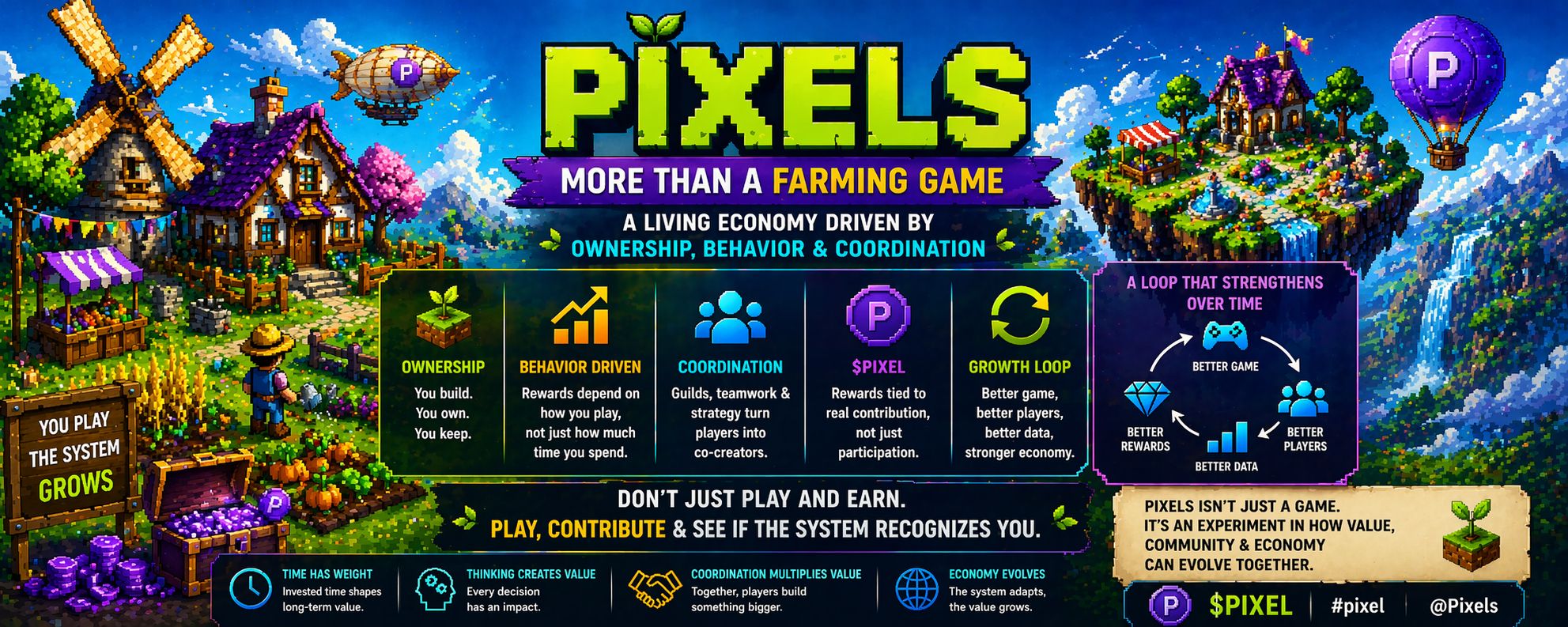
It didn’t feel like I was just completing tasks. I actually had to think. When to act, how to use resources, what decisions make sense long term. That kind of thinking is usually missing in most Web3 games.
In many cases, the system is very basic. Spend time, earn rewards, repeat. But that model doesn’t last. Once rewards drop, people leave. I’ve seen that happen too many times.
Here, it feels a bit different.
It’s not just about activity, it’s about how you play. Even small decisions can change results. Two players can spend the same time but still get different outcomes.
That part makes it more engaging.
Another thing I noticed is how the system keeps evolving. It doesn’t feel static. Updates don’t just add content, they seem to adjust how the whole system works.
This is where the Stacked ecosystem becomes interesting.
Instead of just distributing rewards, it feels like the system is trying to understand player behavior and reward meaningful participation. Not everything is treated equally, and that changes how players approach the game.
It shifts the focus from grinding to contributing.
I’m not saying it’s perfect. There are still things that need to be proven, especially around long-term balance and fairness.
But it doesn’t feel like a typical play-to-earn model.
It feels like something trying to improve how these systems work.
I’ve been following how this is developing through @Pixels and it definitely feels different from what I expected.