

I've watched enough crypto gaming cycles to know how this usually ends. A @Pixels project launches, the #pixel token spikes because people want to earn, the player base floods with bots extracting every drop of value, and then the economy bleeds out. It is a predictable death spiral.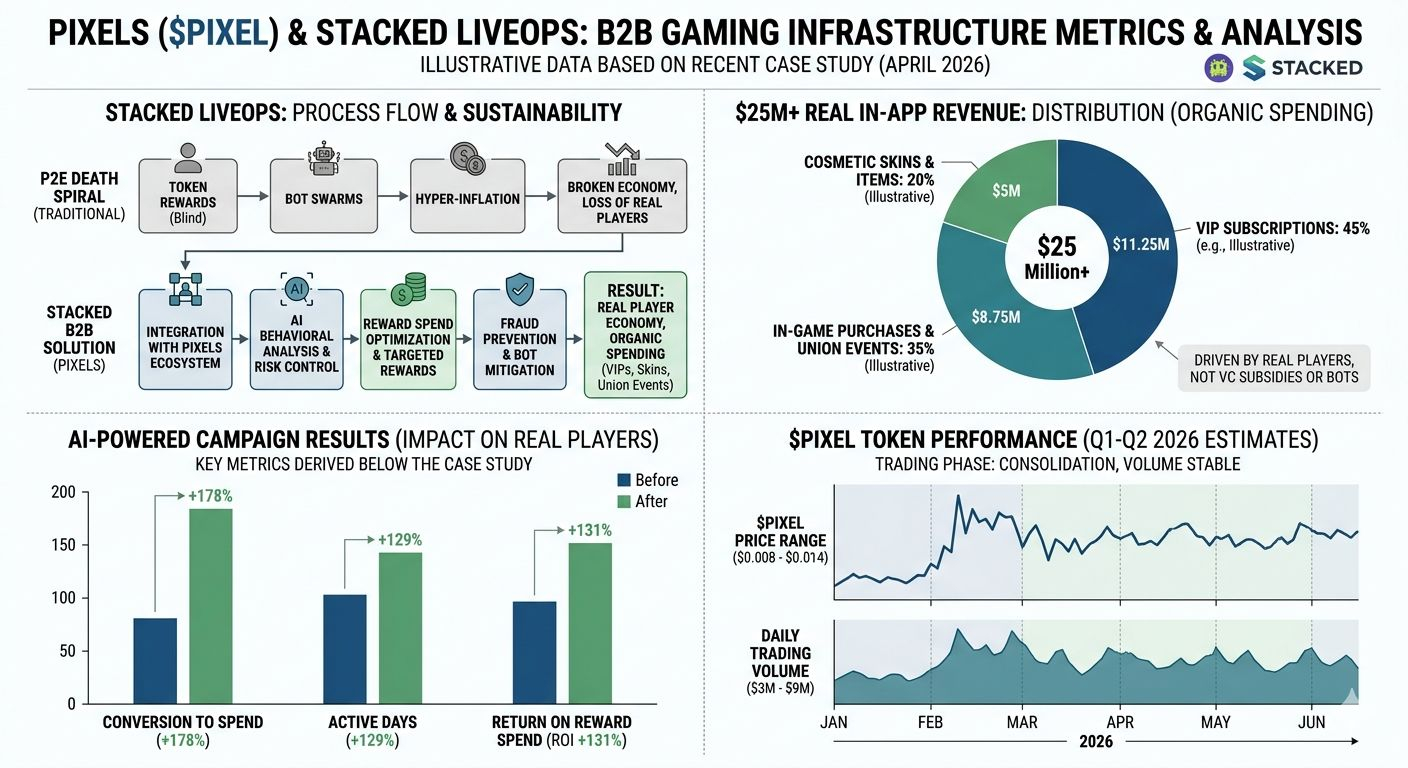
For a long time, I just assumed this was the fatal flaw of any play-to-earn model. You cannot just print rewards and expect a sustainable sink to magically appear. So when I started looking into Pixels again recently, I was pretty cautious. But what actually made me stop and read the documentation wasn't the farming gameplay itself. It was the fact that they are quietly building this underlying infrastructure called Stacked.
It felt less like a game update and more like an admission that the old way of doing things was fundamentally broken.
The core of what Stacked is doing actually addresses the friction I have seen in almost every other Web3 game. Normally figuring out how to reward the right player at the right time without attracting a swarm of automated scripts is a nightmare.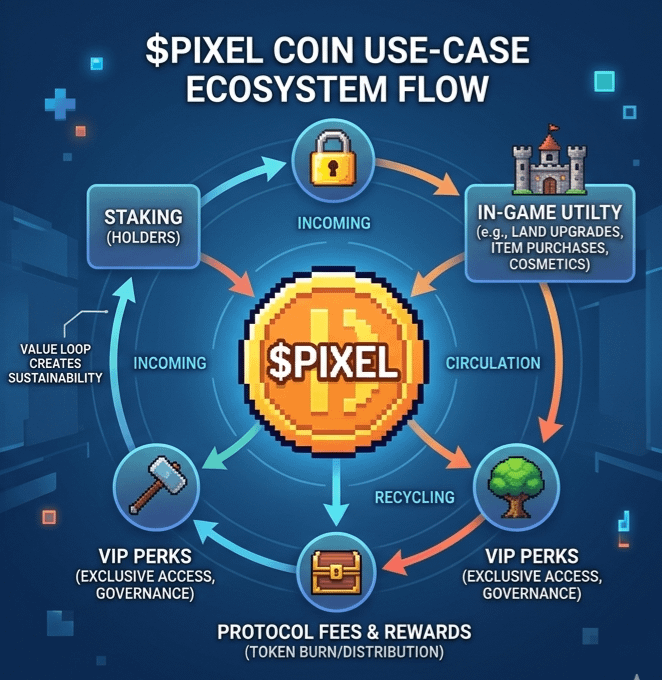
Stacked uses what they call an AI Game Economist to look at player cohorts and figure out exactly why people drop off. Instead of just spraying tokens at everyone who logs in, the engine analyzes churn and suggests highly targeted rewards.
It tries to offer real value, whether that is cash or crypto, for actual engagement rather than mindless spam quests.
The anti-bot and fraud-resistant architecture operates at scale to filter out the noise, ensuring that the incentives actually reach genuine players who are contributing to the ecosystem.
This approach honestly makes a lot of economic sense to me. In traditional gaming, studios spend an absolute fortune on user acquisition through ad platforms, and a huge chunk of that money is wasted on low-quality traffic.
By redirecting those traditional ad budgets directly into the pockets of verified, engaged players, the model shifts completely. It is a much more efficient way to spend marketing dollars. As someone who analyzes these networks, seeing capital flow to the actual users rather than middlemen feels like the correct evolution for this space.
I have to be realistic here, though. This infrastructure is not magic and it certainly does not guarantee success. Balancing game economies is notoriously difficult, even for experienced teams. If an external studio integrates the Stacked tools but fails to configure the AI properly or if they set their reward parameters too loosely, their economy will still bleed out.
Technology can only do so much if the underlying economic design is flawed. It requires constant tuning and a deep understanding of player psychology, which many Web3 teams still lack.
But seeing where this kind of infrastructure actually fits is what makes it interesting. Stacked effectively transitions the $PIXEL token from being just an isolated in-game currency to a B2B cross-ecosystem loyalty tool. Its survival is no longer tied to the popularity of a single farming game. The fact that this engine has already processed over 200 million rewards and helped drive over 25 million dollars in real revenue shows that it is operating in production, not just sitting in a whitepaper. It is an industrial-grade LiveOps system doing heavy lifting in the background.
For now, my approach is just to watch how external studios adopt this system over the next few quarters. The real test will be seeing if this LiveOps engine actually improves player lifetime value over a multi-month period for games outside the immediate Pixels ecosystem.
It is easy to make promises in this industry, but real usage and sustained engagement are the only metrics that matter. I appreciate that they are building this in production, battling the friction of live economies, rather than just pitching a deck. That kind of pragmatic, data-driven approach is exactly what this space needs to mature.