
I asked myself a question last week that I hadnt asked seriously before
If you removed every token reward from Pixels entirely would anyone still log in
Not the scholarship farmers in Manila
Not the guild leaders chasing prize pool rankings
Not the landowners collecting passive resource surpluses
Just someone who wants to spend an hour in a farming game because farming games are enjoyable
I dont have a confident answer and that bothers me more than any unlock schedule
The dual currency architecture is where I want to start because it reveals exactly what the team learned from watching $BERRY collapse in real time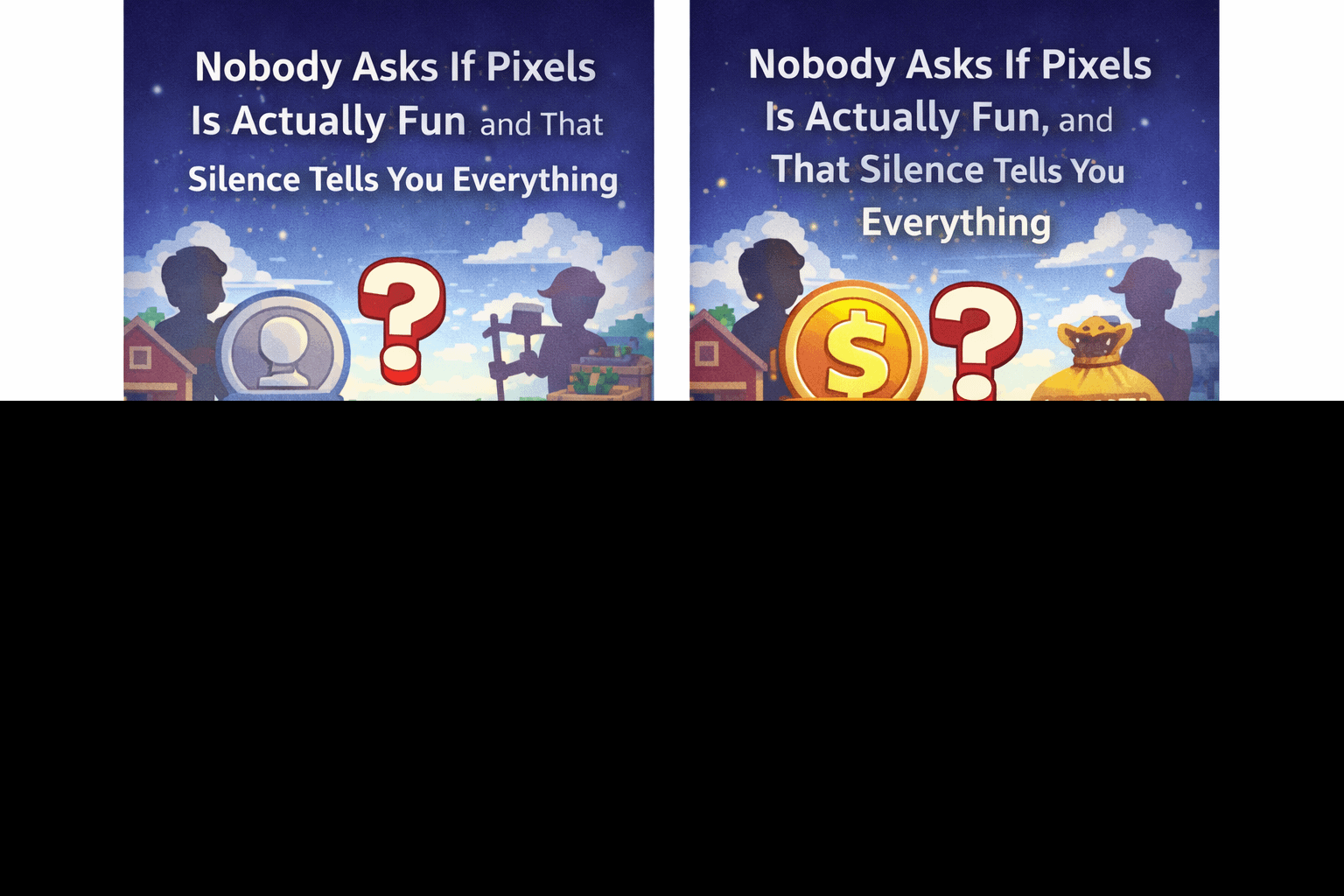
The game runs two parallel economies now where the governance and premium token trades on exchanges and carries real world price exposure while an off chain currency called Coins handles the daily transaction layer inside the game itself
Coins cannot be withdrawn cannot be traded on any exchange and exist purely as a gameplay medium
This separation was not in the original design
It was a crisis response to watching bots drain an on chain currency with 2 percent daily inflation until it became worthless
The team rebuilt the economic foundation under a live game with millions of accounts and did it without shutting down
That is genuinely difficult engineering and I think it deserves acknowledgment
The crafting system that sits on top of this dual economy is more layered than most coverage ever gets into
Cooking happens at woodburning stoves and requires harvested crops combined in specific recipes that restore player energy at different rates
Winemaking at wineries turns agricultural output into products that provide sustained energy regeneration rather than instant restoration
Ceramics at kilns consume Clay from Regular environment NFT lands and produce building materials that higher tier constructions require
Woodworking at benches processes timber from forestry skill activities into furniture and housing items
Each of these disciplines connects back to a specific skill tree and each skill tree gates recipes behind level thresholds that take real time investment to reach
The interdependency is real
Most players never see it
And here is the housing system detail that almost never gets written about seriously
Players can customize indoor spaces with wallpaper flooring and paintings
Outdoor plots support decorative items that express personal aesthetic choices within the shared world
NFT landowners can enable video chat on their properties turning land parcels into actual social venues where players gather and talk
The in game wedding that happened as a community event was not a marketing stunt
It was evidence that some portion of this player base has formed genuine social attachments inside Terravilla
That is the hardest thing to build in any online world and Pixels stumbled into it somewhat accidentally
But the VIP membership model is where I get genuinely conflicted about what kind of game this actually is
The VIP Lounge restores 400 energy every 8 hours which translates to a meaningful daily farming advantage over free players
The subscription costs roughly 10 dollars per month in token terms
This creates a two tier play experience where paying players farm significantly more efficiently than non paying players
In a traditional game I would call that a reasonable premium tier
In a game marketed on economic opportunity and fair participation that structure deserves more scrutiny than it gets
Paying to farm better is not the same as playing better
The Theatre AMA events are a small mechanic that I find disproportionately clever
Players earn energy while watching scheduled community broadcasts inside the game world
This turns passive content consumption into an active gameplay reward which means the team can hold a product update announcement and pay players in energy for attending
It aligns player attention with developer communication in a way that most Web3 projects never figure out
Most projects pay for attention through token airdrops and get mercenary participation with zero retention
Pixels gets people to show up to town halls because showing up fills their energy bar
The incentive design there is subtle and it works
The seasonal event calendar reveals something important about the retention strategy the team is actually executing
The Pixmas Winter Carnival the Lunar New Year celebration and recurring community competitions create a content rhythm that pulls lapsed players back at predictable intervals
This is standard mobile game design applied to a Web3 context and it works for the same reason it works in mobile
People who stopped logging in daily will return for a limited time event because the scarcity of the content window overcomes the friction of reopening the app
The team understands this behavioral pattern and builds their calendar around it deliberately
That is product thinking not just blockchain thinking
What I keep returning to though is the question of depth at the endgame
A player who reaches level 100 in Farming level 100 in Cooking and level 100 in Woodworking has invested serious time into this progression system
What does that player do on day 500 that they couldnt do on day 50
The crafting recipes get more complex and the resource requirements scale upward but the fundamental loop of plant water harvest craft remains structurally identical across every skill level
Stardew Valley survives this problem through character relationships narrative progression and emotional investment in a fictional community
Pixels survives it through competitive events seasonal content and economic incentives
Remove the economic incentives and the emotional scaffolding looks thin
I think @Pixels is building something genuinely ambitious but I think the team knows better than anyone that the game loop needs another dimension before the platform ambitions can fully land
The cross game staking model where players direct token weight toward games they participate in is the most interesting structural experiment they have running right now
If Pixel Dungeons and future partner games on the Ronin ecosystem can each add a different play style that feeds back into the same token layer then the platform becomes bigger than any single game mechanic
The farming world becomes one entry point among several rather than the only reason to hold tokens
That would actually change my long term read on this project
But right now in April 2026 the farming game is still carrying the full weight of the ecosystem
The mobile app still doesnt exist for the audience that needs it most
The crafting depth is real but invisible to most players
And the question of whether Pixels is fun without financial incentive remains one that I think the team is actively afraid to answer publicly
I would respect them more if they tried
