
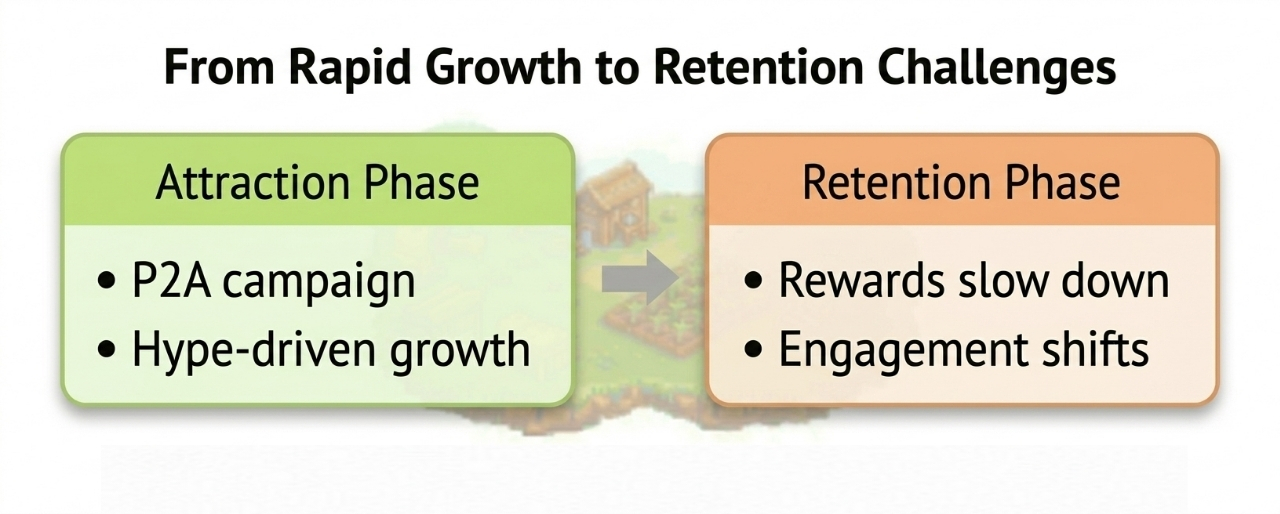
I remember when Pixels suddenly felt like it was everywhere. One moment it was just another game people were trying, and the next moment it felt like everyone was talking about it.
New players were joining constantly, activity was rising fast, and the game didn’t feel empty at any time of the day. It didn’t look like slow growth, it looked like momentum.
A big part of that came from the Play-to-Airdrop phase.
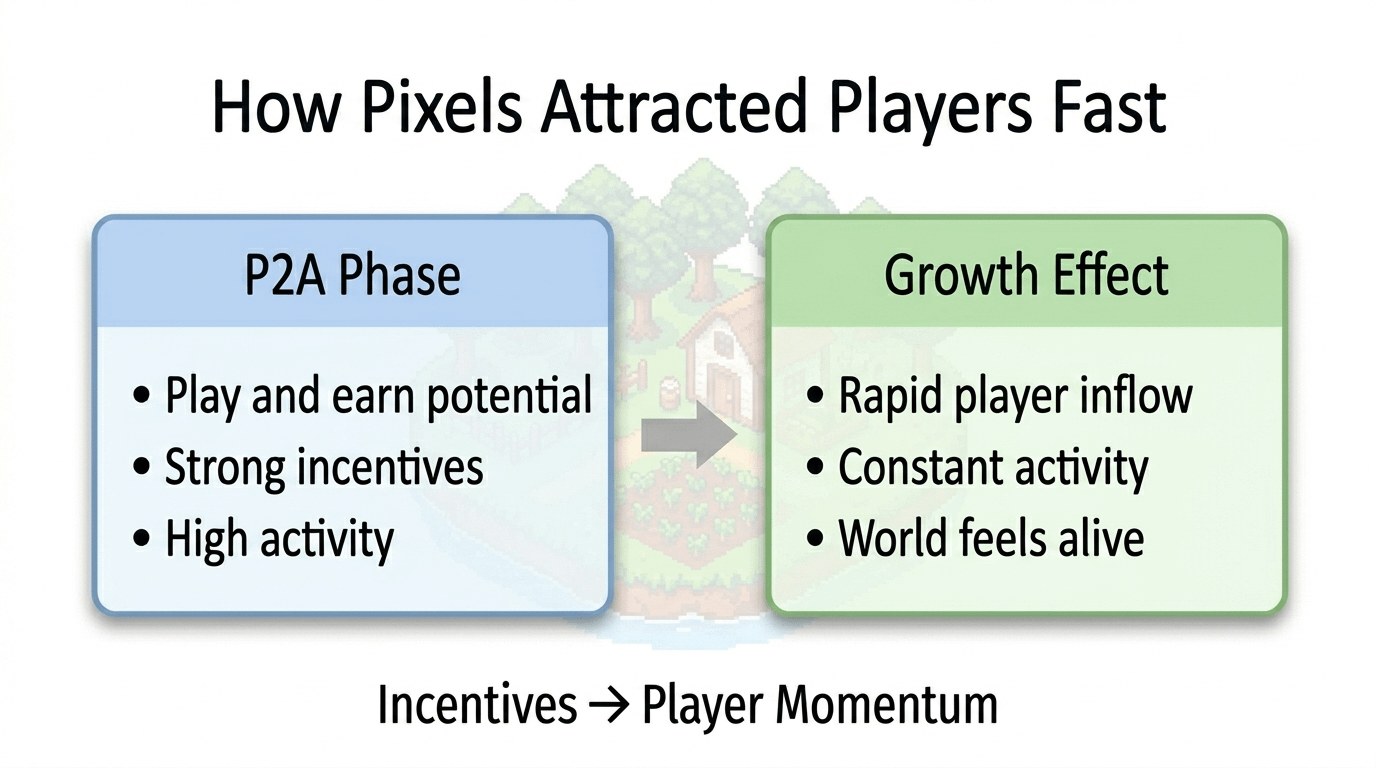
It wasn’t just about playing anymore. It was about the possibility that your time in the game could turn into something valuable later.
That alone changed how people approached it. You weren’t just exploring, you were paying attention, trying to stay active, trying not to miss out.
And then systems like tiers started shaping behavior even more.
I kept seeing people talk about where they stood, how to move up, what it takes to reach higher levels.
Even something like Tier 5 became part of the conversation. Not because everyone fully understood it, but because it gave players something to aim for. Something slightly out of reach.
Was it the rewards that pulled people in?
or the feeling of being early?
Because once more players joined, the effect multiplied.
More players meant more activity.
More activity made the world feel alive.
And a game that feels alive naturally attracts even more people.
But that same momentum didn’t hold forever.
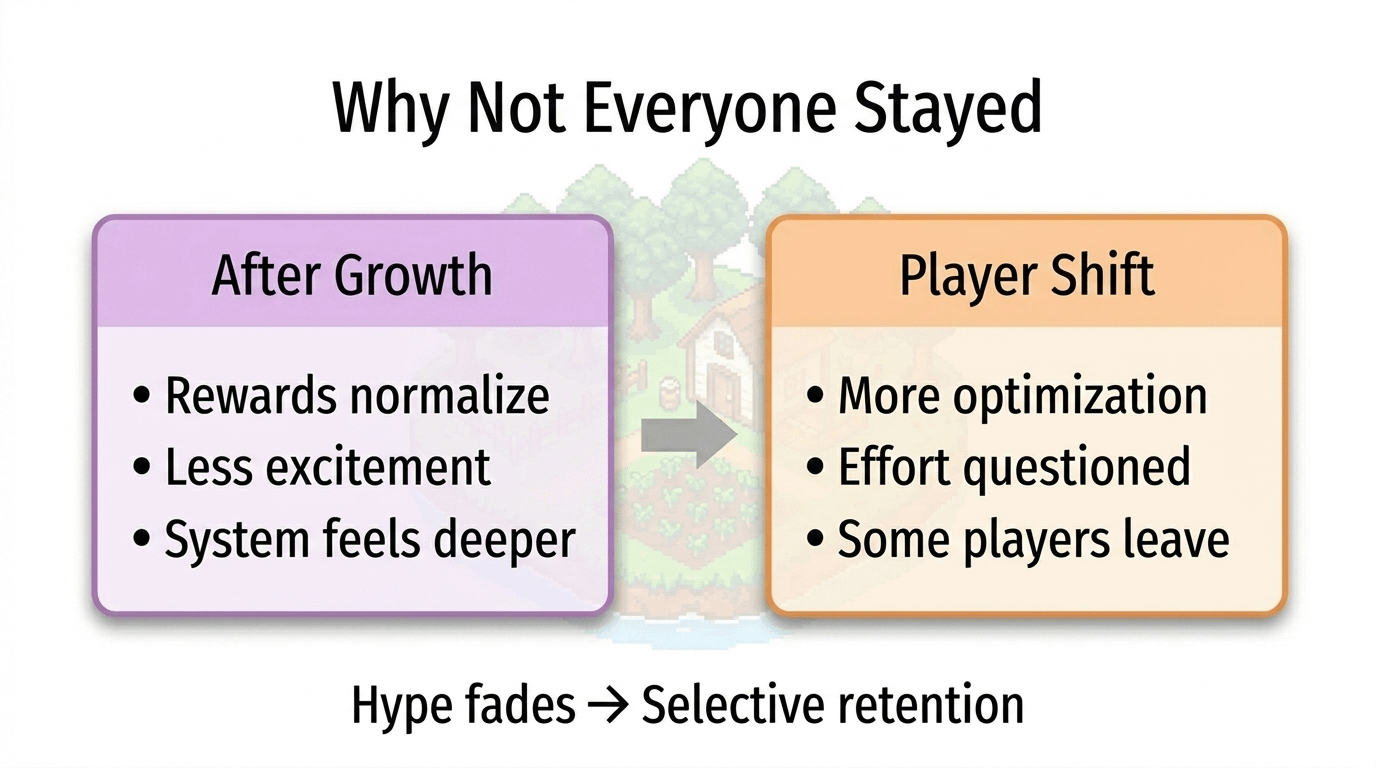
After some time, the questions started changing.
Some players began optimizing everything they did.
Some started questioning if the effort really matched the outcome.
And some just lost interest once the initial excitement faded.
The system didn’t stop working, but it stopped feeling the same and that’s where the difference becomes clear.
Pixels clearly figured out how to attract attention at scale.
But keeping players seems to depend on something deeper than rewards or tiers.
If hype and incentives bring people in,
what actually makes them stay once that fades?