
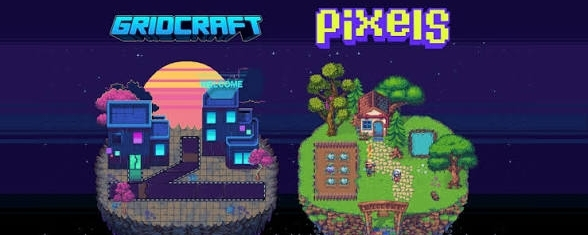
In the evolving world of Web3 gaming, very few projects manage to combine simplicity, creativity, and real economic design into a single experience. Pixels (PIXEL) is one of those rare cases. Built on the Ronin Network, it is more than just a game—it is a social digital ecosystem where players farm, explore, craft, and compete in a constantly evolving open world.
This article takes a deep look at Pixels from a grounded perspective. We will explore how the game works, what makes it unique, how its economy is structured, the role of the PIXEL token, and the recent direction of its leaderboard-driven ecosystem. The goal is simple: to understand why Pixels is becoming one of the most talked-about casual Web3 games today.
A Simple Game With a Complex Economy
At first glance, Pixels looks like a peaceful farming game. Players grow crops, gather resources, complete tasks, and upgrade their land. But beneath this calm surface lies a carefully designed economic system.
The core loop is built around three actions:
Farming resources
Exploring new areas
Crafting and upgrading items
What makes it different from traditional games is that every action is tied to an on-chain economy. The resources you gather are not just in-game numbers—they contribute to progression, trading, and token utility.
Pixels succeeds because it avoids overwhelming players. Instead of forcing blockchain mechanics upfront, it blends them into a familiar farming simulation style.
Built on Ronin: Why It Matters
The Ronin Network plays a major role in Pixels’ performance and adoption. Ronin is known for low fees, high scalability, and strong gaming infrastructure.
For Pixels, this means:
Fast in-game transactions
Low-cost interactions
Smooth player experience even during high activity
Easier onboarding for non-crypto users
This technical foundation allows Pixels to scale a large player base without friction. In Web3 gaming, this is critical because high gas fees and slow networks often destroy user experience.
Core Gameplay: Farming, Exploration, and Creation
Pixels is designed around three interconnected gameplay pillars:
1. Farming System
Farming is the heart of the game. Players plant crops, wait for growth cycles, and harvest resources. These resources can be used for crafting, selling, or progressing in quests.
The farming mechanic is intentionally simple, but it becomes strategic when players start optimizing:
Crop timing
Resource value
Market demand cycles
This creates a subtle layer of economic planning beneath the casual gameplay.
2. Exploration
The open world encourages players to move beyond their farms. Exploration introduces:
New zones
Rare materials
Hidden quests
Special events
Exploration is not just cosmetic—it directly affects progression and earning potential.
3. Creation and Crafting
Crafting transforms raw materials into valuable items. These items often play a role in progression or can be traded within the ecosystem.
This system creates a loop:
Farm → Explore → Gather → Craft → Upgrade → Repeat
PIXEL Token Utility: The Economic Engine
The PIXEL token is the backbone of the ecosystem. It is not just a reward token—it is designed to support multiple layers of utility.
Key utilities include:
In-game purchases (items, upgrades, cosmetics)
Progression enhancements
Participation in special events
Governance elements in ecosystem decisions
Economic incentives tied to gameplay activity
Instead of relying purely on speculation, PIXEL is integrated into the gameplay loop. This is important because sustainable Web3 games require real in-game demand for their tokens.
The token also supports a dual economy structure:
In-game resources (soft economy)
PIXEL token (hard economy)
This separation helps stabilize gameplay while still maintaining real value flow.
Leaderboard Campaigns: Competition Meets Economy
One of the most engaging systems in Pixels is the Leaderboard Campaign structure. These campaigns reward active and strategic players based on performance metrics such as:
Farming efficiency
Quest completion
Resource contribution
Activity levels during events
Leaderboards introduce a competitive layer that keeps the ecosystem active. Instead of passive farming, players are motivated to optimize their strategies.
This also creates short-term economic cycles:
High activity periods during campaigns
Resource demand spikes
Token engagement increases
In simple terms, leaderboard events act as economic “boost phases” that energize the entire ecosystem.
Recent Direction and Ecosystem Growth
Pixels has been steadily evolving from a casual farming game into a broader social economy. Recent development trends suggest a focus on:
Expanding social gameplay mechanics
Improving player retention loops
Strengthening token utility within core gameplay
Introducing more seasonal and leaderboard-based events
The shift is clear: Pixels is not just building a game, but a persistent world economy where activity, time, and strategy all matter.
Another noticeable trend is increased emphasis on player-driven interaction, meaning the economy becomes more influenced by user behavior rather than fixed reward structures.
What Makes Pixels Different From Other Web3 Games?
Many Web3 games fail because they over-focus on tokens and under-focus on gameplay. Pixels does the opposite.
Its strengths include:
Familiar farming-game design
Low entry barrier for new players
Real integration of blockchain without forcing it
Strong economic loops tied to gameplay activity
Sustainable incentive structure through PIXEL utility
Most importantly, Pixels avoids feeling like a “crypto product.” Instead, it feels like a game first.
Challenges and Risks
No Web3 ecosystem is without challenges. Pixels also faces several important risks:
Maintaining long-term player engagement
Preventing inflation of in-game rewards
Balancing token utility with gameplay fairness
Ensuring leaderboard systems do not favor only high-volume players
The success of Pixels will depend on how well it maintains economic balance while scaling its user base.
The Future of Pixels
Looking forward, Pixels has the potential to evolve into a fully persistent digital society. If development continues in its current direction, we may see:
More complex social systems
Expanded land ownership mechanics
Deeper crafting economies
Advanced governance using PIXEL tokens
Cross-game or cross-platform integrations
The biggest opportunity lies in turning casual players into long-term ecosystem participants.
Conclusion
Pixels (PIXEL) represents a new direction in Web3 gaming—one that prioritizes simplicity, engagement, and sustainable economic design over complexity and speculation. Built on the Ronin Network, it combines farming, exploration, and creation into a smooth and accessible experience.
Its token economy is deeply integrated into gameplay, while leaderboard campaigns add competition and dynamic economic cycles. Although challenges remain in balancing growth and sustainability, the foundation is strong.
In essence, Pixels is not just a game about farming virtual land. It is an evolving experiment in how digital economies can feel natural, social, and rewarding at the same time.
For players and observers alike, Pixels offers something increasingly rare in Web3: a system that feels alive.
