
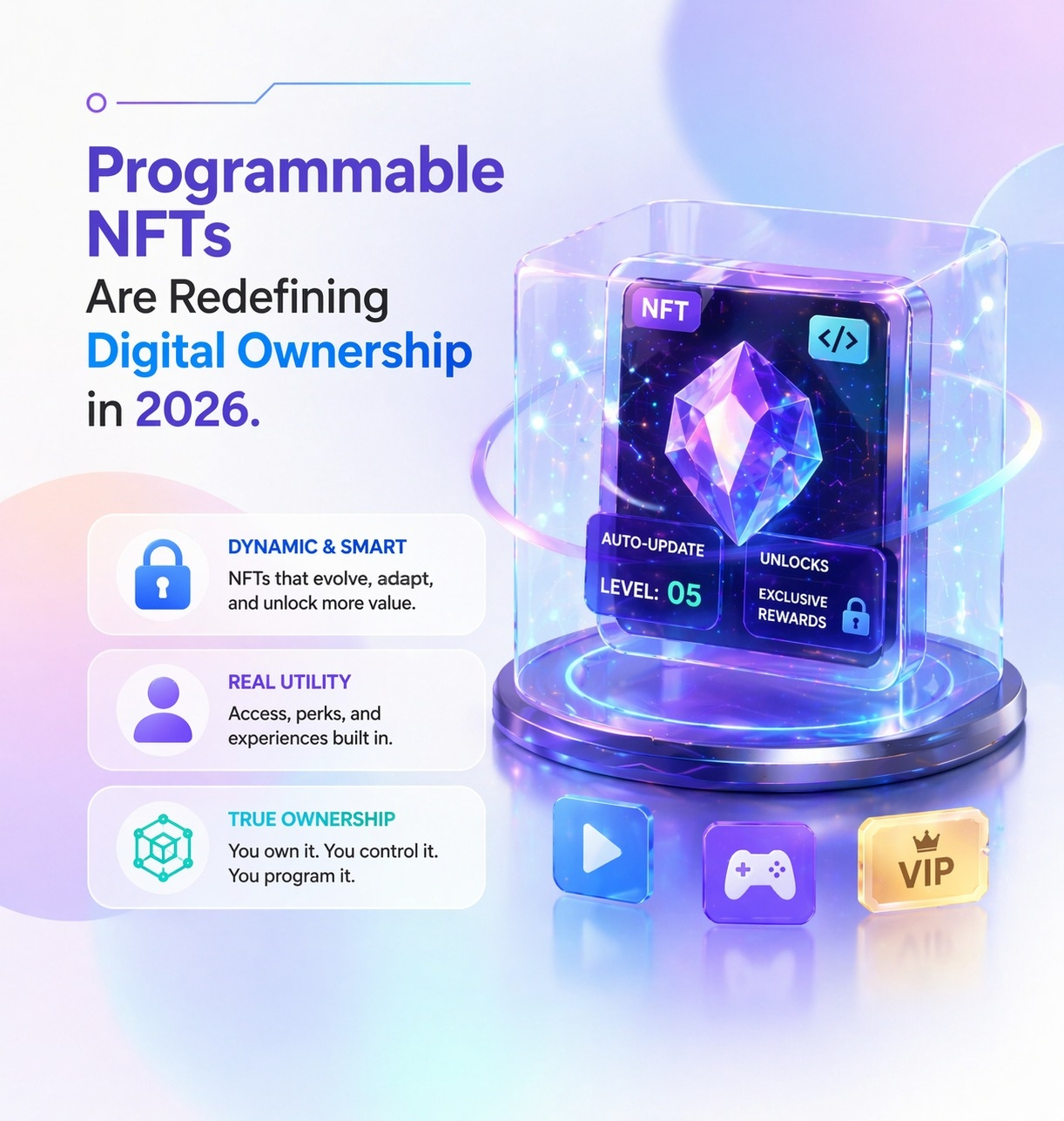
NFTs were once mainly associated with digital art and collectibles, but in 2026, they are evolving into programmable assets with real functionality. These next-generation NFTs can change, interact, and adapt based on conditions, making them far more than static tokens.
This shift is transforming NFTs into dynamic tools within the Web3 ecosystem.
⚙️ What’s Changing in NFT Technology
Earlier NFTs were fixed assets with limited use beyond ownership. Now, programmable NFTs introduce logic and interactivity directly into the asset itself.
Key developments include:
• NFTs that evolve based on user actions or milestones
• Utility-driven NFTs with in-app or in-game functionality
• Dynamic metadata that updates over time
• Integration with smart contracts for automated behavior
The focus is shifting from static ownership to interactive experiences.
🚀 Why This Trend Is Growing
As the NFT space matures, users are demanding more value and functionality. Simple collectibles are no longer enough to sustain long-term interest.
Main growth drivers:
• Demand for real utility beyond digital art
• Growth of gaming and metaverse ecosystems
• Developer innovation in smart contract design
• Need for more engaging user experiences
This makes programmable NFTs more relevant across multiple sectors.
📊 Market Impact
Programmable NFTs could unlock new business models in gaming, memberships, ticketing, and digital identity. Projects leveraging dynamic NFTs may gain stronger user engagement and long-term value.
They also create opportunities for continuous interaction rather than one-time ownership.
🔮 Final Outlook
NFTs are evolving from simple collectibles into intelligent digital assets.
If adoption continues, they could become a core component of digital ownership, enabling more interactive and personalized experiences.
The future of NFTs may be defined not by what they represent, but by what they can do.
#NFT #Web3 #CryptoTrends #ProgrammableNFTs #Blockchain #BinanceSquare #Write2Earn