
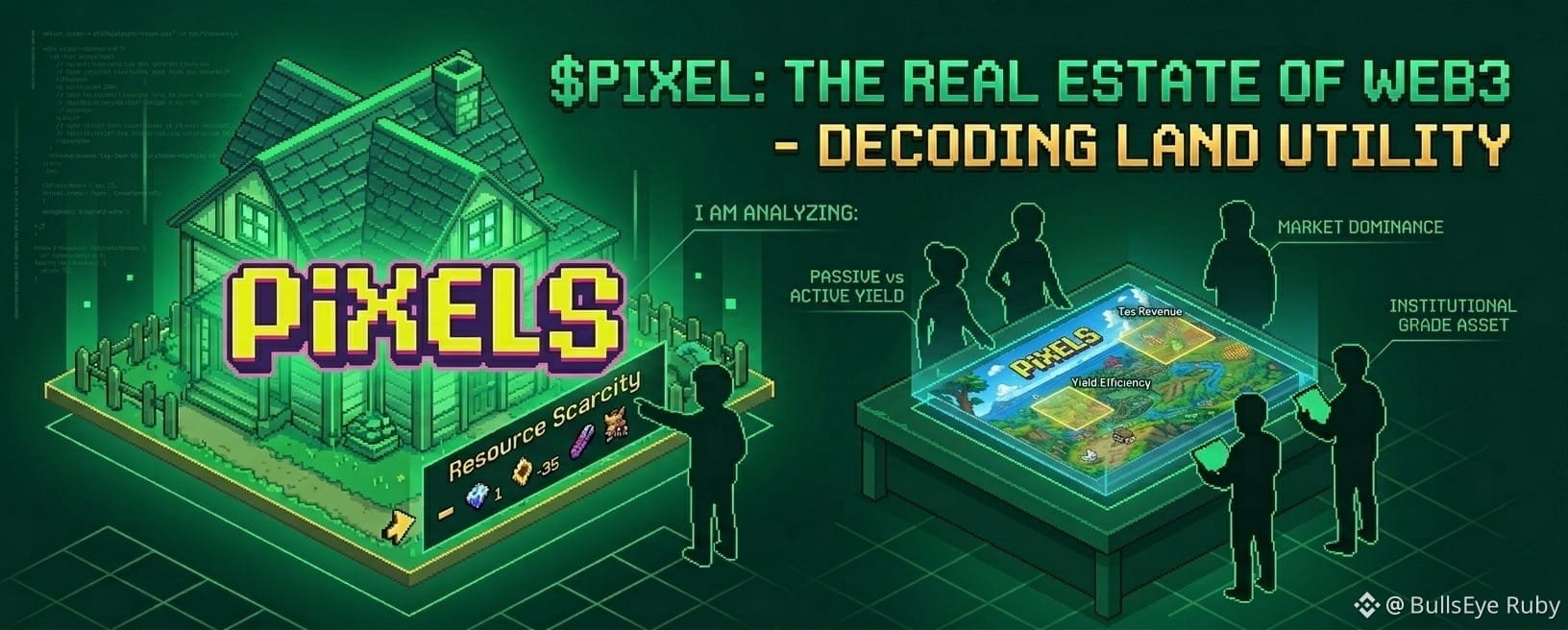
So, I'm on day seven of my big research project into @Pixels I m expanding my analysis to focus on the ecosystem’s most tangible, finite asset: Digital Land. In traditional markets, land is the ultimate hedge against inflation and a primary engine of production. In this digital environment, Land Ownership is a fundamental strategic requirement for institutional-grade resource generation and market dominance. My research shows that landowners aren't just players; they are the core infrastructure providers of the entire economy.
1. The Passive vs. Active Yield Gap: Labor is a Commodity, Land is Capital
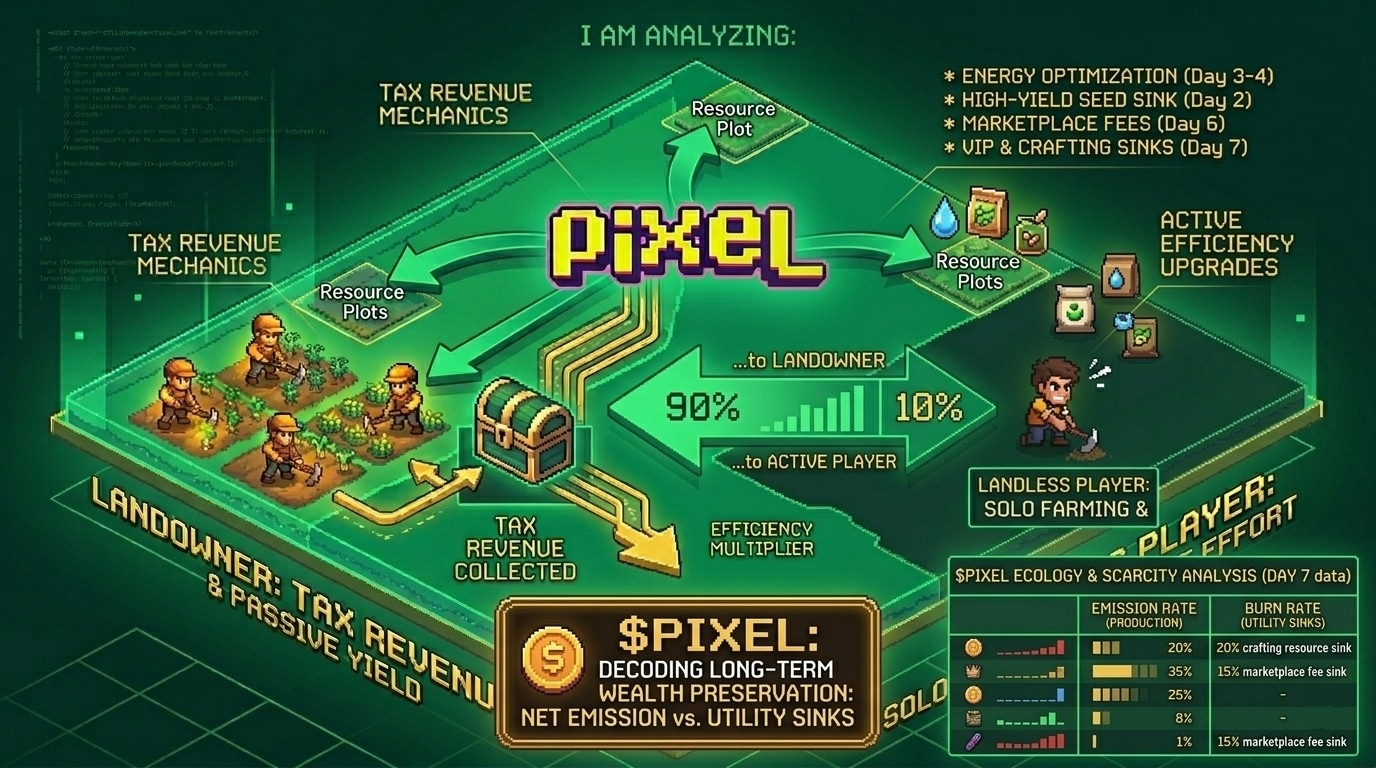
My observation is that there is a profound efficiency gap between the "Landless" player and the "Landowner." While the Ronin Network allows millions of players to farm resources via sheer active labor, landowners control the means of production. From my strategic perspective, labor in this ecosystem is a deflationary commodity—anyone can farm. Land, however, is scarce and serves as capital appreciation. Owners capture a significant portion of other players' energy expenditure through intrinsic taxation and usage fees. This ensures a recurring, non-speculative demand for PIXEL for plot maintenance, upgrades, and social coordination. If you are not a landowner, you are effectively a worker in someone else's factory.
2. Resource Scarcity & Market Dominance: The Path to Institutional Wealth
I am Closely Watching the 'Scarcity Gradient' of High-Tier Resources. A primary focus of my Day 7 analysis is tracking which plots possess the unique soil conditions, water access, or energy boosters required to craft late-game commodities. As the active player base scales, the demand for these niche resources will intensify. I believe that this scarcity is not just a gameplay loop; it is a critical "Value Driver" for the PIXEL token. When thousands of sophisticated players and guilds require specific materials that only a handful of landowners can provide, these landowners become the "Market Makers" of that supply chain. This is where the PIXEL economy perfectly mirrors real-world commodity markets, rewarding strategic asset control over basic active participation.
3. Land as an Institutional-Grade Asset: Complexity and Utility Sinks
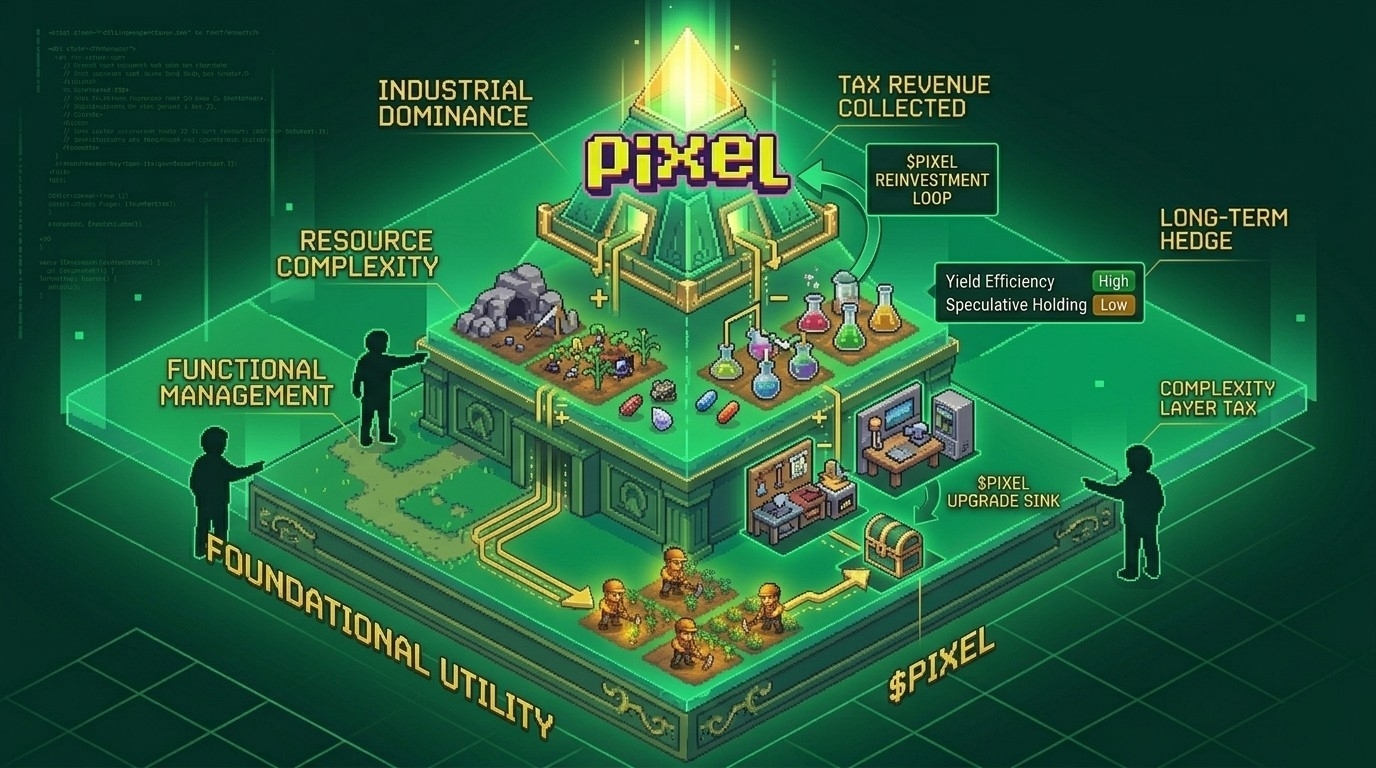
The core strategic difference between simple utility NFTs and PIXEL Land is Functional Utility. Unlike speculative assets that merely sit in a wallet, this land requires active management, strategic resource allocation, and recurring PIXEL reinvestment. This functional requirement creates massive, utility-driven token sinks. My research suggests that this multi-layered "Complexity Layer" is precisely what keeps the ecosystem healthy. It forces professionalization among owners and prevents passive speculation by penalizing inefficient land management. From my analytical perspective, this makes the asset institutional-grade, suitable for long-term hedging rather than short-term trading.
4. Final Strategic Predictions
I predict that we are entering the 'Consolidation Phase' of PIXEL Real Estate. Strategic landowners and guilds are currently analyzing yield-efficiency metrics to acquire specific combinations of resources to secure entire supply chains. My final strategic takeaway is that professionalization is not a choice; it is a requirement to thrive. The real alpha isn't the token price; it is the fundamental utility of the land beneath our pixels. The value of this digital real estate will decouple from simple player growth metrics and realign with resource complexity and industrial dominance.
I m excited to hear your smart strategies in the comments. Let's talk about the institutional ROI. 👇
