
I’ve been thinking about PIXELS this closely lately, almost absentmindedly, like something that keeps returning in the background while I’m doing other things. Not really as a game, but as a kind of living system where things move—or don’t—and where those movements quietly affect everything else.
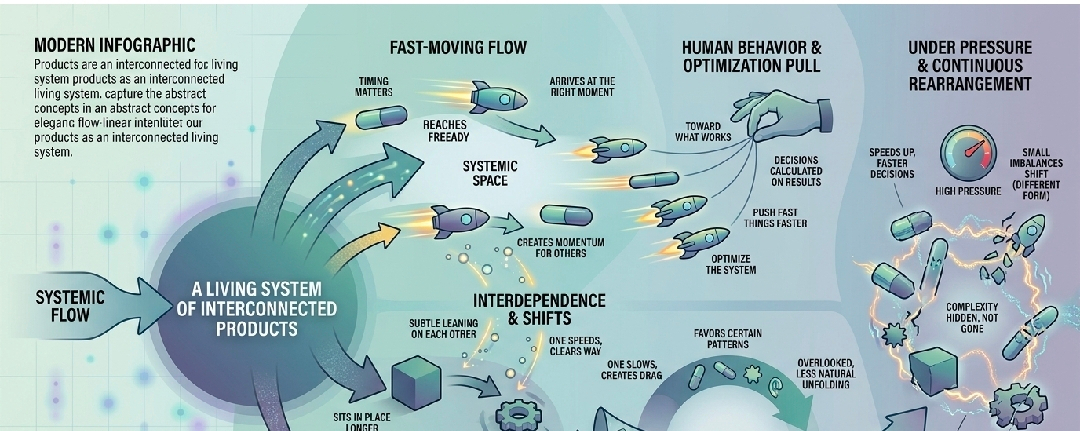
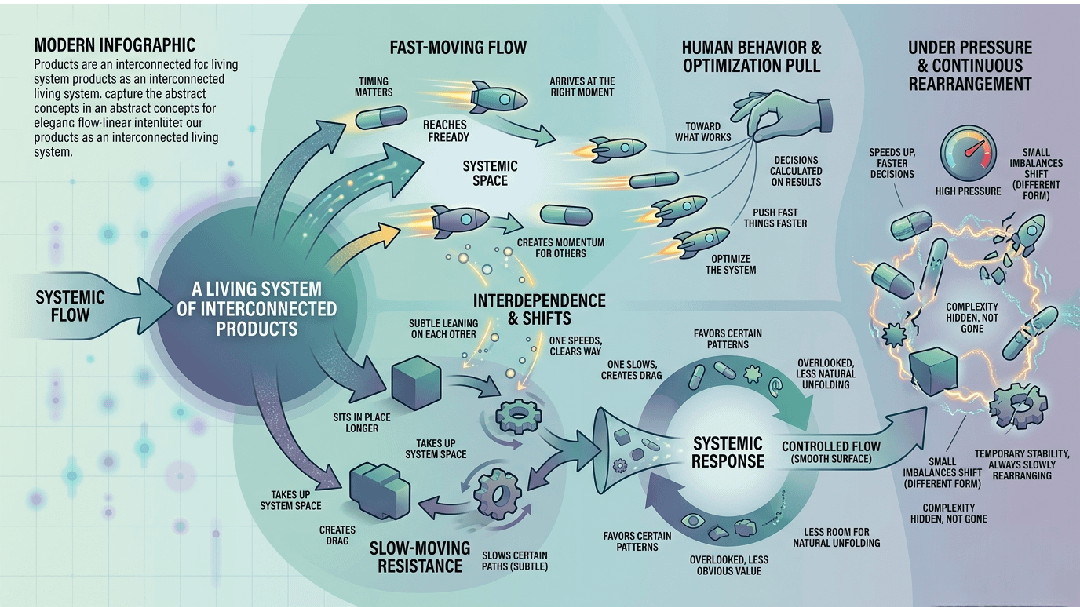
It doesn’t feel right to think of products as separate pieces anymore. They look separate on the surface, sure, but once you watch them for a while, you start to notice how much they lean on each other. One product picks up speed, and somehow it clears the way for another. Something slows down, and without much noise, it creates a kind of drag across the rest. It’s subtle. Nothing dramatic. Just small shifts that add up.
Some products move quickly, almost effortlessly. They seem to arrive at the right moment, when people are ready for them, when the system has space for them. And because of that, they keep moving. It’s easy to assume they were always meant to succeed, but it doesn’t feel that simple. Change the timing slightly, or place them in a different flow, and they might not move the same way at all.
Others just… stay. Not failing, not disappearing, just sitting in place longer than expected. And while they sit there, they start to shape things in quieter ways. They take up space, they hold attention, they slow certain paths without anyone really deciding that should happen. It’s not obvious at first, but over time you can feel the imbalance, like something slightly out of rhythm.
What’s interesting is how people react once they start noticing this. There’s a natural pull toward trying to fix it, to optimize it. To push the fast things faster, to figure out what to do with the slow ones. And that’s where behavior starts to shift. Decisions become a bit more calculated, a bit more focused on what shows results quickly. Not in a bad way—just in a very human way. We tend to move toward what seems to work.
But the system responds to that too. It starts to favor certain patterns, certain types of movement. Things that don’t fit as neatly into those patterns can get overlooked, even if they still matter in less obvious ways. Over time, the whole flow begins to feel a bit more controlled, maybe even smoother on the surface, but also a bit tighter, like there’s less room for things to unfold naturally.
And under pressure, that feeling becomes clearer. Everything speeds up a little, decisions come quicker, and there’s less tolerance for delays. But at the same time, the system doesn’t really become simpler. If anything, it just hides its complexity better. The small imbalances don’t go away—they just shift around, appearing somewhere else, in a different form.
The more I sit with it, the more it feels like nothing in a product line is ever truly still or fully resolved. Things are always adjusting, even when it looks calm. A product moving forward, another holding back, both part of the same quiet process.
And maybe that’s what keeps it interesting to watch—the sense that what looks stable is only temporarily so, and that underneath it, everything is still slowly rearranging itself.