
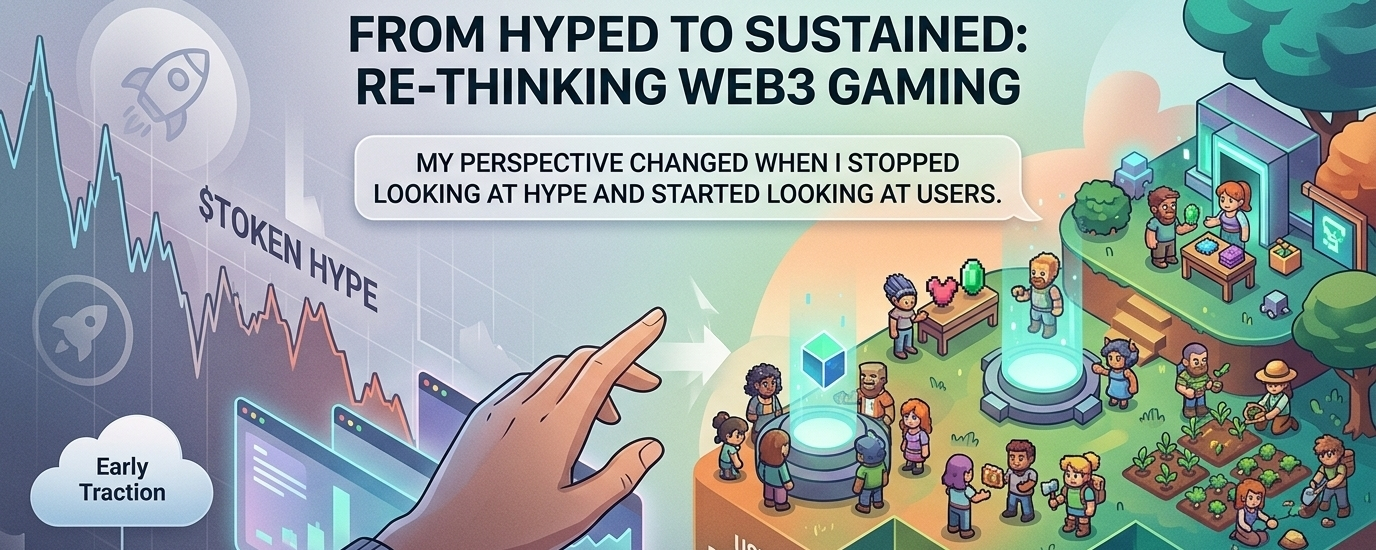
When I first explored Web3 gaming projects, I approached them the same way many people do — by looking at the token first. Price movement, early traction, and market attention seemed like the most important signals. But over time, I started noticing a pattern that changed how I evaluate these projects.
In most cases, the initial excitement fades faster than expected. User activity drops, engagement slows down, and the ecosystem weakens even if the token had a strong start. That’s when I realized that long-term success depends far more on how players interact within the system than on early hype.
Looking at @Pixels now, I try to apply that same perspective. Instead of focusing only on surface-level metrics, I’m more interested in how the ecosystem encourages ongoing participation. If players continue to engage, trade, and stay active, the structure becomes more resilient.
This is where $PIXEL becomes part of a larger picture. Its relevance depends on how strong the ecosystem remains over time. If activity stays consistent, it reflects real usage. If not, it risks following the same pattern seen in many other projects.