
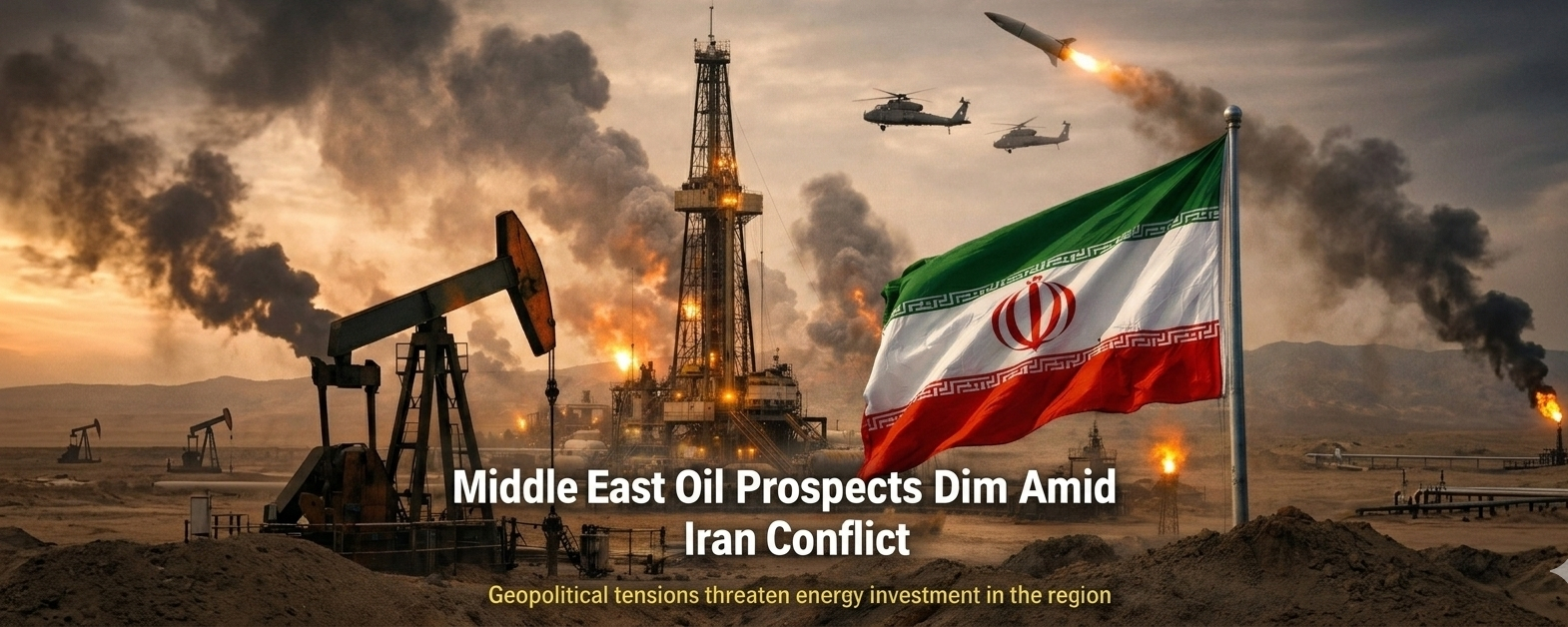

especially due to the ongoing conflict related to Iran. The global oil industry, which normally aggressively explores expansion, drilling projects, and fracking opportunities, is now looking quite cautious regarding that region. Bloomberg also highlighted this issue on X, where it was stated that geopolitical tensions have weakened the prospects of the expected oil boom in the Middle East. For the world's largest oil service and contracting companies, the situation is no longer a simple business opportunity but has become a high-risk environment.
This conflict is directly impacting future investments, as companies only engage in large-scale drilling or infrastructure expansion when there is stability in the region and long-term returns seem predictable. However, due to the Iran conflict, supply routes, regional security, policy risks, and operational continuity have all come under question. For this reason, both oil contractors and energy investors are thinking more carefully about their next moves. Historically, the Middle East has been a major center for oil production, but if tensions continue in this manner, new projects may be delayed, contracts may slow down, and overall production growth expectations may also decline.
Industry stakeholders are closely monitoring which direction the conflict is going, as its effects will not be limited to just regional oil operations. Its broader impact could affect global energy prices, supply confidence, investor sentiment, and long-term market strategy. If geopolitical risks escalate, companies may adopt a more defensive approach. Therefore, the current outlook is that the strong momentum for oil expansion in the Middle East, which could have been built, now appears to be significantly dimmed under the pressure of uncertainty and conflict.