
When you first open Pixels, honestly it feels like just another chill farming game where you plant a little seed, wait a bit, and then harvest. No pressure, no competition noise. But as you spend time in that world, gradually you start to feel that this game is not straightforward. There is a strange depth to it that doesn’t appear at first glance.
This game doesn’t force you. It attracts you. You think you’ll just play for 10 minutes, but then you check your crops, explore a bit, trade with someone, and before you know it, you’ve become part of a system. That’s the moment when Pixels starts to feel more than just a game.
Its real story becomes clear when you see how it was made. The Web3 games scene was quite messy before; people chased tokens more than games. Pixels didn't directly change this but softly adjusted it. When it shifted to the Ronin Network, suddenly everything became smooth. Transactions became easy, lag reduced, and everything started to feel a bit like a “normal game.” This change feels small, but it was the point where people began to take it seriously.
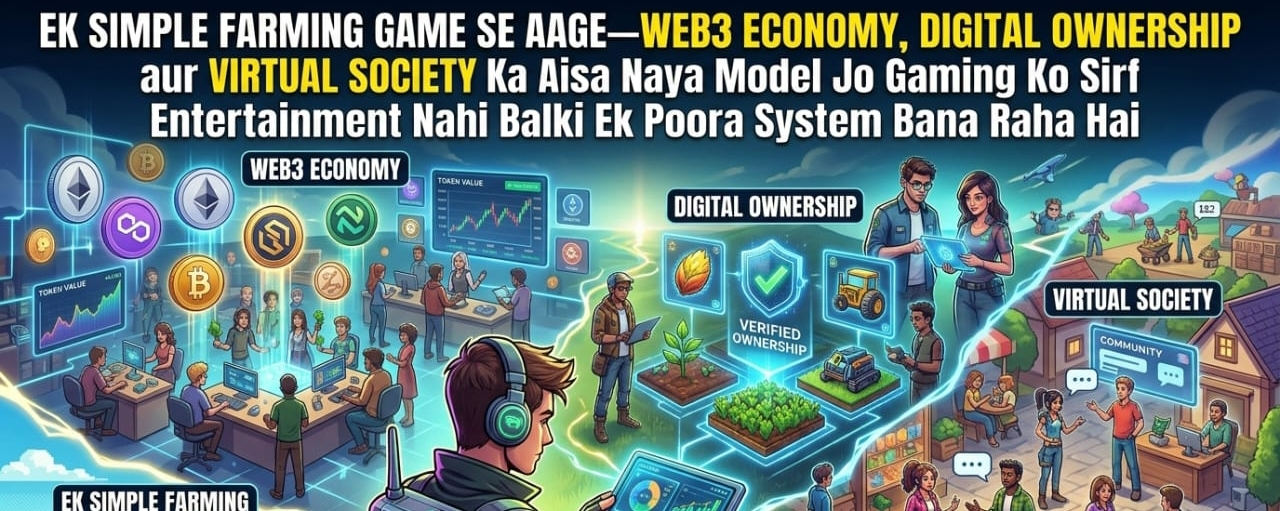
Inside the game, two types of currency are in circulation, and this can initially seem confusing. There are simple coins that you use daily to buy seeds, for crafting, and for small things. And there is a PIXEL token, which feels a bit heavier... as if its relation is more to the system than to the game. Gradually, you understand that coins allow you to move in the game, while PIXEL positions you within the game.
And then farming, which on the surface seems just like farming, actually becomes something else. You realize that you are not just working on your land, but you are part of a chain. Your grown crop benefits someone else, and someone else's resource helps you advance. It all flows so naturally that you feel it's just part of the game, but in reality, a small economy is running.
The concept of land is also interesting. If you have your own land, the feel of the game changes. You are not just a player; you feel a bit like an “owner.” And if you don't, you work within the system. This difference is subtle but powerful. This is the place where the game starts to feel a bit like the real world.
When the PIXEL token launched, suddenly everyone’s eyes were on this game. People were not just playing; they were calculating. Who is earning how much, when to sell, what to hold. For some, this was a golden moment; for others, it was confusing. This was the phase where excitement and risk began to feel intertwined.
But what sets Pixels apart is its social side. You can play alone, but when you interact with others, join guilds, and trade, the game feels alive. It’s not just farming; it becomes about building something together with people. Sometimes it feels more like a community than just a game.
And to be honest, this game changes you a bit. You start planning more, keeping track of timing, and begin to see the value in every little thing. It's not addictive because it's flashy; it's addictive because it makes you feel like you are in control. Like you are building something that is solely yours.
After recent updates, another change is felt. Earlier, people focused more on earning; now the game feels a bit balanced. It seems developers want people to come not just for money but also for the experience. The effort to make the system stable is clearly visible.
If I speak directly, defining Pixels is difficult. It's a game, but not just a game. It's a small digital world where your time, your effort, and your decisions matter. It doesn't force you, but gradually pulls you in.
And perhaps the most interesting thing is sometimes you ask yourself: Am I just playing a game, or have I actually become part of a system?