
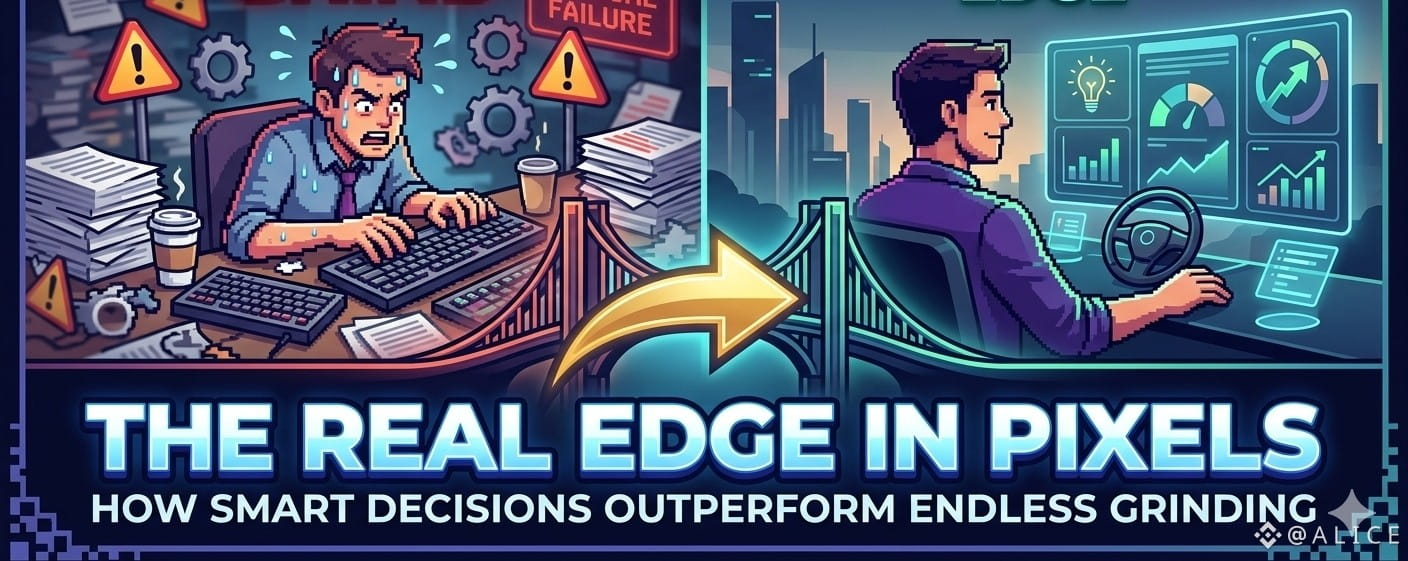
Understanding the Difference Between Grinding and Deciding
In the world of digital assets and gaming economies, many people believe that success comes from grinding harder than everyone else. Grinding often means spending long hours completing repetitive tasks, hoping that time alone will translate into rewards. While effort does matter, it is not always the smartest path forward.
Decision making, on the other hand, focuses on choosing the right actions at the right time. It is less about how long you play and more about how well you think. A player who understands when to act, pause, or pivot can often outperform someone who simply keeps pushing forward without a strategy.
Think of it like traveling. You can walk nonstop for hours, but if you are heading in the wrong direction, you will still end up lost. A good decision acts like a compass, ensuring your effort actually moves you closer to your goal.
Why Time Alone Doesn’t Guarantee Progress
It is easy to assume that more time equals more rewards, especially in pixel-based ecosystems or gamified platforms. However, time without direction can lead to wasted energy. Many users fall into routines that feel productive but do not actually improve their position.
For example, imagine collecting in-game resources without understanding their value or future use. You may spend hours gathering items that later turn out to be less useful. Meanwhile, someone else spends less time but focuses only on high-value activities, gaining better outcomes.
This is where smart decision making becomes powerful. Instead of asking, “How much time should I spend?” the better question is, “What is the most effective thing I can do right now?” That simple shift in thinking can completely change results.
The Power of Strategy in Pixel-Based Economies
Pixel ecosystems often reward those who understand patterns, timing, and resource allocation. Strategy is not about complexity; it is about clarity. Knowing what to prioritize can make even limited time highly productive.
Consider how experienced players approach challenges. They do not rush into every task. Instead, they observe, learn, and then act with purpose. They may skip low-impact activities and focus only on those that offer meaningful progress.
This approach is similar to managing energy rather than just time. When you combine awareness with action, every move becomes intentional. Over time, these small, smart decisions create a significant advantage that grinding alone cannot match.
Learning to Pause, Analyze, and Act
One of the most underrated skills in any digital environment is the ability to pause. Many users feel the need to constantly stay active, fearing they might miss out. However, constant activity without reflection often leads to poor decisions.
Pausing allows you to analyze your current position. Are your actions aligned with your goals? Are you repeating habits that no longer work? Taking a moment to reflect can prevent hours of inefficient effort.
A simple analogy is playing a strategy game. If you keep making moves without thinking, you may lose quickly. But if you take time to study the board, even a few well-planned moves can turn the game in your favor. The same principle applies in pixel-based systems.
Building a Decision-Making Mindset
Developing strong decision-making skills does not happen overnight. It requires curiosity, observation, and a willingness to learn from mistakes. Instead of focusing only on outcomes, pay attention to the process behind your choices.
Ask yourself questions like: Why did this work? What could I have done differently? These reflections help you refine your approach over time. Gradually, you will start noticing patterns and opportunities that others might miss.
It is also helpful to stay informed and engaged with the community. Observing how others think and act can provide valuable insights. However, always remember to make your own decisions based on your understanding and comfort level. This is about building your edge, not copying someone else’s path.
Balancing Effort with Intelligence
Effort and intelligence are not opposites; they work best together. Grinding becomes effective only when guided by smart decisions. Without direction, effort can feel exhausting. With the right strategy, even small actions can produce meaningful results.
Imagine two people planting seeds. One plants randomly across a field, while the other chooses fertile spots and the right timing. Both are working, but only one is maximizing results. That difference comes down to decision making.
In pixel ecosystems, this balance is essential. You do not need to be active all the time, but when you are active, your actions should have purpose. This approach not only improves efficiency but also makes the experience more enjoyable and less stressful.
The Long-Term Advantage of Smart Choices
Over time, the gap between grinding and smart decision making becomes very clear. Those who rely only on effort may see slow or inconsistent progress. In contrast, those who focus on making better choices often experience steady and sustainable growth.
This does not mean avoiding effort altogether. Instead, it means using effort wisely. Every decision you make shapes your journey, and small improvements in thinking can lead to big results over the long run.
In digital environments that continue to evolve, adaptability is key. The ability to learn, adjust, and decide effectively will always be more valuable than simply doing more.