


Earlier, I viewed rewards in GameFi linearly: more distributions - higher activity. In the short term, this works, but over time the system breaks down because players quickly optimize their behavior for payouts. As a result, rewards cease to influence decisions and simply start to drain the economy.
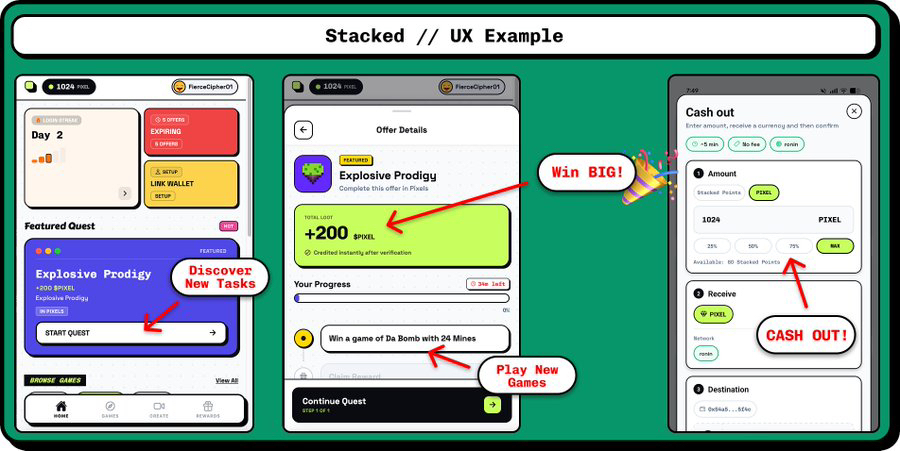
When I figured out how @Pixels builds the mechanics through Stacked, it became clear that the focus has shifted. Here, the volume of rewards is not important, but their timing and targeting. The system does not react automatically to actions. It looks at the context: where the player is in the cycle, whether there is a risk of churn, which actions correlate with retention. And it gives incentives based on that.
The difference is not in the formulations, but in the effect. If the reward comes 'on schedule', it loses its value and becomes part of the routine. If it hits at a moment when the player is unsure - to stay or to leave - it really influences the decision. This is the point where the economy starts to work, rather than just distributing tokens.
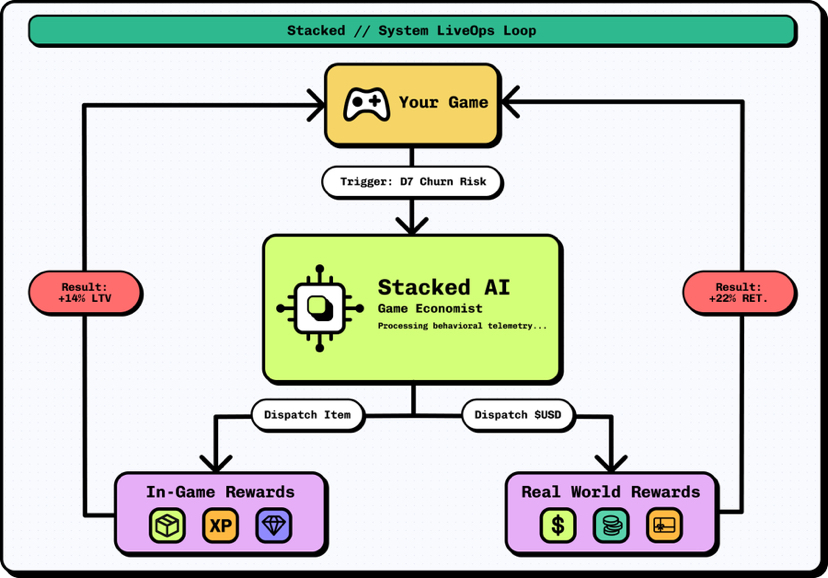
Stacked is precisely trying to catch these moments. Through behavior analysis, the system finds gaps: where engagement drops, where players disengage, where the incentive can change the trajectory. Then comes the adjustment - who to give, how much, and when. This is no longer a template distribution, but management.
AI here performs a practical function: it accelerates the search for patterns and reduces the cycle of 'hypothesis → testing → adjustment'. Without this, everything turns into manual iteration, which does not scale. With it, there is a chance to keep the system in balance, although there are no guarantees. Risks remain. Incorrect timing - and the reward does not work. A tilt towards incentives - and players start playing 'under the system'. An error in analysis - and the wrong behavior is reinforced. But these are already manageable risks, not chaos from uncontrolled issuance.
My honest conclusion: the problem with GameFi is not the lack of rewards, but their lack of system. @Pixels through Stacked tries to make the reward a precise tool of influence. If this balance is maintained, such a model lasts longer than the classic 'did - received'.
