

In less than 48 hours, an incident at KelpDAO created visible tensions in $AAVE and left a key question on the table:
👉 How safe is it to use LRT as collateral in DeFi?
If you operate or invest in this ecosystem, this is not noise: it's a signal.
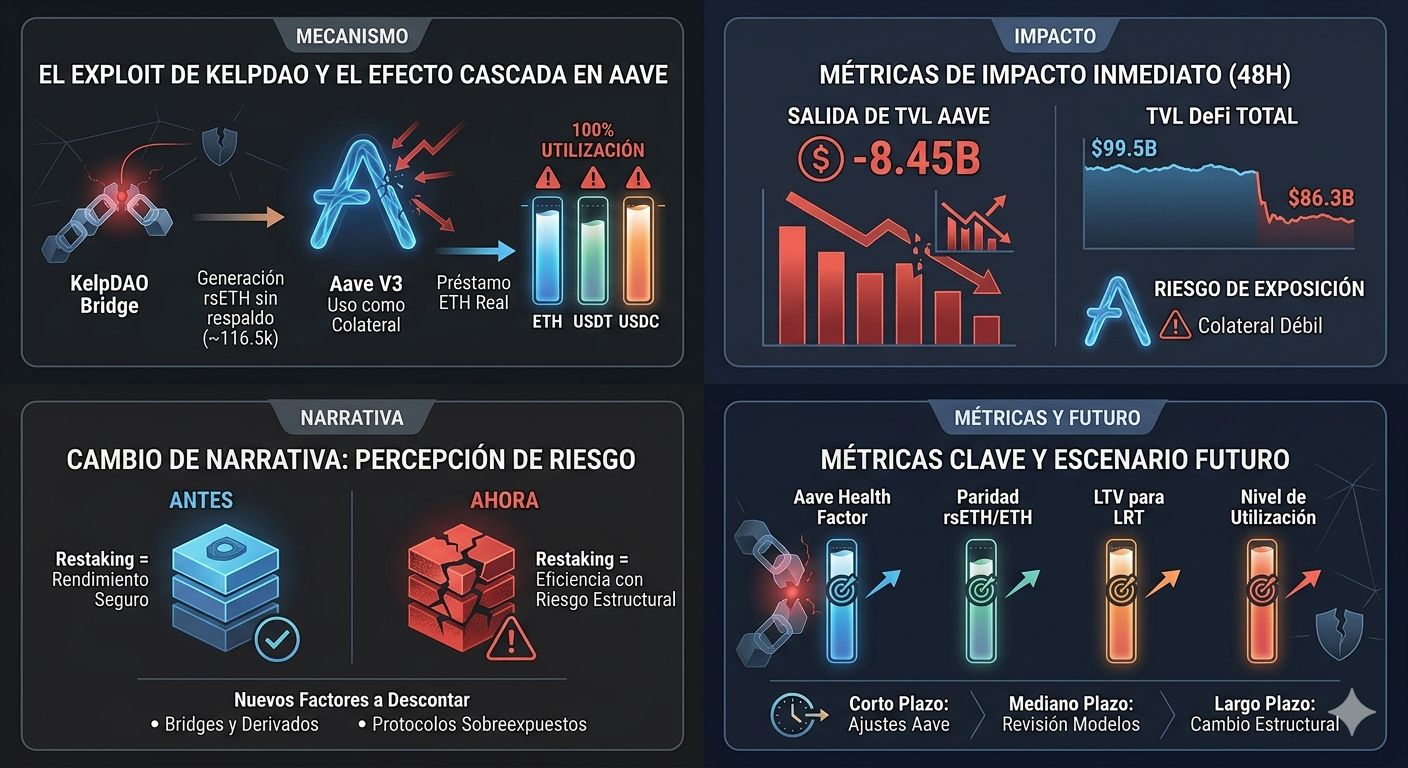
🧠 What really happened
The mechanism was relatively simple, but with effects amplified by DeFi composability:
The KelpDAO bridge was manipulated
About ~116,500 rsETH were generated without verifiable backing
They were used as collateral on Aave
A real loan was taken against that collateral $ETH
Immediate outcome
Pools of ETH, USDT, and USDC reached high utilization (close to 100%)
Withdrawals temporarily limited due to lack of available liquidity
Aave's exposure to potentially weak collateral
👉 It is not just an exploit: it is a real stress test for the current DeFi model.
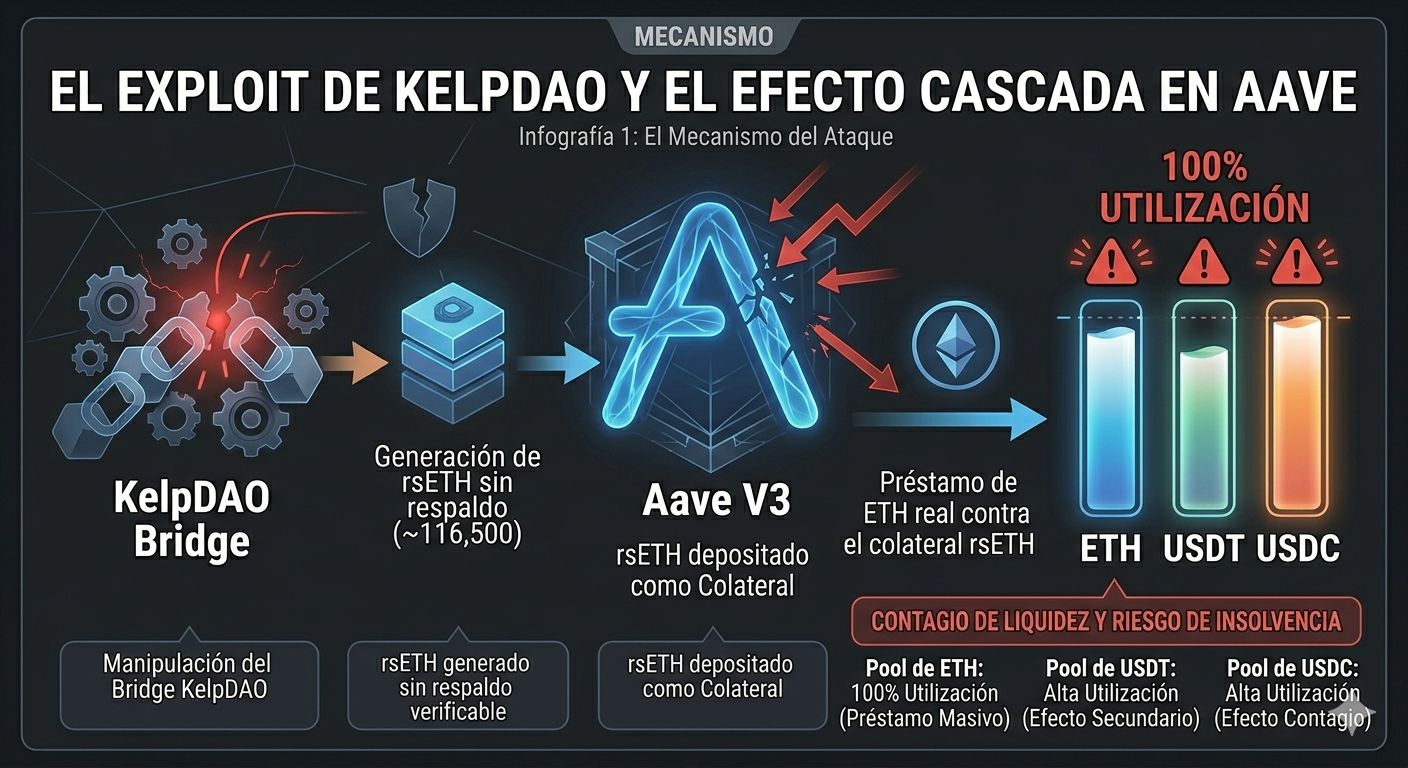
📉 Why this matters now
The effects were rapid:
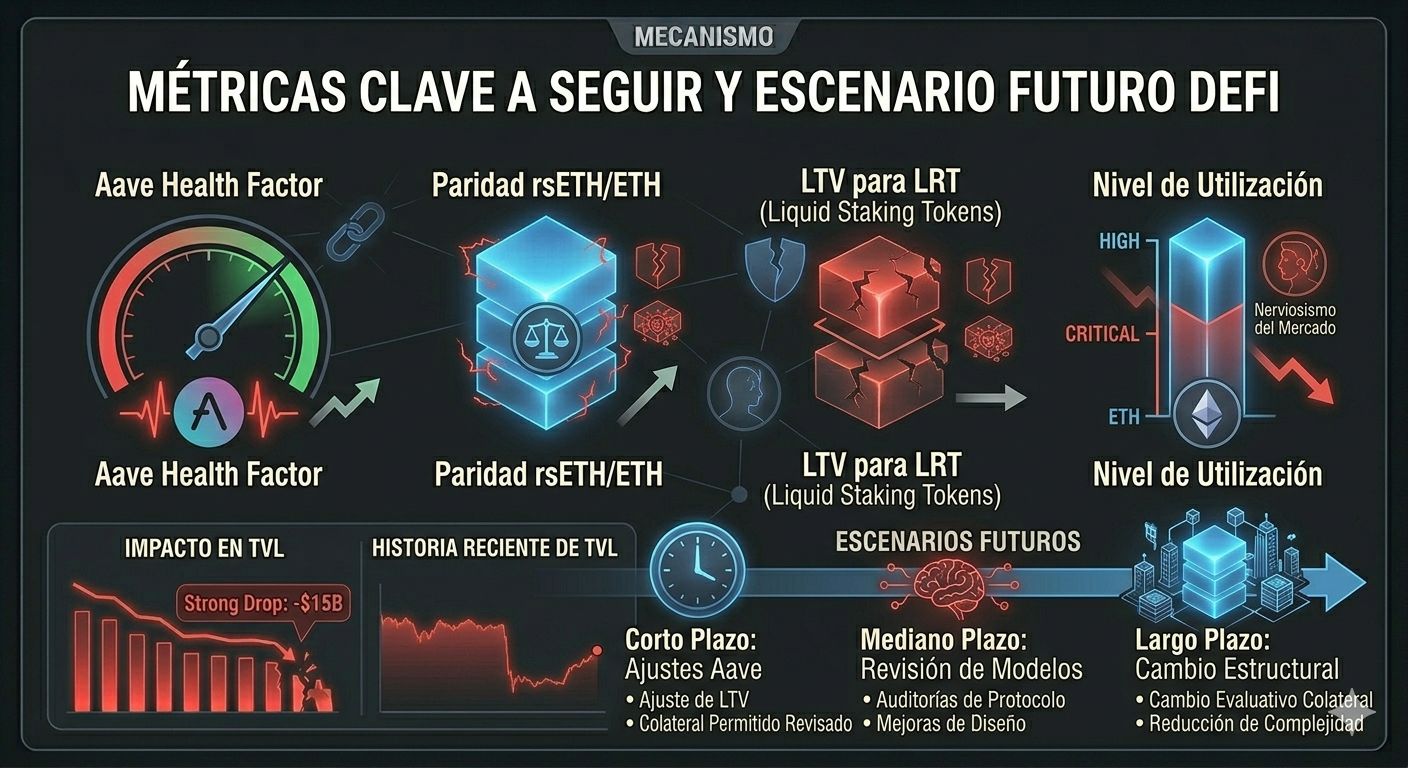
TVL in DeFi: from ~$99.5B → to ~$86.3B
Aave: outflow of ~$8.45B in 48h
Pressure on liquidity in key pools
But the most important data is not the drop, but this:
👉 The market is reevaluating what it considers 'safe' collateral.
Not everything that follows the price of ETH has the same level of risk.
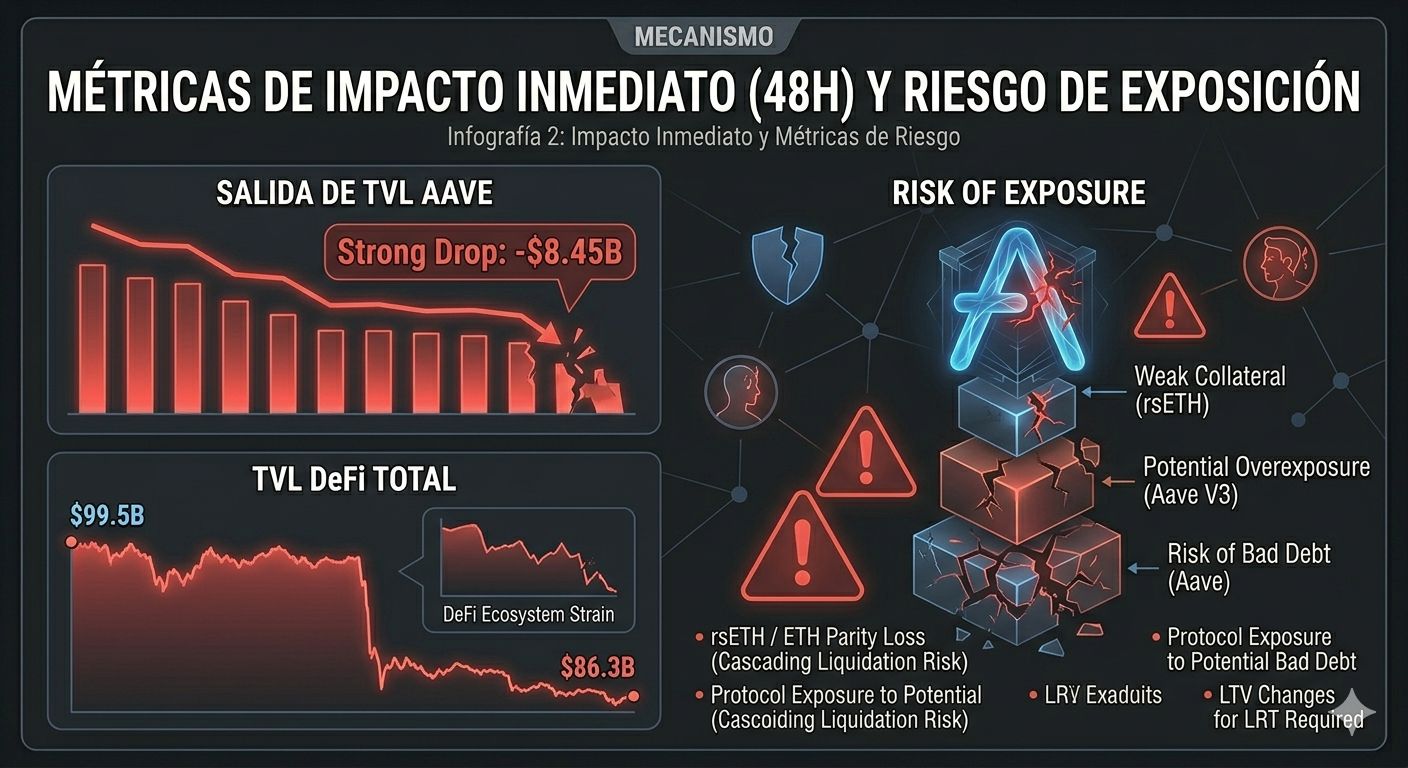
🧩 Change of narrative
The narrative is evolving:
Before:
“Restaking = relatively safe additional yield”
Now:
“Restaking = capital efficiency with structural risk”
What the market starts to discount:
LRTs can introduce non-obvious risk, bridges and derivatives increase complexity, lending protocols may be overexposed, and returns no longer automatically compensate for risk
👉 We are seeing an adjustment in risk perception.
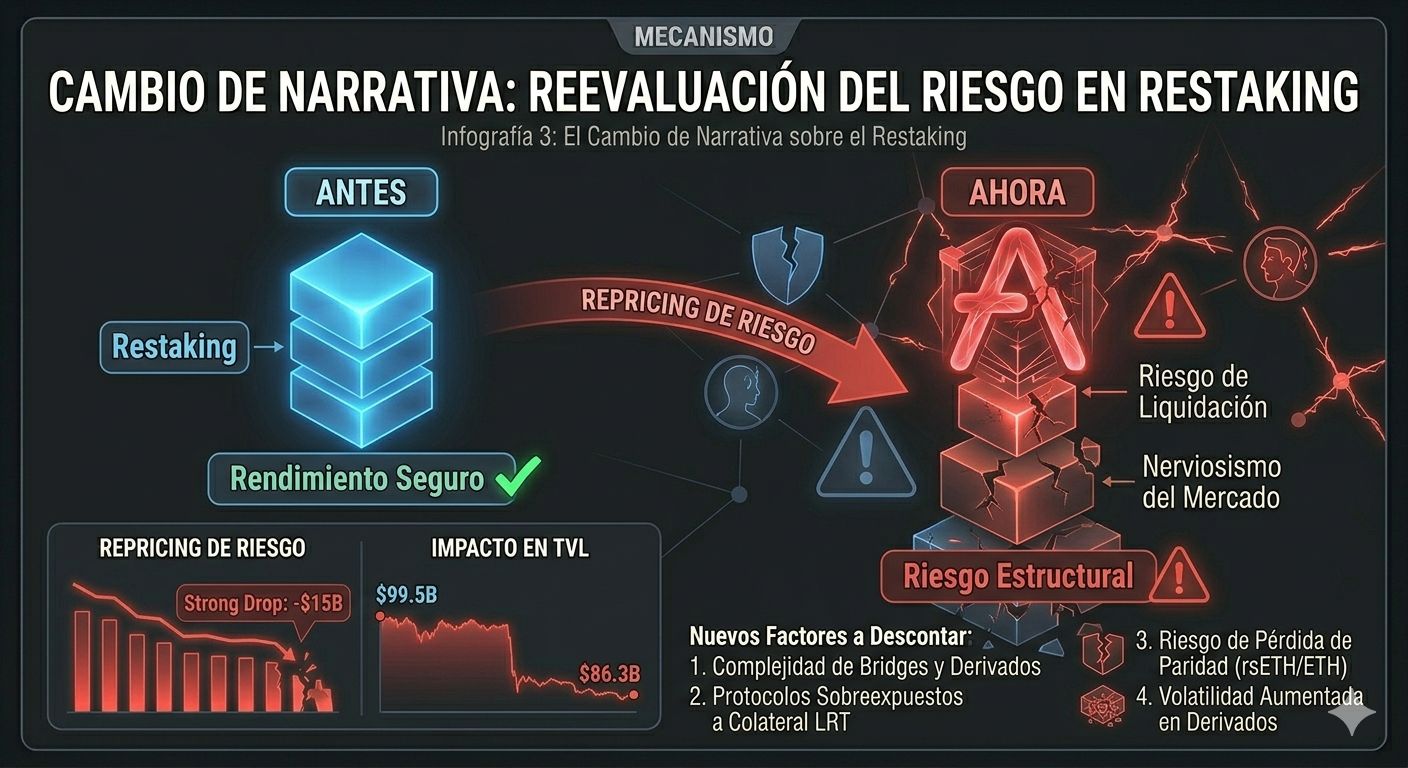
📊 Key metrics to follow
For traders and investors:
Average Health Factor in Aave
Parity rsETH / ETH
Changes in LTV for LRTs
Utilization level in pools
There the next relevant signals will appear.
⚙️ The critical point: derived collateral
rsETH is part of the restaking narrative:
It is designed to represent ETH in staking but is dependent on multiple layers (validators, bridges, contracts)
👉 In practical terms:
It is a derivative, not the underlying asset.
The problem is not its existence, but how it is valued within the system.
⏳ What to expect from here
Short term
Risk adjustments in Aave (LTV, allowed collateral)
Volatility in assets related to ETH
Possible price deviations in LRTs
Medium term
Review of risk models in lending
Greater focus on audits and protocol design
Long term
Structural change in how collateral is evaluated in DeFi
⚠️ Risks to consider
Cascade liquidations if there is a loss of parity
Possible bad debt in protocols
Contagion to other LRTs
👉 Scenario to watch: events similar to stETH 2022, but in a more complex environment.
🧠 Conclusion
This event leaves a clear lesson:
The problem was not just the exploit, but how the system treated derived assets as equivalent collateral to the underlying asset.
That introduces risk… and the market has already started to adjust it.
🎯 Approach for traders and investors
This type of event often marks turning points:
Risk repricing
Lower leverage
Higher selectivity in collateral
👉 The key now is not to react with panic, but to understand where the real exposure is.

#KelpDAOFacesAttack #AAVE #rsETH #exploit #BinanceSquareTalks $RAVE


