My cousin's husband went to the gym for the first time, the coach took him around, set up a one-month training plan for him, told him what to practice in the first week, what to add in the second week, and when he could increase weight. He came back and told me that he had previously gotten a gym membership but never went after getting it. This time felt different because he knew what he needed to do tomorrow and what to do next week; having a path to follow means he won't get lost. He persisted, and three months later he said he no longer needed that training plan because he knew what the next step was himself.
The same principle applies to this matter in the game. If a new player comes in and doesn't know what to do, they are likely to leave within three days, not because the game is bad, but because they can't find out what the next step is.
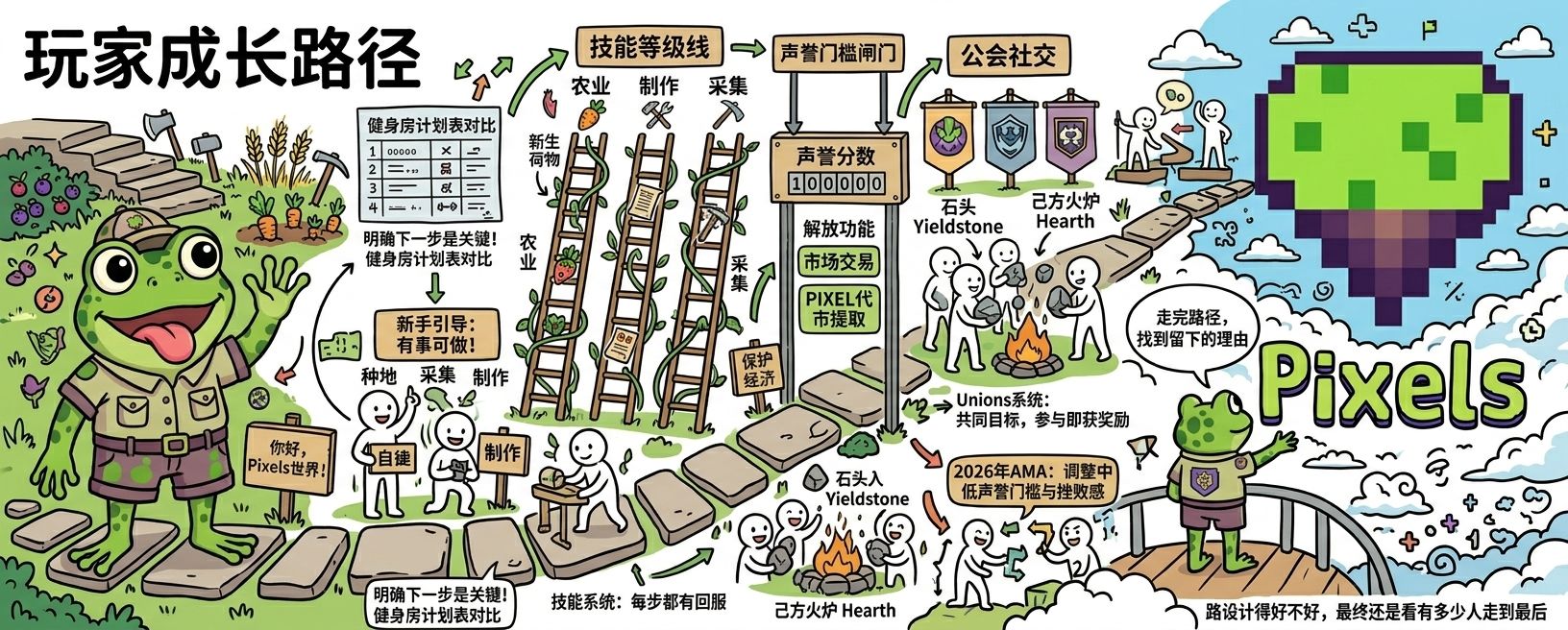
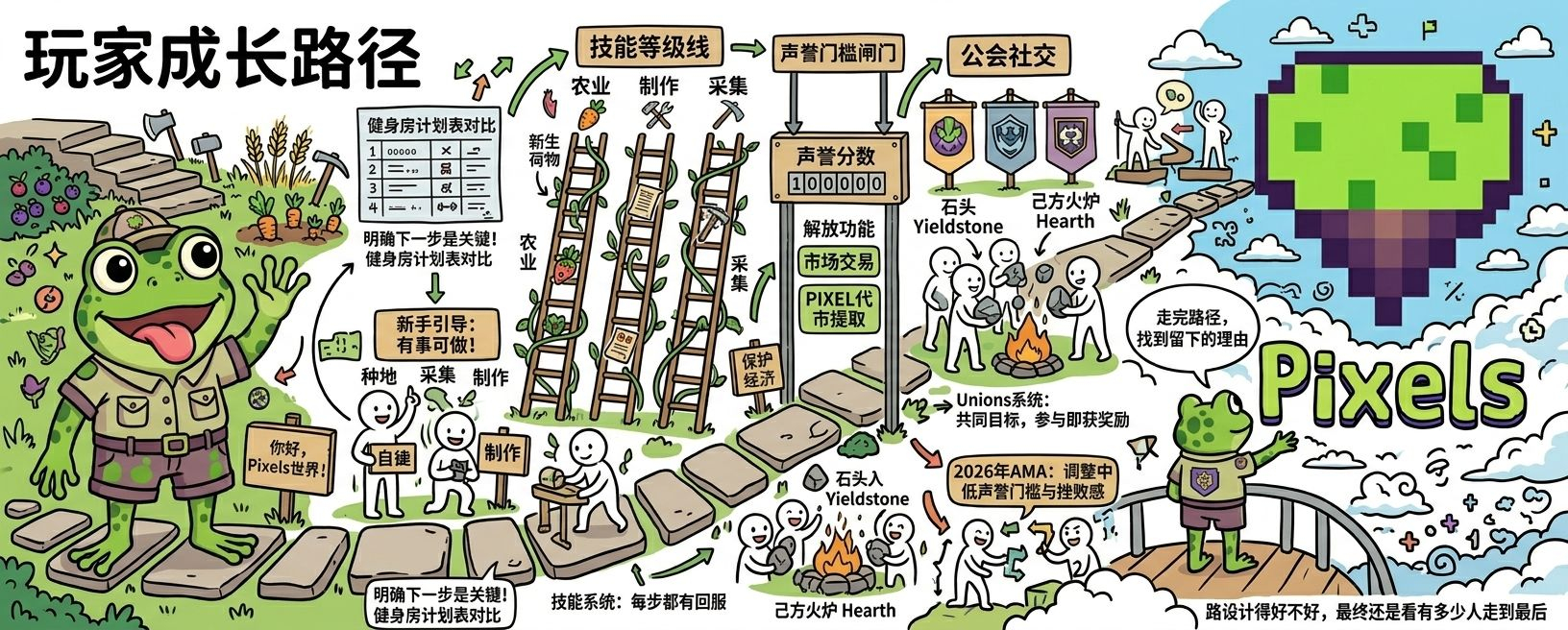
In this regard, it does better than most blockchain games. After new players enter the game, various free crafting stations and infrastructure are scattered throughout the main urban area of Terra Villa. They can start working without having to spend money to buy land. The game has guiding tasks that lead newcomers through basic actions like farming, gathering, and crafting. This design provides something for those who enter without any understanding, preventing them from facing a bunch of incomprehensible systems and closing the page right away.
After passing the beginner stage, the skill growth system takes over. The skill system covers a wide range. Agriculture has its own independent leveling line, crafting has its own independent leveling line, and gathering and animal husbandry each have their own sets as well. Players do not need to understand everything at once; they can focus on one direction and gradually delve deeper. When they reach a certain level in that direction, they will naturally begin to need items from other directions. The breadth of the game opens up little by little. After leveling up, new crop types, crafting recipes, and more efficient methods can be unlocked, with visible rewards at each step, not aimlessly groping in the dark.
The reputation system is a very important node on this growth path. New players start with low reputation scores, and continuous play and task completion will gradually increase their scores. Only when the reputation reaches a certain level can players unlock market trading between players, withdraw PIXEL tokens, and other functions. This threshold is not set arbitrarily; the most common failure in blockchain games is the influx of numerous bot accounts that come in to harvest rewards and then dump tokens. Games without a reputation threshold can easily be ruined by such behavior. Pixels has set this gate to protect the entire game economy from being undermined by short-term arbitrage behavior, while also giving new players a clear direction for effort, knowing how much they need to do to unlock the next permissions. Having goals helps retain players.
The Unions system in Chapter 3 adds a social layer to this growth path. New players can join one of three guilds without any entry requirements; anyone can enter. Once inside, they share common goals: collecting Yieldstone, investing resources into their Hearth, and participating in seasonal competitions. Rewards are distributed based on participation; a newcomer can receive rewards just by participating, without needing to accumulate a certain amount of assets to qualify for the table.
However, a clear growth path does not mean there are no problems. In the AMA in January 2026, players reported that the reputation threshold for newcomers is too high, and many revenue channels are closed to low-reputation players. This limits what newcomers can do in the initial period, and feelings of frustration can easily accumulate. The team acknowledged this issue and said they are making adjustments, but so far it has not been fully resolved. No matter how well the growth path is designed, if the experience in the first three days feels uninteresting, there won't be an opportunity to showcase the carefully designed content later.
My cousin's husband still goes to the gym every week. He says he doesn't remember what that initial plan looked like, but he remembers that it was that plan that got him through the door, and once inside, he found his reasons to stay. The design of the growth path does just that: it leads players through the door and gives them enough reasons to stay. Whether the path is well designed or not ultimately depends on how many people make it to the end.