
Many traders believe that 'trading practice' is about studying countless indicators, chasing hot trends everywhere, or seeking out 'masters' to find the 'limit-up secret.'
Too shallow, shallow enough to repeatedly cut the account in half.
True trading practice is not about piling up techniques or gambling on luck, but about a robust, closed-loop, underlying operating system that enables you to survive long-term in the market's battlefield.
It addresses the two deadliest ailments in trading: greed and fear.
Not for getting rich overnight, but to cultivate a set of trading principles and strategies in the unpredictable market that allows for both offense and defense, the ability to hold onto profits and stop losses.
First, the "dual cultivation of Buddhism and Taoism" in trading: when dissected, trading moments become transparent
Taoism is your "technique", the confidence in trading
Understand the rules, be clear about cycles, leverage trends, and get results.
Laozi said, "Man follows the earth, the earth follows heaven, heaven follows the way, and the way follows nature," the "way" in trading is the market rule — the inertia of trends, the cycle of periods, and the flow of capital.
It teaches you to discern direction in turbulence and seize opportunities in the market. For example, understanding "acting in accordance with the trend" means understanding the power of trends and not opposing the market; mastering "extremes will turn back" means grasping the rhythm of cycles, escaping peaks in madness, and laying out in fear.
This is the capability to break through externally in trading, the ability to secure your position in the market, preventing you from becoming "the leeks to be cut" in complex trends.
Buddhism is your "heart", the calmness in trading
break my attachment, remain indifferent to gains and losses, eliminate obsessions, and cut off internal consumption.
(Diamond Sutra) states, "All forms are illusory," the ups and downs, profits and losses in trading are merely the "forms" of the market. If one clings to every profit feast or loss suffering, they will only be led by emotions, ultimately exhausting their capital in chasing rises and killing falls.
It teaches you not to be arrogant in profit and not to collapse in loss. For example, practicing "no obstacles in the mind" is about letting the trading plan not be disturbed by emotions; achieving "no fear" means being able to adhere to rules when facing unrealized losses.
This is a trading nature that is inwardly stable, it's your armor for protecting your account, allowing you not to be bound by your mindset amid profit and loss fluctuations.
Only when combined are they capable of long-term profitability as traders.
Use the way as a technique, develop executable trading strategies; use Buddhism to cultivate the mind, refining a trading mindset that is undisturbed.
Externally, you can capture trends with rules, and internally, you can endure fluctuations with awareness. Lacking either half, trading becomes a "money-losing deal."
Second, where is the strength of the dual cultivation of Buddhism and Taoism in trading?
Taoism gives you the ability: to be strong, not weak
Only talking about feelings without understanding rules makes one a "leek", who will only be repeatedly harvested by the market.
Taoism helps you to see market rules clearly and act accordingly. For example, understanding "the way of heaven is impartial, always with the virtuous" (where "virtuous" means those who comply with market rules), not acting recklessly or speculating while trading, and strictly following signals from trends, capital, and patterns.
Building positions with basis, having rules for profit and loss, not being led by market noise. It gives you trading methods that are "decisive" and confidence to "protect your capital and profit".
Just like the old saying in trading: "Those who buy are apprentices, those who sell are masters, and those who hold cash are ancestors." The wisdom of "selling" and "holding cash" embodies the thinking of Taoist rules.
Buddhism gives you a broader perspective: let go, do not be arrogant
Only understanding skills but not letting go, one can easily swell in profit and lose control in loss, ultimately being eliminated by the market.
Buddhism helps you break the "obsession with wealth", viewing short-term profits and losses lightly.
When you profit, you know it’s the market giving, not your own "deification"; when you lose, you understand it’s trading costs, not the end of the world.
Dressing you in a "mindset bulletproof vest": having profit expectations, but not greedy; having loss preparations, but not fearful. This is the "long-termism posture" that can survive in the market.
After merging: trading closes the loop, continuous profitability
Taoism helps you "increase income" — researching the market, refining strategies, capturing opportunities, allowing for the possibility of income in your account;
Buddhism helps you to "save" — manage your mindset, execute discipline, and control risks, so that your account is not devoured by significant drawdowns.
One external, one internal, one attack, one defense, one movement, one stillness.
As trading masters say: "Trading is a game of probability, a profitable trading system + a stable trading mindset = long-term profitability." This is the most complete "profit cycle" in trading, ensuring you always have the "next opportunity" in the market.
Third, why is it the highest level of "cultivation" in trading?
Only practicing "techniques" (Taoism) can easily lead to "technical superstition". Once the market doesn't meet expectations, you will doubt your strategy, deny yourself, and ultimately get lost in frequent adjustments;
Only practicing the "heart" (Buddhism) can easily turn into "Buddhist lethargy", appearing to have a good mindset, but in reality lacking any strategy, with the account declining over the long term with no solution.
Traders who practice the dual cultivation of Buddhism and Taoism can capture market trends with strategies and withstand volatility with their mindset.
Just like those investment giants who traverse bull and bear markets, they understand economic cycles (the techniques of Taoism), and can calmly layout during market crashes (the heart of Buddhism).
During trading:
First, use Taoist thinking to calmly analyze trends, capital, and patterns, and develop a cold trading plan;
With the mindset of Buddhism, strictly execute plans, profits do not drift, and losses do not panic.
Strategies without flaws, mindsets without vulnerabilities.
They do not talk about "secrets", nor do they mention "dark horses", yet they can live clearly and earn steadily in the market.
This is the true "winner" in the trading market.
Fourth, what does a truly dual-cultivating trader look like?
- Strategies are extremely stable, understanding is profound, aiming for high-probability opportunities when taking action, avoiding meaningless trades;
- Discipline is like the way, the mindset is like Buddha, plans are as clear as a knife, but operations are not swayed by gains and losses;
- Being in the market, but not being bound by K-lines in mindset.
Having the ability to capture opportunities and the mindset to accept volatility, possessing both, switching easily between them.
Being "greedy" for opportunities but with boundaries, being "fearful" of losses yet maintaining discipline, the market has no way to deal with him.
Fifth, the ultimate sentence
The dual cultivation of Buddhism and Taoism in trading is not a "fence-sitter" swaying back and forth,
Rather, it is the most complete and highest-level "profit evolution" of traders.
Understanding the market through the way, cultivating the heart through Buddhism.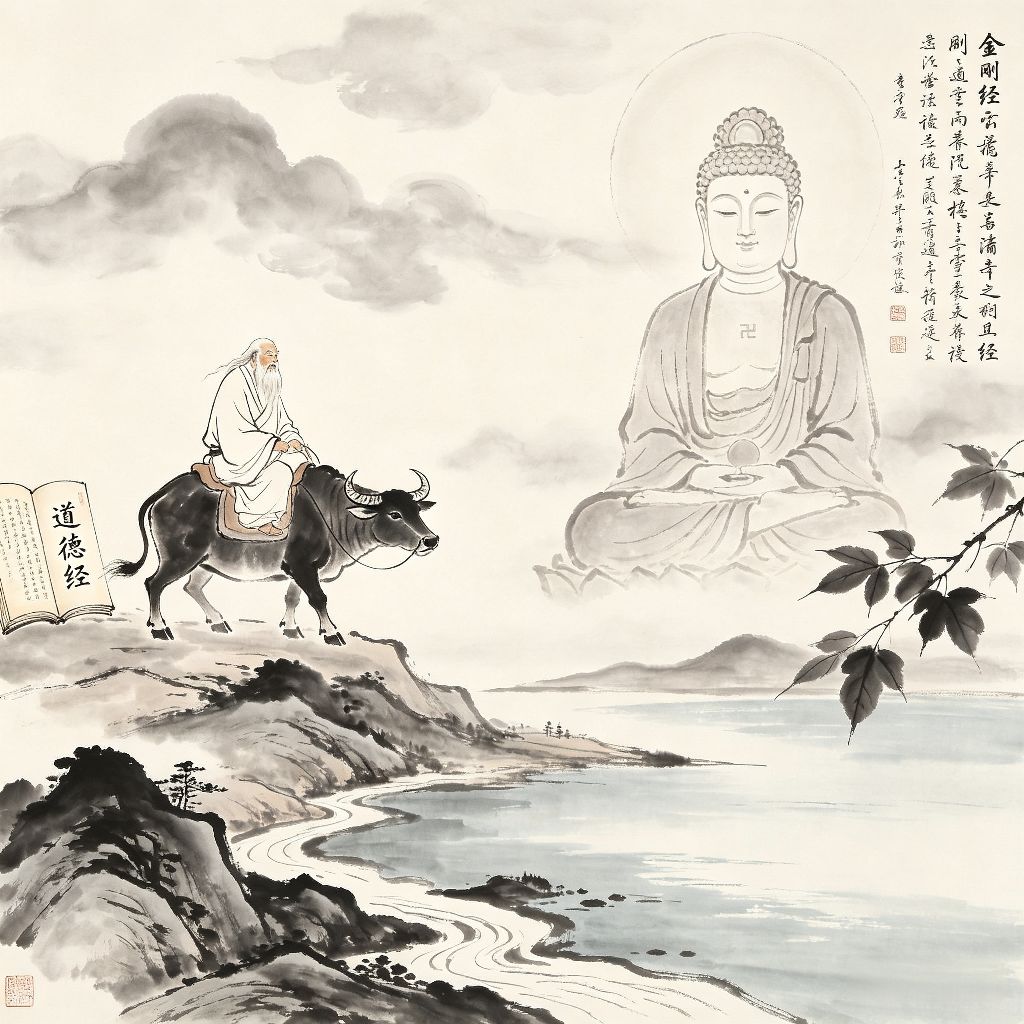
True trading experts are all like this:
When entering, there is the determined force of "drawing the sword and facing the trend";
When exiting, there is the composure of "profit and loss at will, rise and fall as it may."
May you:
With external techniques, secure your position in the market, capturing certain opportunities amid fluctuations;
With an inner Buddhist heart, trading freely, cultivating a heart that is "calm amidst profit and loss."
Trading follows principles, fluctuations do not alarm.
In the trading market, profit soberly, and complete the account.
